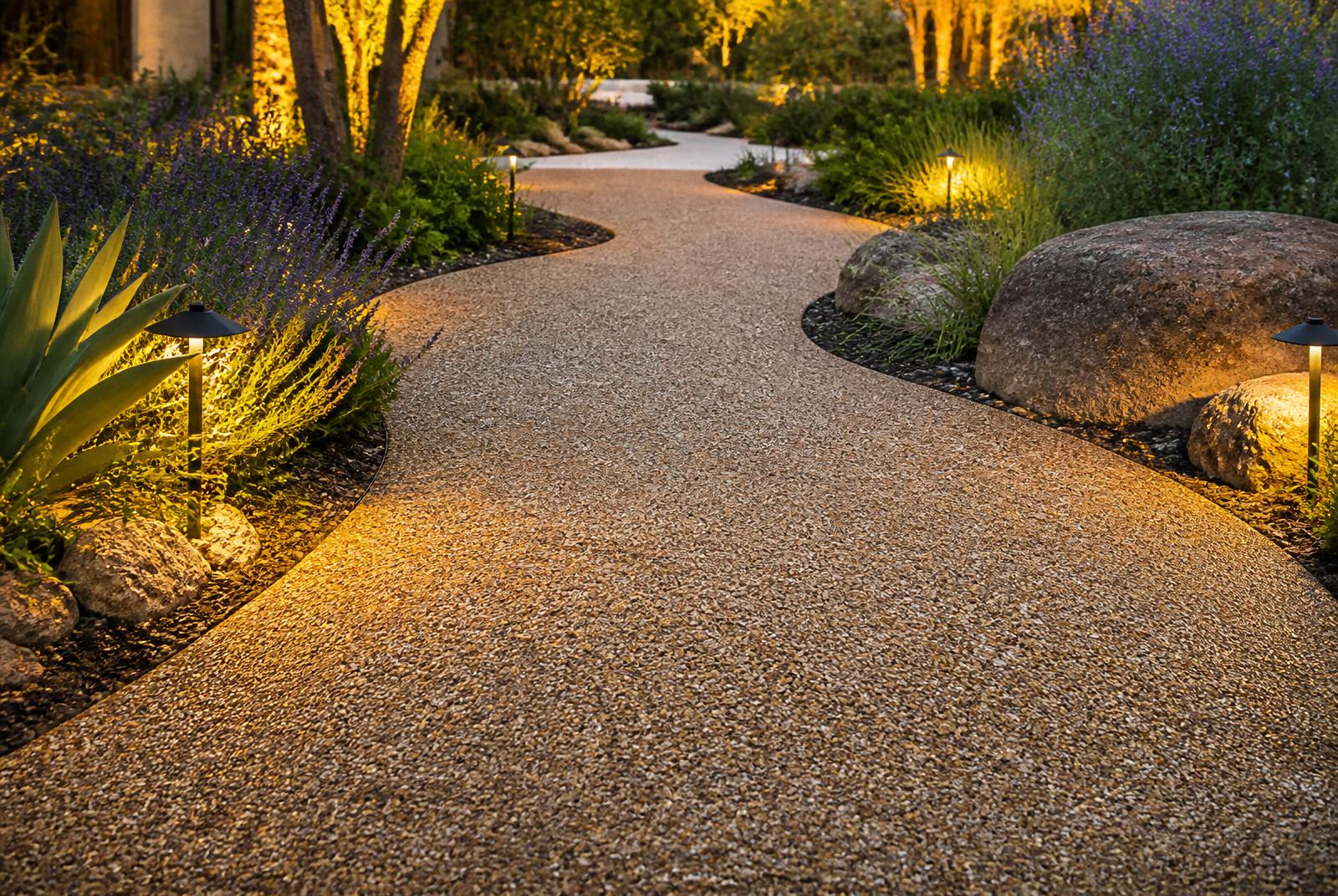
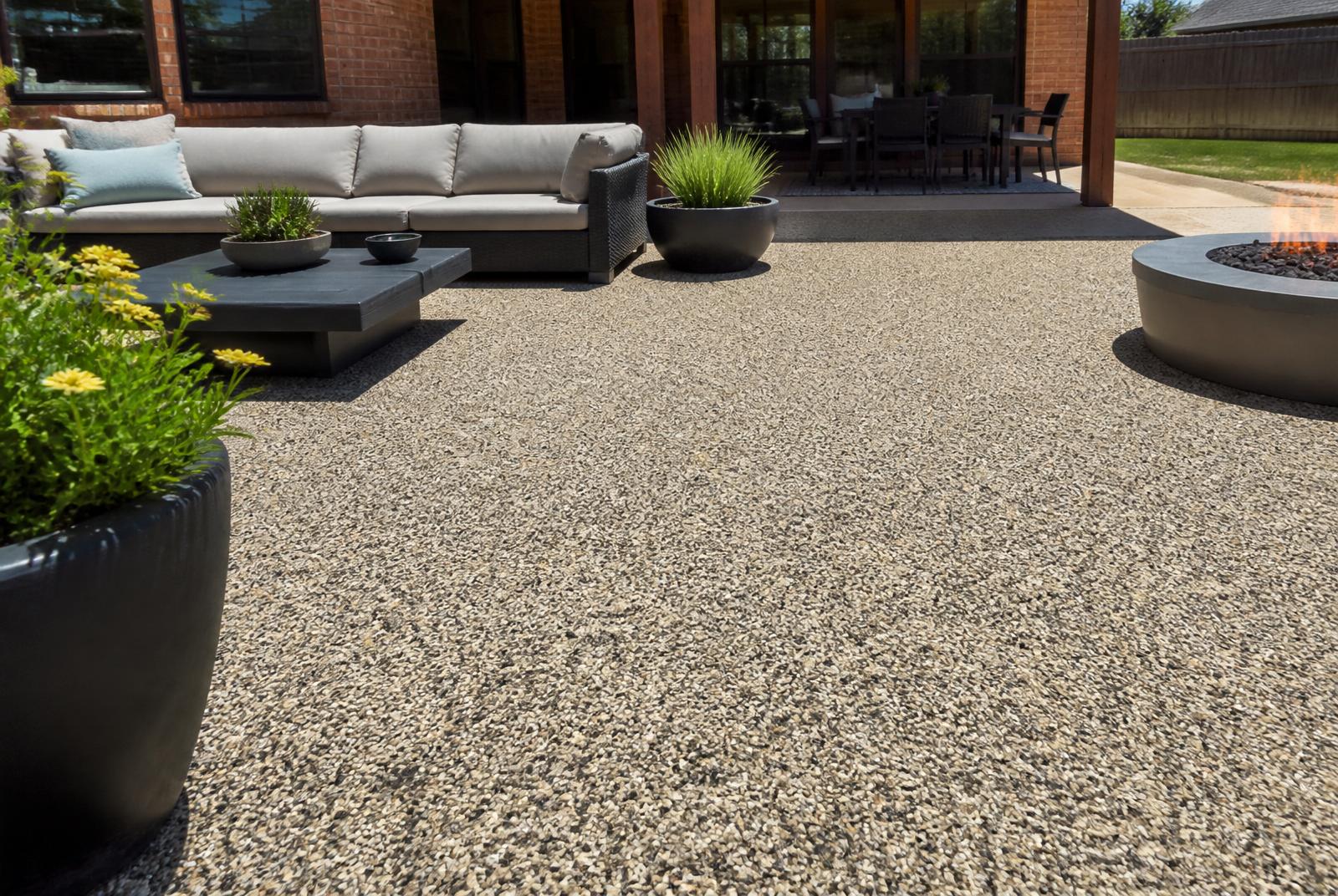
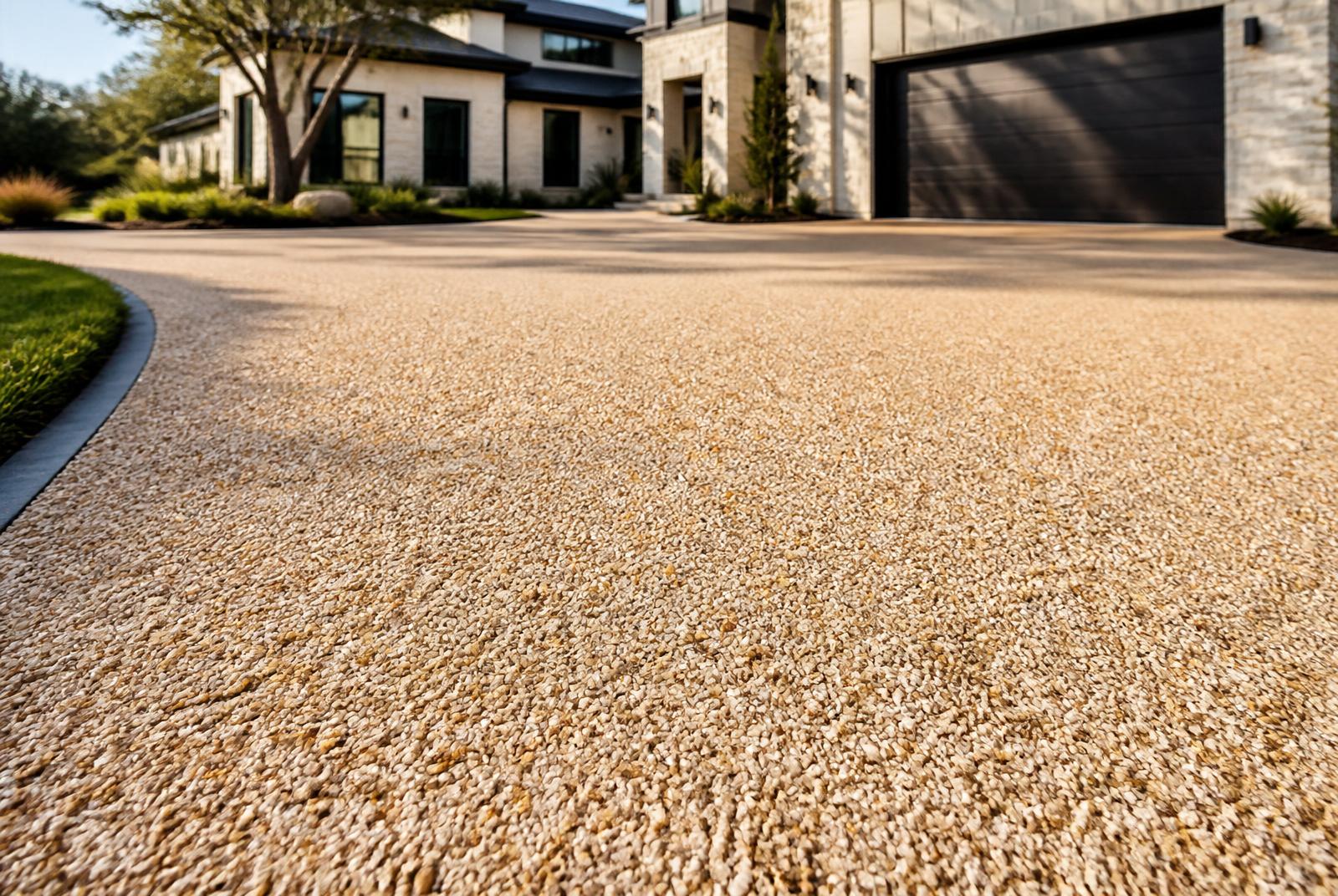
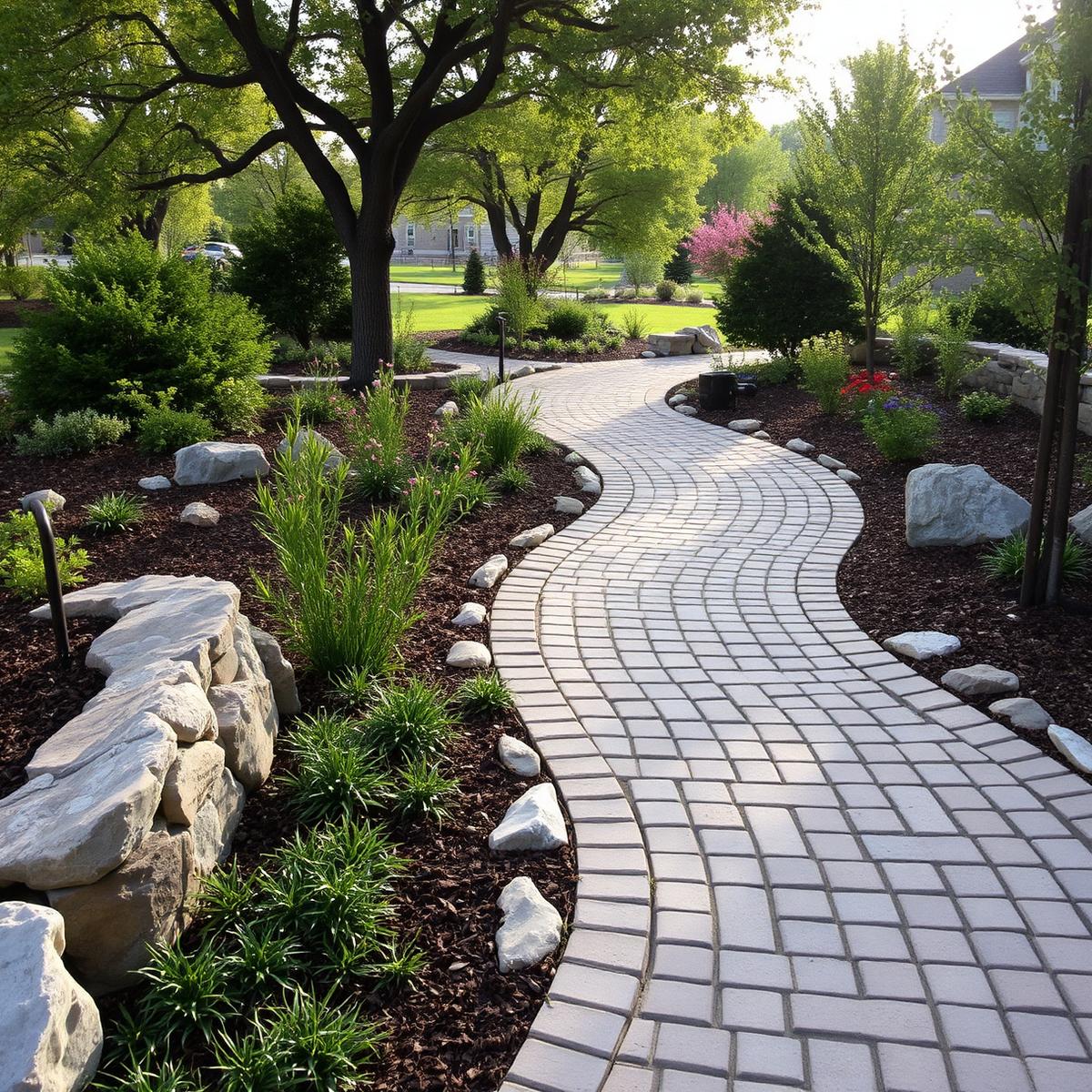
In McKinney, Texas, the soil beneath your driveway is in constant motion. The high-concentration Blackland Prairie clay swells aggressively when wet during heavy spring downpours and shrinks dramatically during scorching DFW summers. Traditional poured concrete forms a monolithic, rigid slab that resists this movement until ground tension exceeds its tensile strength—resulting in unsightly, permanent cracks.
Permeable pavers, by contrast, act as an interconnected flexible matrix of high-density concrete blocks resting on a deep, open-graded aggregate reservoir. At Paverston, we regularly replace failed, sunken, and cracked concrete driveways across McKinney with engineered permeable paver systems. By allowing rainwater to filter directly into the sub-base while accommodating seasonal ground shifts without cracking, permeable pavers deliver unmatched longevity, drainage performance, and curb appeal for North Texas properties.
What this means for a DFW homeowner
McKinney homeowners face unique structural challenges due to local soil hydrology. When expansive clay absorbs moisture, it can exert thousands of pounds of upward pressure per square foot. In a standard poured concrete driveway, this hydraulic force creates stress points across the entire slab. Even with control joints and steel rebar, concrete slabs inevitably snap, shift out of alignment, or lift along expansion seams, creating uneven lips and trip hazards.
Permeable paver systems eliminate monolithic tension entirely. Because every individual paver stone is separated by aggregate-filled joints, the surface possesses high movement tolerance. As the clay subgrade expands or contracts, the flexible joint network allows individual units to micro-adjust independently without cracking the surface. Furthermore, by directing surface water down through the driveway rather than pushing it off the edges, permeable pavers prevent localized soil saturation along your garage apron, foundation walls, or lawn edges, creating far more stable subgrade moisture levels year-round.
Best surface or material options for this project
When planning a high-durability driveway project in McKinney, selecting the right material system determines how your investment handles vehicular weight and soil movement.
- Interlocking Permeable Concrete Pavers: These units feature engineered side spacer nubs that maintain consistent wide joints filled with crushed #8 or #89 stone. They offer compressive strengths exceeding 8,000 PSI (compared to 3,000–4,000 PSI for standard poured concrete), allowing heavy vehicles like trucks and SUVs to park daily without damaging the surface.
- Traditional Poured or Stamped Concrete: A single continuous pour, typically 4 inches thick with wire mesh or rebar reinforcement. While offering a lower initial upfront cost, traditional concrete lacks elasticity. In McKinney's soil, it is susceptible to spiderweb cracking, surface scaling, and differential settlement over time.
- Porcelain Pavers & Natural Stone Accents: High-end architectural materials like porcelain or granites can be integrated into border bands or decorative accents. However, for full permeable driveways carrying heavy vehicular loads, thick interlocking concrete permeable pavers remain the industry benchmark for stability.
Base prep, drainage, and North Texas soil details
Installing a successful driveway in McKinney requires an engineered sub-base designed specifically for heavy clay soils. Skipping proper excavation or using incorrect aggregates will lead to structural failure regardless of the surface material chosen.
For a high-performance permeable paver driveway, excavation must extend 10 to 14 inches below final grade to remove topsoil and reach firm clay subgrade. The process involves:
- Heavy Duty Geotextile Fabric: A woven or non-woven geotextile membrane is laid over the compacted clay subgrade. This layer prevents native clay from migrating upward into your clean stone reservoir while allowing water to pass through freely.
- Open-Graded Base Reservoir (#2 or #57 Stone): Unlike traditional aggregate bases that contain fine dirt and wash out, permeable bases use clean, angular crushed stone with zero fines. A 6-to-10-inch layer of coarse aggregate (#2 or #57 stone) is mechanically compacted. This open void space acts as a temporary underground detention basin during heavy Collin County rainstorms.
- Bedding Layer (#8 Stone): A 1.5-to-2-inch layer of clean #8 angular crushed stone is screeded flat over the base to provide a perfectly level, setting bed for the pavers.
- Edge Restraints: Heavy-duty concrete curb locks or reinforced edging units are anchored around the perimeter to lock the paver matrix tightly in place, preventing lateral spreading under heavy vehicle braking.
Cost guidance in Dallas–Fort Worth
Driveway hardscaping in the DFW metroplex reflects the scope of base preparation, soil excavation, and material quality required for longevity. In our market, paver driveway projects start at $20 per square foot installed, with premium permeable paver driveway systems typically ranging between $22 and $38 per square foot. Demolition and removal of existing concrete slabs adds $6 to $12 per square foot.
| Feature / Metric | Permeable Paver Driveway | Traditional Concrete Driveway |
| :--- | :--- | :--- |
| Installed Cost (per sq ft) | $22 – $38 | $12 – $18 (Standard Poured) |
| Existing Removal Cost | $6 – $12 / sq ft | $6 – $12 / sq ft |
| Soil Movement Tolerance | Exceptional (Micro-adjusts without cracking) | Poor (Prone to structural cracking) |
| Longevity & Lifespan | 30 to 50+ Years | 12 to 20 Years |
| Stormwater & Drainage Impact | Eliminates surface runoff; absorbs rainfall | Creates high runoff; can flood yard/garage |
| Maintenance & Repairs | Simple spot-repair (replace single pavers) | Difficult (Requires unsightly mudjacking or full repour) |
| Curb Appeal & Value | High custom aesthetic; premium resale appeal | Basic industrial look; prone to discoloration |
What to look for in photos or during a site visit
When evaluating completed driveway installations or reviewing contractor portfolios, look closely at structural execution details:
- Joint Aggregates: In permeable driveway photos, look for clean, small stone chips (#8 aggregate) filling the joints between pavers rather than polymeric sand, which seals the surface.
- Perimeter Containment: Check edge lines where the driveway meets the lawn or street. You should see crisp borders secured by continuous concrete restraint curbs rather than loose dirt or sagging edges.
- Surface Transitions: Verify smooth, flush alignment where the paver surface meets the concrete garage apron and public street gutter without awkward dips or trip lips.
- Water Infiltration Testing: During a live site visit or demo, pour a bucket of water directly onto the permeable surface. The water should disappear immediately into the joints without pooling or running down the drive.
Paverston recommendation
For McKinney homeowners planning a long-term driveway investment, Paverston strongly recommends engineered permeable paver systems over traditional poured concrete. While concrete offers a lower initial price point, its inability to flex with North Texas clay soil leads to costly repairs, cracking, and eventual replacement within 10 to 15 years.
A professionally constructed permeable paver driveway provides a flexible, beautiful, and structural solution that withstands shifting ground, manages sudden rainstorms, and adds immediate architectural value to your home.
Ready to upgrade your driveway with a system built for North Texas soil? Contact Paverston today at 214-228-1011 or visit our contact page to schedule your site evaluation and custom estimate.
Related questions
Do permeable paver joints get clogged with soil and debris over time?
Permeable paver joints filled with angular #8 stone resist clogging remarkably well. In typical residential environments, routine sweeping or occasional light power washing maintains full drainage capacity for many years. If fine dust accumulates after several years, the top layer of stone chip can easily be vacuumed out and replenished.
Can a permeable paver driveway support heavy domestic trucks and heavy equipment?
Yes. When installed over an engineered 10-to-14-inch open-graded stone base with dense concrete pavers exceeding 8,000 PSI compressive strength, permeable driveways handle heavy pickup trucks, large SUVs, and delivery vehicles without sagging or rutting.
How long does it take to replace a concrete driveway with permeable pavers in McKinney?
Most residential driveway replacements in McKinney take between 3 and 5 days. This includes removing and hauling away the old concrete slab, deep excavation of native clay, installing geotextile fabric and aggregate base layers, laying the pavers, and sweeping in the joint stone.
Is custom lighting or border detailing compatible with permeable paver driveways?
Absolutley. Low-voltage LED hardscape lighting, contrasting border pavers, and decorative entry ribbons are easily integrated into permeable driveway designs without interrupting the underlying drainage layer or surface structural integrity.