In most cases in McKinney, laying pavers directly over an existing cracked concrete walkway is not recommended if the concrete has shifted, sunk, or has active, wide cracks. While an overlay is technically possible on flat, stable concrete with only hairline cosmetic cracks, North Texas soil movement usually causes those cracks to mirror right through into the new paver surface over time.
For a long-lasting, smooth walkway that won't trip visitors or shift after a wet spring, full demolition of the damaged concrete is usually the smarter investment. Tearing out the broken slab allows for proper soil excavation, installation of a flexible crushed stone base, and integrated drainage designed specifically for North Texas ground conditions.
What this means for a DFW homeowner
McKinney sits on heavy, expansive Blackland Prairie clay soil. This clay expands significantly when saturated during heavy spring rains and shrinks dramatically during dry summer heatwaves. This continuous shift creates immense pressure under rigid structures like solid concrete walkways, causing them to crack, heave, or settle unevenly.
If you place pavers over a concrete slab that is actively moving:
- Reflective cracking and shifting: The joint sand between pavers will wash out into the cracks below, and individual pavers will sag or pop up along the crack line.
- Water entrapment: Water penetrates the paver joints, gets trapped between the pavers and the old concrete, and accelerates erosion underneath the slab.
- Elevation and threshold issues: Adding 1 to 2.375 inches of pavers plus sand bedding on top of existing concrete raises the walkway surface, which often creates trip hazards at front porch steps, doorways, and garage entries.
Best surface or material options for this project
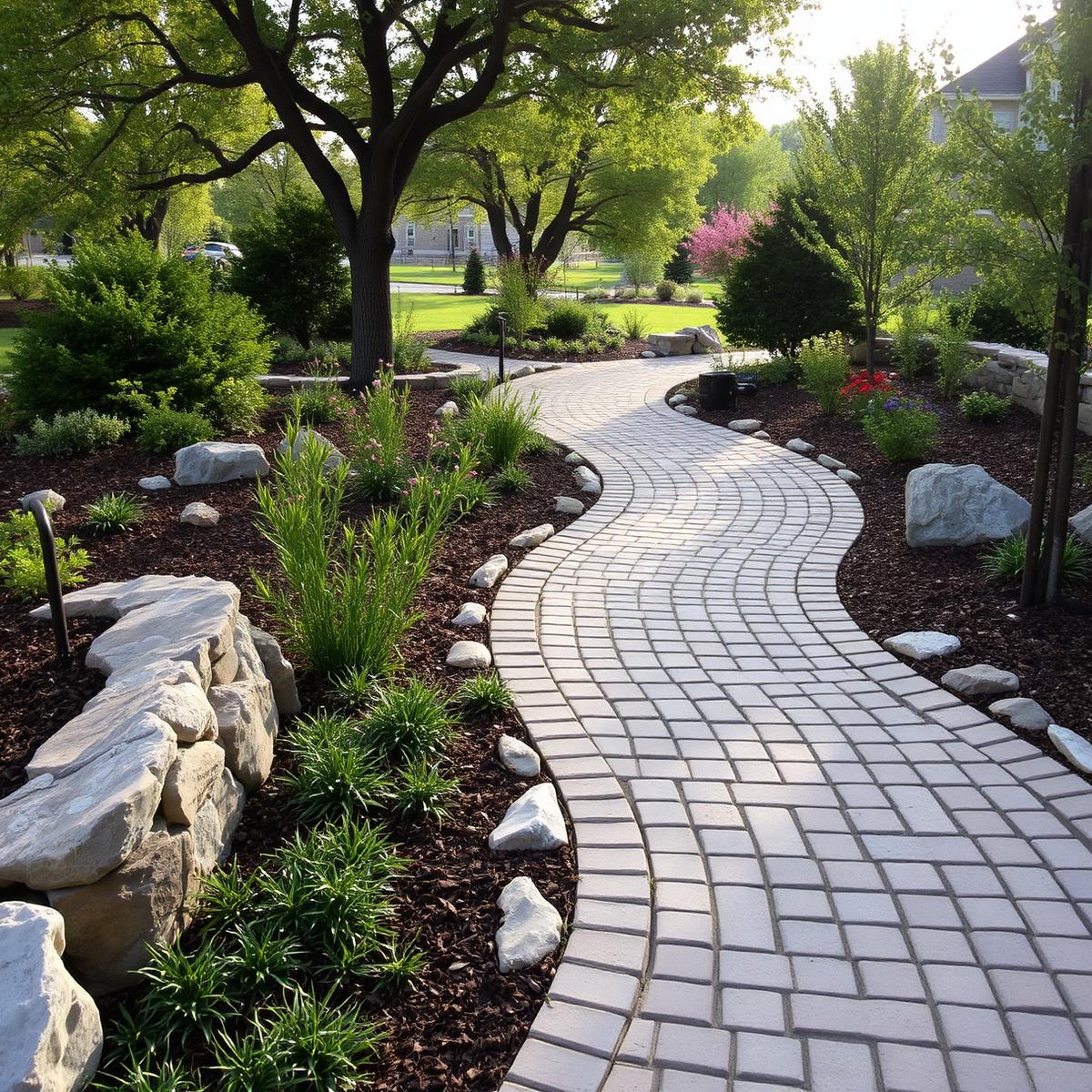
When rebuilding or upgrading a walkway in McKinney, selecting the right material depends on whether you perform a total tear-out or a qualified overlay.
- Interlocking Concrete Pavers (Standard 2.375" depth): The top choice following full concrete demolition. Interlocking pavers articulate independently with soil expansion without cracking, offering a surface rated for heavy foot traffic and long-term durability.
- Thin Concrete Pavers (1.25" depth): Used primarily for overlays on perfectly sound, unshifted concrete slabs. They reduce weight and profile height, but should never be installed over major structural cracks.
- Natural Travertine or Porcelain Pavers: Excellent for high-end front entries and walkways. Travertine offers natural slip resistance and stays cool in summer heat. Porcelain provides a sleek, non-porous modern finish. Both perform best over a fully engineered gravel base rather than damaged concrete.
Base prep, drainage, and North Texas soil details
If you perform a complete demolition, the secret to a walkway that lasts 30+ years in McKinney lies under the surface. At Paverston, our standard base preparation process accounts for North Texas clay soil:
- Excavation: We remove the old concrete and excavate 7 to 9 inches into the native clay soil.
- Geotextile Fabric: We lay a heavy-duty woven geotextile fabric across the trench. This geotextile barrier prevents native clay from mixing into the clean stone base while letting water filter down.
- Crushed Limestone Flexbase: We install 4 to 6 inches of compacted flexible crushed stone (Flexbase) in layers, compacted to 98% density. This base flexes slightly with seasonal ground shifts without cracking.
- Bedding Sand: A smooth 1-inch layer of washed concrete sand provides the bedding layer for the pavers.
- Polymeric Sand & Edge Restraints: Heavy-duty concrete edge restraints are spiked into the base along the edges, and polymeric sand is swept into joints to lock pavers tightly while sealing out weeds and moisture.
If an overlay is approved on a stable slab, weeping holes must be drilled through the existing concrete at low points to allow trapped water to drain, and concrete borders must be mortared down along the outer perimeter to hold the field pavers in place.
Cost guidance in Dallas–Fort Worth
Walkway projects in Dallas–Fort Worth start at $20 per square foot for standard paver installation over a freshly prepared base. Demolition adds to the overall scope but saves you from premature failure.
| Project Option | Estimated Cost per Sq. Ft. | Ideal Conditions | McKinney Longevity |
| :--- | :--- |
|---|
| Paver Walkway (New Base) | $20 – $32 / sq ft | Total rebuild after full concrete removal | 25–30+ years |
| Concrete Demolition & Haul-Off | +$6 – $12 / sq ft | Removal of broken 3"–4" concrete slab | Standard scope requirement |
| Thin Paver Overlay (Existing Slab) | $20 – $28 / sq ft | Sound concrete, no movement, hairline cracks only | 3–7 years (high risk on clay) |
| Travertine / Porcelain Upgrade | +25% to 40% over base | Premium entries, pool walks, high curb appeal | 25+ years on proper aggregate base |
Note: Complex border patterns or custom soldier courses add 15% to 25% to paver labor installation costs.
What to look for in photos or during a site visit
During an initial site evaluation or when reviewing photos of your cracked walkway, our estimators evaluate four main structural indicators:
- Differential Settlement: If one side of a crack is higher than the other (even by 1/4 inch), the slab has lost subgrade support. An overlay will fail here.
- Door Threshold Clearances: We check the space between the existing concrete and the bottom of your front door threshold or porch step. If there isn't at least 2.5 to 3 inches of clearance, an overlay will block your door or create a dangerous step drop.
- Existing Drainage Patterns: Photos showing standing water or dark algae staining on old concrete signal poor slope. Full tear-out allows us to re-grade the walkway slope away from your foundation.
- Tree Root Intrusion: Nearby mature oaks or crape myrtles often lift concrete walkways. Roots must be managed beneath the subgrade before installing new pavers.
Paverston recommendation
If your McKinney walkway has visible offset cracks, sunken sections, or holding water, skip the overlay. Demolishing the failing concrete and installing a full-depth interlocking paver system with a compacted flexible aggregate base is the only way to guarantee a smooth, safe walkway that withstands Collin County clay soil.
Ready to upgrade your home's curb appeal with a durable, professionally built paver walkway? Contact Paverston today at 214-228-1011 or visit our Contact Page to schedule a free on-site evaluation and quote.
Related questions
Can you put sand directly over concrete before laying pavers?
No, you should never put loose bedding sand directly over concrete without proper drainage planning. Rainwater filters through the paver joints, hits the solid concrete below, and washes the sand away or turns it into mud, causing the pavers to settle unevenly and shift out of place.
How thick should pavers be for a walkway overlay?
If an overlay is appropriate on a structurally sound, uncracked concrete pad, thin pavers measuring 1.25 inches (30mm) thick are typically used. For full installations over a crushed stone aggregate base, standard 2.375-inch (60mm) pavers are required for maximum stability.
Will tree roots cause a paver overlay to fail in McKinney?
Yes. Tree roots growing under a rigid concrete slab push the concrete upward, causing large structural cracks. If you lay pavers over that concrete without removing the roots underneath, the roots will continue growing and push up the pavers within 1 to 2 seasons.
How long does it take to demolish an old concrete walkway and install pavers?
Most residential walkway demolition and paver installation projects in McKinney take 2 to 3 days to complete. Demolition and base excavation occur on day one, base compaction and edging on day two, and paver laying, cutting, and polymeric sanding on day three.