Permeable pavers are engineered hardscape units featuring widened, aggregate-filled joints that allow rainwater to pass directly through the surface into an underground stone reservoir. In the Dallas–Fort Worth metroplex, where sudden torrential storms frequently overwhelm standard drain pipes and gutters, permeable hardscapes offer a high-performance solution that manages stormwater on-site while delivering a refined, high-end appearance.
At Paverston, we design and install permeable paver systems engineered specifically for North Texas ground conditions. Rather than allowing rainwater to pool against your home's foundation or wash out your landscaping, a properly built permeable paver system absorbs rainfall instantly, keeping driveways, patios, and walkways dry, safe, and structural.
What this means for a DFW homeowner
For homeowners across Dallas, Tarrant, Collin, and Denton counties, managing stormwater is a primary property challenge. North Texas is notorious for thick, expansive Blackland clay soil. Clay absorbs water very slowly, which means moderate to heavy rain quickly turns into surface runoff. When pouring standard non-porous concrete or traditional tight-joint pavers, heavy rain has nowhere to go except into your flower beds, across neighbor lot lines, or toward your home's slab.
Installing permeable pavers solves several localized challenges:
- Elimination of Surface Pooling: Raindrops sink immediately through open-graded joint aggregate, eliminating standing puddles on your driveway or patio.
- Reduced Pressure on Foundations: By controlling surface water flow and routing sub-surface moisture safely away through engineered stone reservoirs, you minimize soil heave around your home's foundation.
- Compliance with Municipal Lot Coverage: Cities like Dallas, Fort Worth, Plano, and Frisco enforce strict maximum impervious surface limits on residential lots. Because permeable pavers are classified as pervious hardscaping, they often allow you to build larger outdoor living spaces or driveways without violating city codes.
- Erosion Control: Eliminates topsoil washout along property margins and flower bed borders during sudden 2-inch torrential downpours.
Best surface or material options for this project
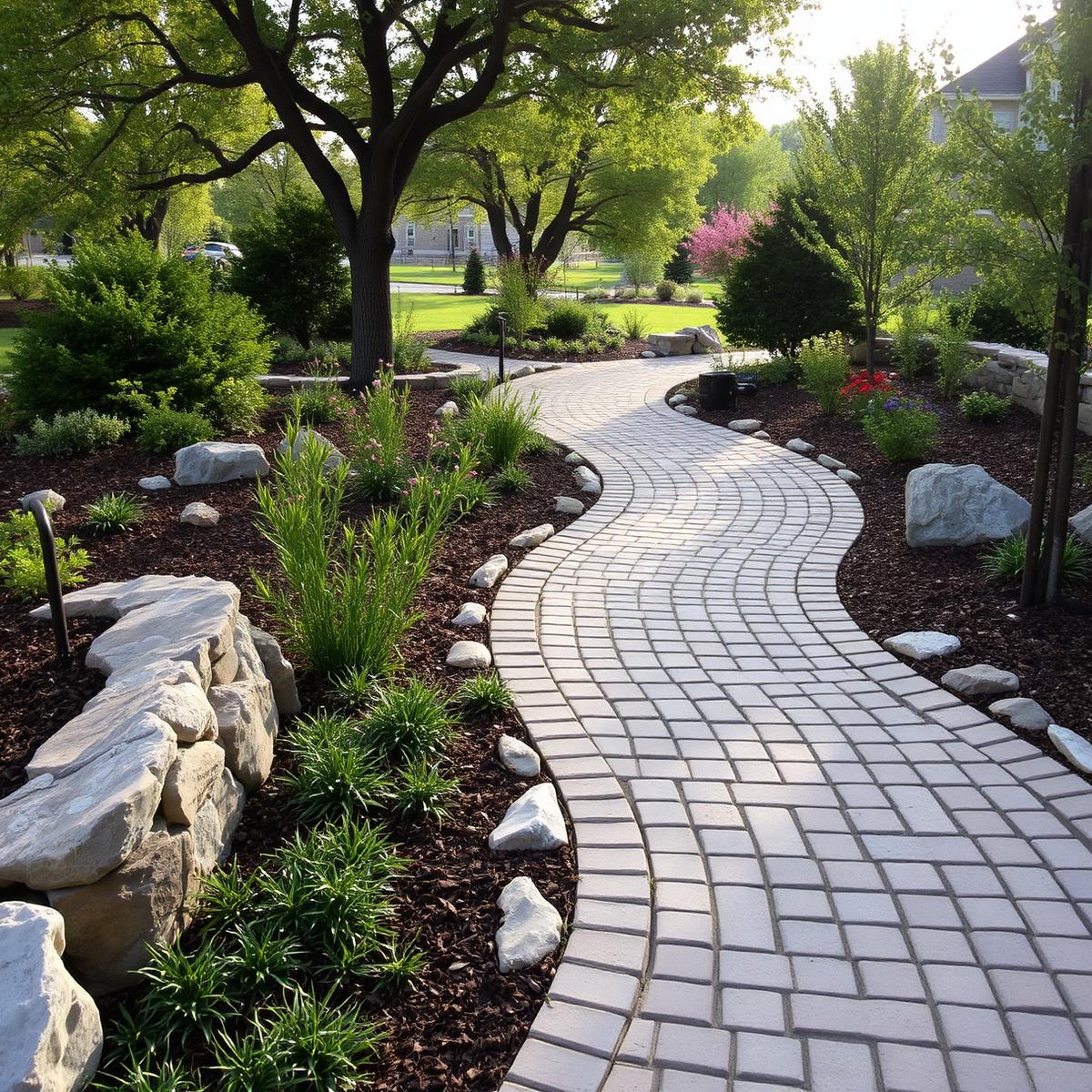
Not all pavers are permeable. Permeable Interlocking Concrete Pavers (PICP) are uniquely shaped with built-in spacer lugs that maintain uniform joint gaps ranging from 3/16 inch to 1/2 inch wide.
Here are the primary material options suitable for North Texas applications:
- Standard Permeable Concrete Pavers: Brands like Belgard (Aqua Line series) and Pavestone produce high-density concrete units designed specifically for driveway and patio vehicular and pedestrian loads. They offer sleek modern rectangular shapes or textured cobblestone profiles.
- Open-Graded Joint Aggregate: Unlike standard pavers that use polymeric sand, permeable systems require clean, washed crushed stone (typically #8 or #89 granite or basalt chips) in the joints. Sand cannot be used because it washes out or seals off water infiltration.
- Turf or Grass Pavers: Rigid concrete or recycled plastic grid pavers designed with open cells that allow grass or small gravel to grow inside. These work exceptionally well for overflow driveway parking, boat pads, or secondary access paths.
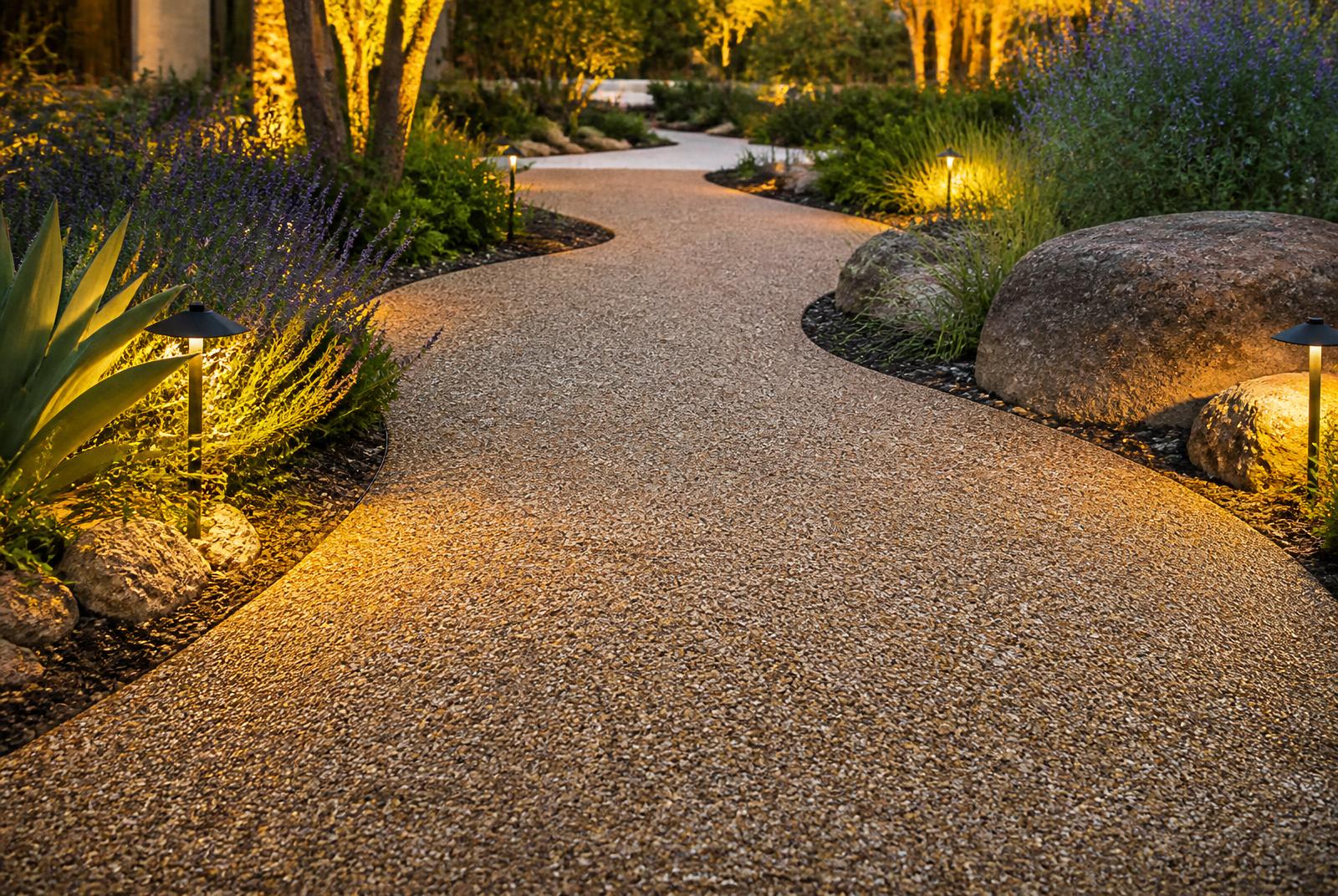
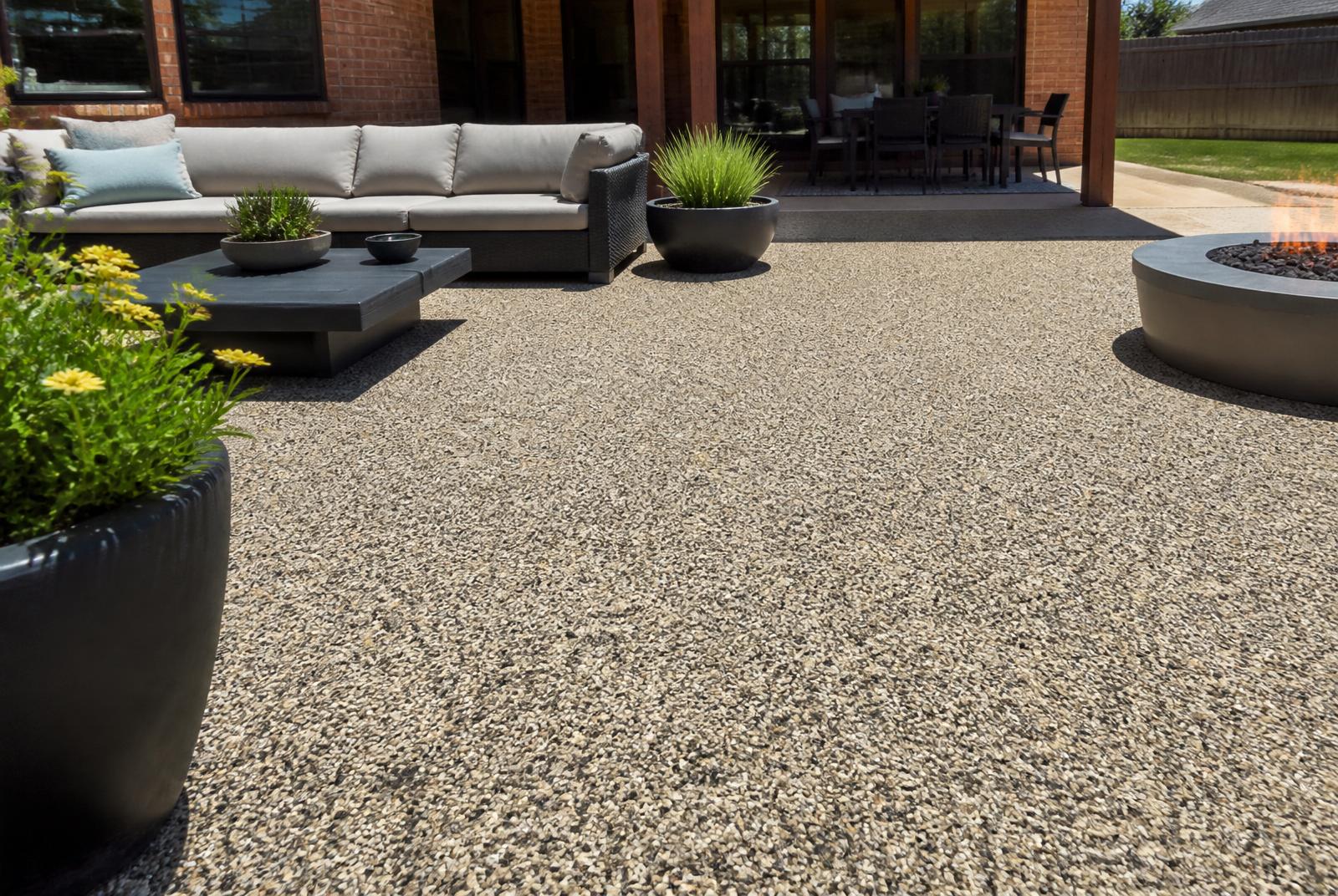
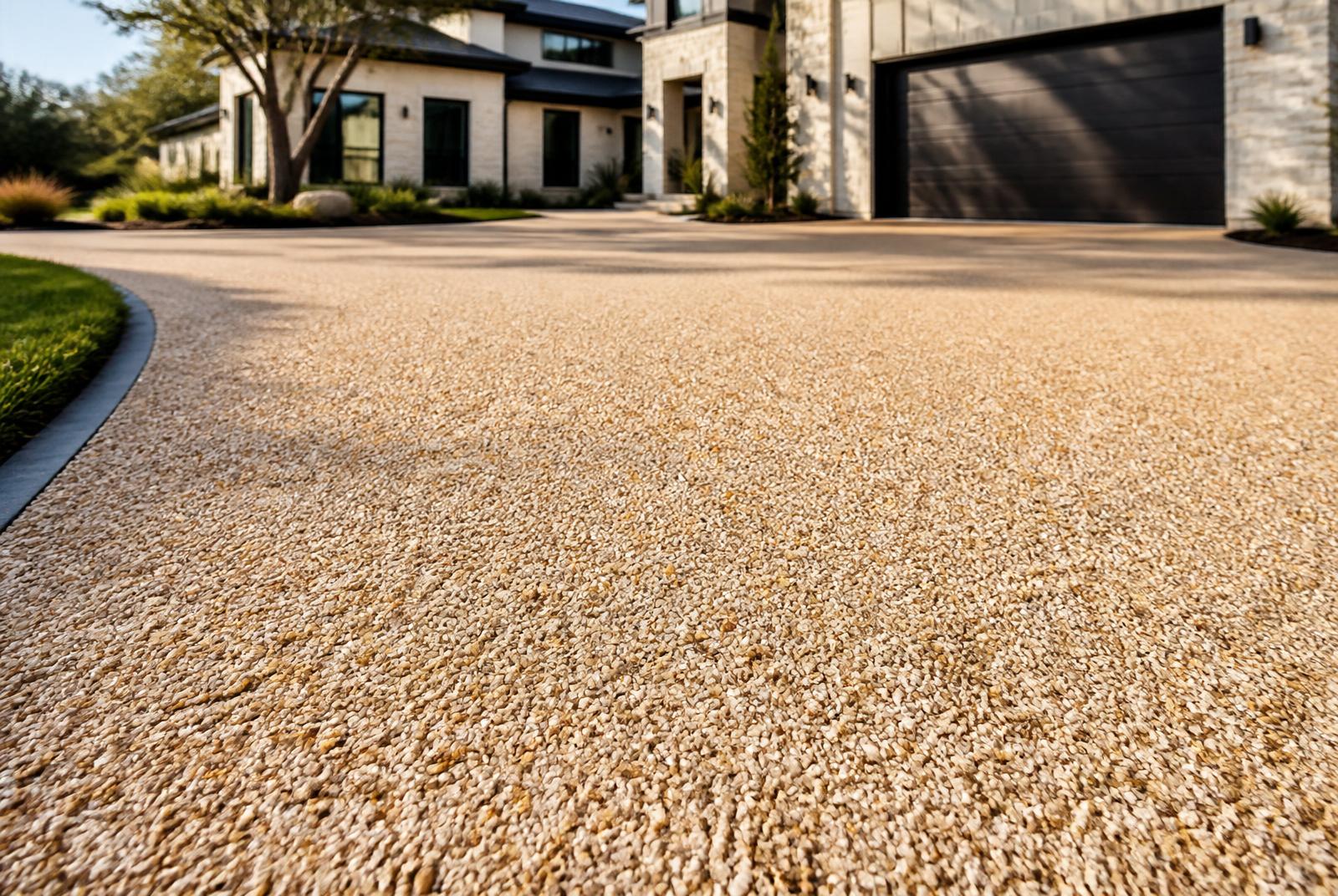
- Resin Bound Stone: A smooth, continuous porous surface made by binding natural aggregates with clear UV-stable resin, perfect for tree surrounds, garden walkways, or pedestrian patio borders.
Base prep, drainage, and North Texas soil details
Installing permeable pavers on DFW clay soil requires a completely different base design than traditional paver installation. Standard paver bases rely on compacted crushed limestone fines (Flex Base), which pack tightly and block water flow. Permeable installations require an open-graded aggregate reservoir that stores water beneath the surface while it slowly percolates into the native clay subgrade.
Our base preparation protocol includes:
- Deep Excavation: We excavate 10 to 16 inches deep into the soil depending on whether the project is a pedestrian walkway or a heavy-duty vehicular driveway.
- Heavy-Duty Non-Woven Geotextile Fabric: We line the entire excavated subgrade with a high-flow geotextile fabric. This prevents soft North Texas clay from pumping upward into the clean base stone while allowing water to pass through.
- Sub-Base Storage Reservoir (#2 Stone): A 6-to-8-inch layer of clean, 1.5-to-2.5-inch crushed aggregate without rock dust or fines. This layer provides massive void space to hold temporary stormwater accumulation.
- Base Reservoir (#57 Stone): A 4-inch layer of clean 3/4-inch crushed stone compacted with heavy equipment to lock the stones together through mechanical interlock.
- Bedding Layer (#8 Stone): A 1.5-to-2-inch leveling layer of clean 3/8-inch crushed stone chip that provides a smooth setting bed for the pavers.
- Perforated Underdrain Installation (When Required): In severe clay conditions with minimal natural percolation, we install perforated PVC pipe inside the stone reservoir tied directly to a discharge point or pop-up emitter at the curb.
Cost guidance in Dallas–Fort Worth
Permeable paver systems require deeper excavation and higher volumes of specialized washed crushed aggregate compared to traditional pavers. In the DFW market, all professional paver installation work starts at $20 per square foot installed. Below is a realistic pricing guide for installed permeable paver projects in North Texas.
| Project Type | Average Cost per Sq. Ft. (Installed) | Key System Features |
| :--- | :--- | :--- |
| Permeable Walkways & Sidewalks | $20 – $32 / sq ft | 8"-10" open-graded base, #8 joint chip stone, geotextile liner |
| Permeable Patio Spaces | $20 – $32 / sq ft | 10"-12" open-graded base, multi-piece pattern units, border course |
| Permeable Driveways | $22 – $38 / sq ft | 12"-16" heavy-duty reservoir base, vehicle-rated 80mm pavers |
| Permeable Pool Decks | $26 – $44 / sq ft | Cool-surface units, open-graded drainage layers, high slip resistance |
Note on Demolition & Site Work: Demolition of existing concrete slabs adds $6 to $12 per sq. ft. to overall project costs. Removal of old existing pavers or flagstone adds $4 to $8 per sq. ft. Complex multi-piece laying patterns add 15% to 25% in labor costs.
What to look for in photos or during a site visit
When evaluating permeable paver installations in project galleries or reviewing active job sites in DFW, pay attention to these subtle quality markers:
- Consistent Joint Gaps: Look closely at driveway and patio photos to ensure joint lines are uniformly straight and joint aggregate chips fill the space completely to within 1/8 inch of the paver chamfer.
- No Fines or Dirt Contamination: In jobsite construction photos, the aggregate stone layers should look completely clean and dust-free. Dust or soil mixed into base stone will ruin permeability.
- Edge Restraints: Check that heavy-duty concrete edge restraints or reinforced concrete curbs are installed along outer perimeters, especially on driveways, to prevent lateral paver spreading.
- Zero Water Pooling After Heavy Rain: Look at post-storm photos; a correctly installed permeable system shows zero water standing in joints or on surfaces immediately following a rainstorm.
Paverston recommendation
Permeable pavers are one of the smartest investments a DFW homeowner can make if their property struggles with standing water, muddy lawns, or strict municipal lot coverage limits. While the initial investment is higher due to deeper sub-base excavation and specialized washed aggregates, the long-term benefit of managing stormwater natively without unsightly surface French drains makes permeable paving well worth the cost.
If you are planning a patio, driveway, or walkway update in Dallas, Fort Worth, Southlake, Frisco, or surrounding areas, let our engineering-minded team evaluate your soil elevation and drainage needs.
Contact Paverston today at 214-228-1011 or visit our website at /contact to schedule an on-site consultation and estimate.
Related questions
Do permeable pavers work in North Texas clay soil?
Yes, permeable pavers work effectively in DFW clay soils when built with a deep open-graded aggregate reservoir underneath. The deep crushed stone base holds stormwater temporarily during peak rains, releasing it slowly into the subgrade or routing excess water out through a perforated underdrain pipe before it can saturate native topsoil.
How do you keep permeable paver joints from clogging?
Permeable paver joints are kept clear by occasionally sweeping away organic debris, leaves, and lawn clippings before they break down into dirt. Every 2 to 3 years, high-traffic driveways or patios can be refreshed by vacuum-sweeping or power-washing the joint chips and topping off the joints with fresh #8 crushed granite chip aggregate.
Can you drive heavy trucks on a permeable paver driveway?
Yes. Permeable interlocking concrete pavers designed for vehicular use are typically 80mm (3.15 inches) thick and installed over a 12-to-16-inch open-graded stone base. When properly compacted with aggregate interlock, permeable driveways can support delivery trucks, large SUVs, and everyday residential vehicular traffic without rutting.
Can I use polymeric sand in permeable paver joints?
No. Polymeric sand should never be used in permeable paver systems because it hardens into a solid water-resistant barrier when activated. Permeable paver joints must always be filled with clean, washed crushed aggregate chips (#8 or #89 stone) so rainwater can instantly flow down into the base.