In the Dallas–Fort Worth metropolitan area, a professionally installed paver walkway costs between $20 and $32 per square foot for standard concrete pavers. For a typical residential walkway measuring 150 to 300 square feet, overall project costs generally range from $3,000 to $8,000, depending on access, site preparation, edge restraint details, and material choices.
Selecting premium materials such as travertine or outdoor porcelain adds 25% to 40% to the base installation cost, while custom, high-detail laying patterns or serpentine curves add 15% to 25% due to extensive diamond-blade cutting and hand-fitting. If your project requires clearing away old structures, demolition adds between $6 and $12 per square foot for existing concrete removal, or $4 to $8 per square foot to remove old, sunken pavers.
What this means for a DFW homeowner
A front walkway or garden path is more than just a surface to walk on; it is the visual bridge between your driveway, entry porch, and outdoor living areas. In North Texas, walkways take a heavy beating from intense heat, flash downpours, and severe winter freeze-thaw snaps.
When evaluating quotes, it is crucial to look past the surface price tag. A budget contractor charging below $20 per square foot is almost certainly cutting corners where you cannot see: under the ground. In DFW, skimping on excavation depth or crushed stone base prep leads to sloping, gaping joints, and tripping hazards within just one or two rainy seasons. Investing in a properly engineered walkway ensures your front entry or side path stays level, safe, and visually striking for decades.
Best surface or material options for this project
Choosing the right material for your walkway depends on your home’s architecture, intended foot traffic, and budget goals:
- Interlocking Concrete Pavers ($20–$32/sq ft installed): The standard choice for North Texas homes. Available in three-piece modular sets, classic cobble textures, and sleek modern slate finishes. They offer exceptional compressive strength and flexibility over expansive soils.
- Travertine & Natural Stone Pavers (+25% to +40% over base): Travertine provides an elegant, upscale look with natural color variation. It stays remarkably cool under bare feet during 100-degree DFW summers, making it ideal for walkways connecting to pool decks or patios.
- Architectural Porcelain Pavers (+25% to +40% over base): Extremely durable, non-porous, and resistant to stains, moss, and chemical deicers. Porcelain delivers a contemporary, clean aesthetic that never fades under severe Texas UV exposure.
- Intricate Patterns & Custom Curves (+15% to +25% labor premium): Highly curved pathways, intricate herringbone borders, or custom soldier courses require precise cutting and additional labor time, which increases material waste and installer hours.
Base prep, drainage, and North Texas soil details
The secret to an enduring walkway in Dallas–Fort Worth lies beneath the pavers. DFW is notorious for its dense, expansive black clay soil, which swells dramatically when wet and shrinks when dry. Without proper engineering, this ground movement causes unreinforced surfaces to shift, crack, and dip.
At Paverston, our walkway installation process accounts for these local conditions:
- Deep Excavation: We excavate 6 to 8 inches into the native soil to clear root systems and soft topsoil.
- Geotextile Stabilization: We lay a heavy-duty woven geotextile fabric layer between the native clay and the sub-base to prevent stone base contamination and prevent sinkage.
- Compacted Flex Base: We install 4 to 6 inches of crushed limestone aggregate (Flex Base), compacted in 2-inch lifts using heavy plate compactors to achieve maximum density.
- Bedding Sand: A precise 1-inch layer of coarse concrete sand is screeded across the base to seat the pavers evenly.
- Integrated Drainage: We grade every walkway with a minimum 1% to 2% slope away from your home's foundation to prevent water ponding along flower beds or garage footings.
- Concrete Edge Restraints: Heavy-duty spiked plastic or reinforced concrete edge restraints are set along the entire perimeter to prevent lateral shifting over time.
Cost guidance in Dallas–Fort Worth
To help you budget accurately, the table below breaks down installed pricing across typical walkway material types, site preparation scenarios, and standard project sizes in the DFW metroplex.
| Project Type / Material | Installed Cost per Sq Ft | Typical Project Size | Total Estimated Cost Range |
| :--- | :--- |
|---|
| Standard Concrete Paver Walkway | $20 – $32 | 150 – 250 sq ft | $3,000 – $8,000 |
| Premium Travertine Walkway | $26 – $44 | 150 – 250 sq ft | $3,900 – $11,000 |
| Architectural Porcelain Walkway | $26 – $44 | 150 – 250 sq ft | $3,900 – $11,000 |
| Complex Patterns / High Curve Labor | +15% to +25% on labor | Varies | Adds $300 – $1,200 to total |
| Existing Concrete Demolition | +$6 – $12 / sq ft | 150 – 250 sq ft | Adds $900 – $3,000 to total |
| Existing Paver Demolition | +$4 – $8 / sq ft | 150 – 250 sq ft | Adds $600 – $2,000 to total |
Note: All Paverston installations begin at a baseline of $20/sq ft. Final project quotes depend on equipment access, slope correction, and site layout requirements.
What to look for in photos or during a site visit
When browsing walkway project galleries or inspecting a contractor’s completed work in your neighborhood, pay close attention to these structural and aesthetic details:
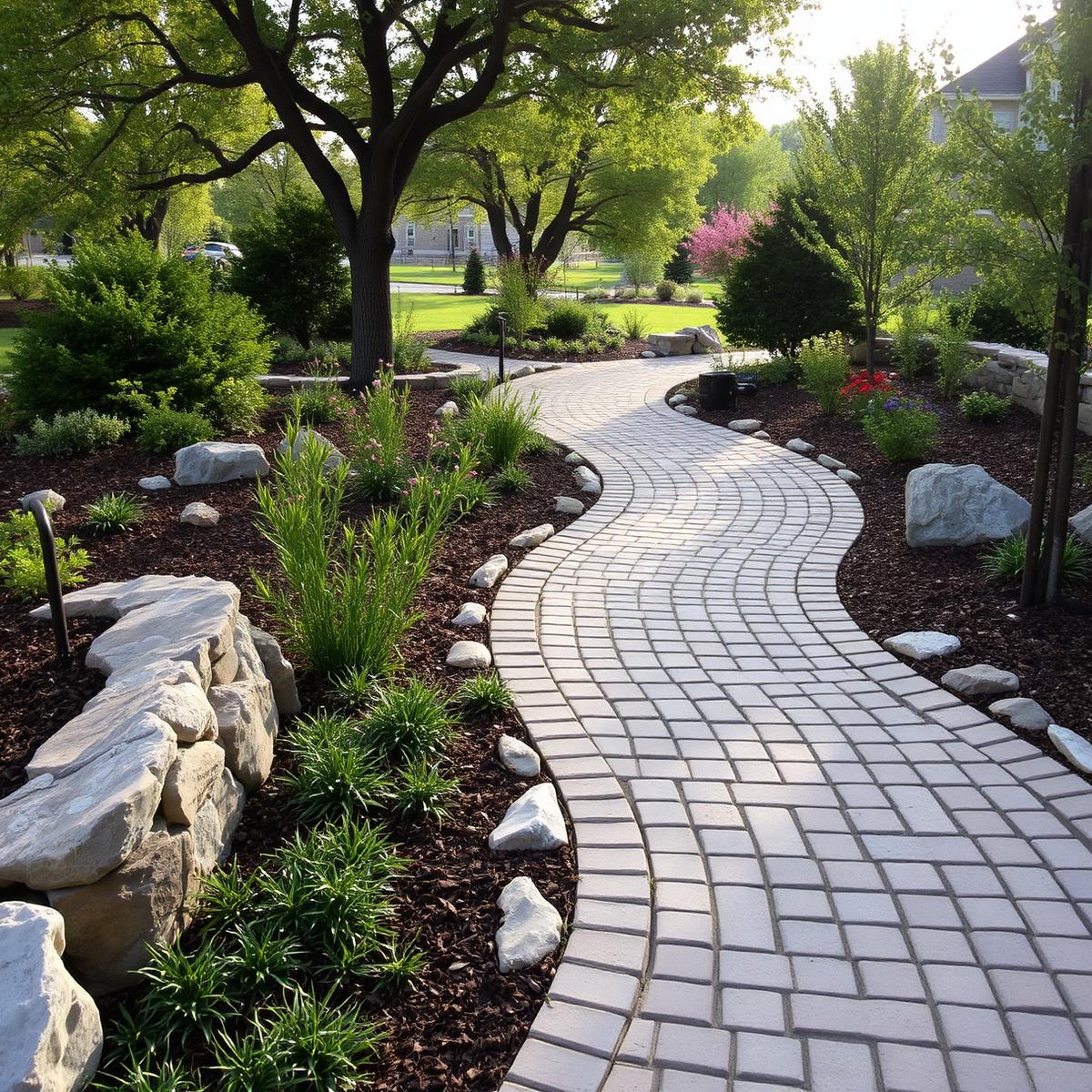
- Crisp, Uniform Borders: Look for a clean soldier course or sailor course framing the pathway. Border cuts should fit tightly against perimeter edges without broad gaps filled with excess joint sand.
- Smooth Flowing Curves: Curving walkways should show smooth, continuous radiuses without jagged angles or uneven gap spacing along the outer edge.
- Flush Transitions: The walkway should meet driveways, porches, and lawn lines seamlessly, eliminating trip hazards at step-downs or entry thresholds.
- Polymeric Sand Quality: Check that the joint sand is fully consolidated and firm, sweeping clean without washing out onto adjacent turf or plant beds.
Paverston recommendation
If you are planning a front entry upgrade or garden walkway in Dallas, Fort Worth, Plano, Frisco, or Southlake, start with a solid foundation. While off-the-shelf stepping stones or cheap concrete slabbing may seem economical initially, they frequently shift and hold standing water after DFW spring storms.
Paverston builds every walkway to withstand severe Texas soil movement. We handle every step—from initial design and utility location to excavation, base compaction, custom cutting, and clean-up. Contact our team today at 214-228-1011 or visit our /contact page to schedule a free, on-site consultation and get an exact, itemized estimate for your home.
Related questions
How long does a paver walkway installation take?
Most residential paver walkways in DFW (150 to 300 sq ft) take 2 to 3 working days from excavation to final joint sanding, assuming normal weather and site accessibility.
Can pavers be installed directly over existing concrete walkways?
Overlaying is possible if the underlying concrete is structurally sound, crack-free, and has proper drainage slope. However, if the existing concrete is crumbling or shifting due to clay expansion, full removal (+$6–$12/sq ft) is recommended.
How do I prevent weeds from growing in my paver walkway joints?
Weeds do not grow from beneath pavers if a proper aggregate base and geotextile fabric are installed. They sprout from windblown dirt settling in the top joints. We use high-performance polymeric sand that hardens like mortar to block weed growth and prevent insect burrowing.
Why are paver walkways more expensive than poured concrete?
Paver walkways require significantly more manual labor, including deep excavation, multi-layer stone base compaction, hand-setting individual stones, edge pinning, and diamond-saw cutting. However, pavers offer higher durability and will not develop large structural cracks when North Texas soils shift.