Preventing paver patio sinking and shifting in Fort Worth requires engineered sub-base prep specifically designed to counteract North Texas expansive clay soil. Fort Worth sits on Blackland Prairie and Eagle Ford shale clay formations that swell significantly when saturated by heavy rain and shrink dramatically during long, dry summers. Without a subterranean soil barrier and a thick compacted aggregate base, these moisture shifts force pavers to dip, heave, and separate within just a few seasons.
At Paverston, we prevent patio failure by excavating deep enough to eliminate uncompacted topsoil, installing heavy-duty geotextile fabric to keep clay from migrating upward into the base, building a dense aggregate foundation, and ensuring positive slope drainage away from your home. When engineered for local soil dynamics, an interlocking paver patio flexes subtly with ground movement while keeping a perfectly level walking surface for decades.
What this means for a DFW homeowner
If you live in Fort Worth, your outdoor living space sits on some of the most challenging soil in the United States. Highly expansive clay acts like a sponge. During wet North Texas springs, clay absorbs water and expands upward and outward with tremendous pressure. During July and August heatwaves, the soil loses moisture, shrinks, and forms deep cracks beneath your yard.
Standard poured concrete slabs often crack, tilt, or snap under these forces because rigid concrete cannot tolerate ground movement. Interlocking pavers, by contrast, are dynamic systems—they move independently along sand-filled joints. However, if the sub-base beneath those pavers is under-built or directly exposed to shifting clay, the individual stones will sink into soft spots or push upward along weak seams.
For a Fort Worth homeowner, preventing patio sinking is not about the surface stone you choose—it is about the engineering hidden beneath it. Investing in proper sub-surface preparation prevents unsightly tripping hazards, eliminates standing puddles, and protects your home's foundation from trapped water.
Best surface or material options for this project
While foundation prep is the key to stability, your choice of paving material affects how weight is distributed across the flexible base. Here are the top surface materials suited for Fort Worth clay conditions:
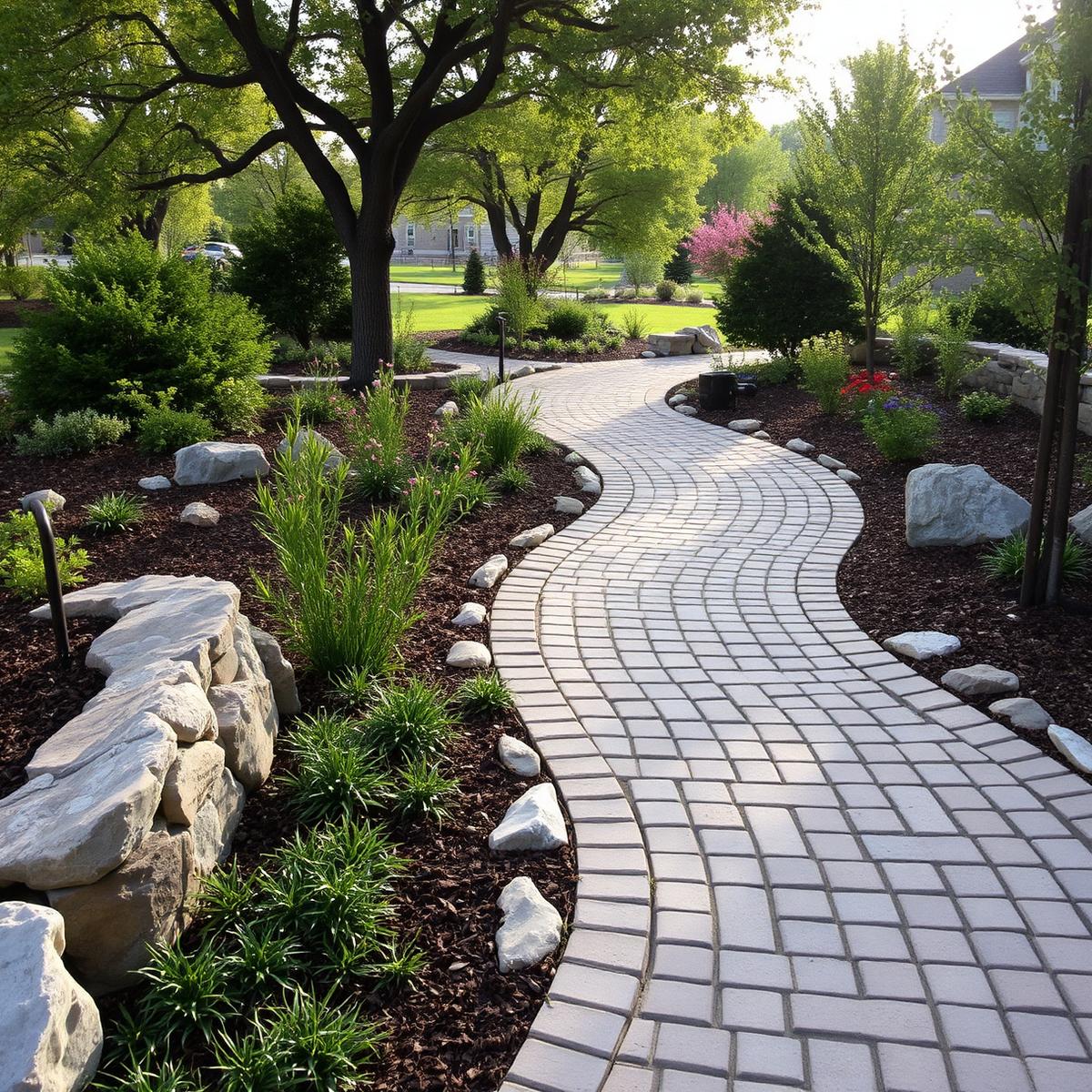
- Interlocking Concrete Pavers: These are the gold standard for expansive clay. Made from high-density concrete with joint-locking chamfers, they spread structural loads evenly across the base. If localized ground settlement ever occurs, individual concrete pavers can be lifted, re-leveled, and re-set without leaving ugly patches or scars.
- Travertine & Natural Stone Pavers: Natural travertine and limestone offer high heat resistance for hot Fort Worth summers. When installed on an open-graded or dense aggregate base with polymeric joint sand, travertine provides an elegant finish that tolerates natural ground expansion without cracking.
- Porcelain Pavers: Outdoor porcelain slabs are non-porous and highly resistant to stain and moisture absorption. Because they are thinner than traditional pavers, they require a ultra-smooth, perfectly compacted crushed aggregate base to prevent edge chipping during minor ground shifts.
- Commercial-Grade Concrete Edge Restraints: A patio is only as stable as its edges. Solid concrete bond beams or heavy-duty spiked polymer edge restraints hold the outer pavers firmly in place, preventing outward spreading and lateral shifting.
Base prep, drainage, and North Texas soil details
Building a patio that defies Fort Worth clay requires strict adherence to subterranean construction standards. Skipping any of these four steps will lead to sinking within 12 to 24 months:
- Deep Soil Excavation: In Fort Worth, excavating 4 inches is never enough. For standard residential patios, we excavate 8 to 10 inches below final grade to remove organic topsoil and expose dense native clay sub-grade.
- Geotextile Fabric Separation: Before adding rock, we line the excavated clay trench with a woven geotextile stabilization fabric. This heavy fabric acts as a permanent barrier. It allows groundwater to pass through while preventing sticky clay from mixing into your clean crushed stone base. Without fabric, wet clay will swallow crushed stone over time, causing the surface to sink.
- Compacted Crushed Limestone Base (FlexBase): We install 6 to 8 inches of TxDOT Grade 4 crushed limestone aggregate. This material contains a mix of crushed stone and fine rock dust that locks together tightly when wet and rolled. We compact the base in maximum 2-inch layers (lifts) using heavy vibratory plate compactors to reach 98% Standard Proctor Density.
- Bedding Sand & Positive Drainage: Over the compacted stone base, we screed exactly 1 inch of sharp, coarse concrete sand (ASTM C33 specification). Fine masonry sand or stone dust should never be used as a bedding layer because it washes away. Finally, we slope the base and finished patio at a minimum rate of 1/4 inch per foot away from all home foundations and structures to shed rainwater efficiently.
Cost guidance in Dallas–Fort Worth
Investing in proper site preparation and soil stabilization adds upfront value, protecting your project from costly repair cycles later. Below is realistic pricing for professionally engineered paver patio projects across the Fort Worth and DFW metroplex:
| Project Type / Material Scope | Average Installed Cost Range (per sq ft) | Key Cost Factors & Soil Considerations |
| :--- | :--- | :--- |
| Standard Concrete Paver Patio | $20 – $32 / sq ft | Includes deep excavation, geotextile fabric, 6" aggregate base, and polymeric sand. |
| Premium Travertine or Porcelain Patio | $25 – $45 / sq ft | Includes premium stone (+25% to +40% over concrete), specialized bedding base, and wet-cast prep. |
| Complex Pattern / Multi-Level Design | +15% to 25% base increase | Requires additional border cutting, stepped excavation, and custom retaining edge prep. |
| Existing Concrete Demolition & Removal | +$6 – $12 / sq ft | Structural removal of existing slab, haul-away, and disposal fees prior to excavation. |
| Existing Paver Removal & Re-Base | +$4 – $8 / sq ft | Lifts existing failed pavers, excavates failed base, installs fabric, new base, and re-lays stone. |
Note: All Paverston installations strictly adhere to minimum project starting rates of $20 per square foot installed to ensure complete soil engineering standards are met.
What to look for in photos or during a site visit
When reviewing past work photos or walking a newly installed patio project, keep your eye out for structural clues that indicate quality soil engineering:
- Patio Photos: Look closely at the edges and border courses. A properly built patio will show straight, crisp lines along perimeter borders with no dipping pavers near grass lines. In photos taken after rainstorms, you should see uniform drying across the stone surface with zero standing water pockets or silt build-up along the edges.
- On-Site Construction Visits: If inspecting an active job site, check the excavation trench. You should clearly see a continuous sheet of dark geotextile fabric separating the underlying dark Fort Worth clay from the bright grey crushed aggregate base. Check that edge restraints are pinned tightly or cast in solid concrete along the entire perimeter.
Paverston recommendation
Do not let cheap quotes deceive you into skipping geotextile fabric or sub-base depth. In Fort Worth, shortcuts taken beneath the ground will manifest as sunken pavers, surface tripping hazards, and trapped water against your home foundation within two seasons.
At Paverston, we engineer every outdoor patio, driveway, and pool deck specifically for North Texas clay conditions. We back our earthwork with deep excavation, heavy-duty stabilization fabrics, high-density aggregate compaction, and precision drainage control.
Ready to build a permanent, beautiful outdoor living space that stays level year after year? Contact the local team at Paverston today. Visit our page at /contact or call us directly at 214-228-1011 to schedule your on-site consultation and estimate.
Related questions
Why is my paver patio sinking in one specific spot?
Localized sinking almost always points to a localized drainage or base failure. Common causes in Fort Worth include downspout water pooling directly near the edge, a leaking underground sprinkler line softening the clay sub-grade, or an un-compacted utility trench underneath the base.
Can you fix a sunken paver patio without replacing all the pavers?
Yes. One major advantage of interlocking pavers is repairability. We can pull up the sunken section of pavers, remove the old bedding sand, repair and re-compact the underlying aggregate base, install geotextile fabric if missing, and reset the original pavers to grade.
Is geotextile fabric really necessary under pavers in Fort Worth?
Yes, it is absolutely mandatory for long-term stability in Fort Worth. Expansive clay sub-grade easily mixes into crushed stone when saturated. Geotextile fabric acts as a permanent barrier that stops clay from migrating upward while allowing water to drain through, preserving the thickness of your stone foundation.
How deep should the base be for a paver patio in Fort Worth clay?
For a standard residential foot-traffic patio in Fort Worth, we recommend a total base excavation depth of 8 to 10 inches. This accommodates a woven geotextile fabric layer, 6 to 8 inches of compacted crushed aggregate (FlexBase), and 1 inch of concrete bedding sand beneath a standard 2.38-inch paver.