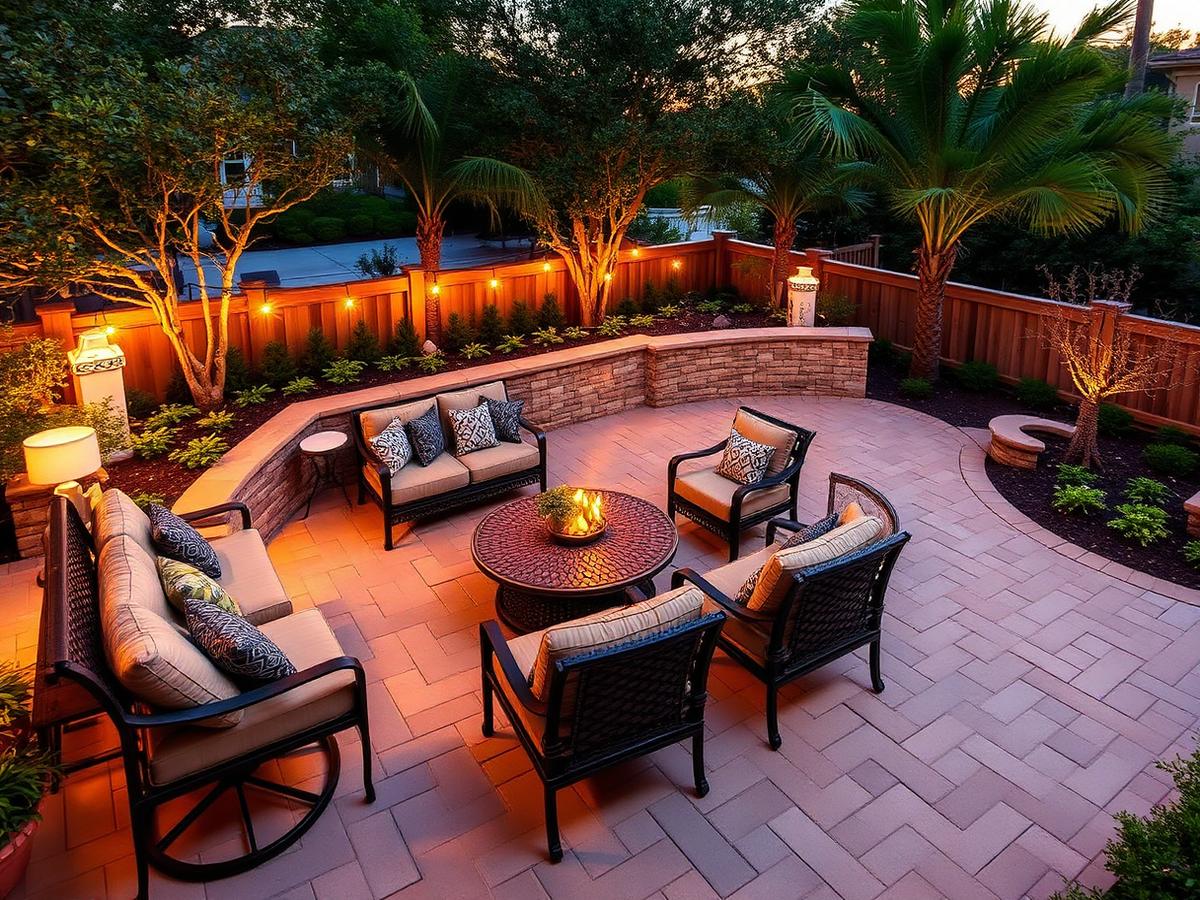
On average, installing a standard 300 to 600 square foot paver patio in the Dallas–Fort Worth area takes between 2 to 4 active construction days. A straightforward ground-level patio with clear backyard access and minimal grading can often be completed in as little as 2 to 3 days, while larger custom designs featuring seating walls, fire pits, or intricate borders typically require 4 to 7 days.
At Paverston, our installation timeline accounts for the entire professional process: site excavation, heavy base compaction, slope and drainage adjustment, screeding, unit placement, and polymeric sand setting. While the physical laying of individual pavers happens quickly, taking adequate time on ground preparation is essential so your outdoor living space copes with the severe soil movement common across North Texas.
What this means for a DFW homeowner
When planning an outdoor renovation, understanding the step-by-step daily timeline helps you manage expectations for noise, equipment access, and property usage. A typical 400-square-foot paver patio installation follows this operational schedule:
- Day 1: Demolition, Excavation & Haul-Off. The crew marks utilities, removes existing turf, dirt, or cracked concrete patios, and excavates 7 to 9 inches below the planned finished height.
- Day 2: Sub-Base Installation & Drainage Prep. Crushed limestone base material is brought in, spread in thin layers (lifts), and compacted with heavy plate compactors. Catch basins or French drain pipes are integrated if needed.
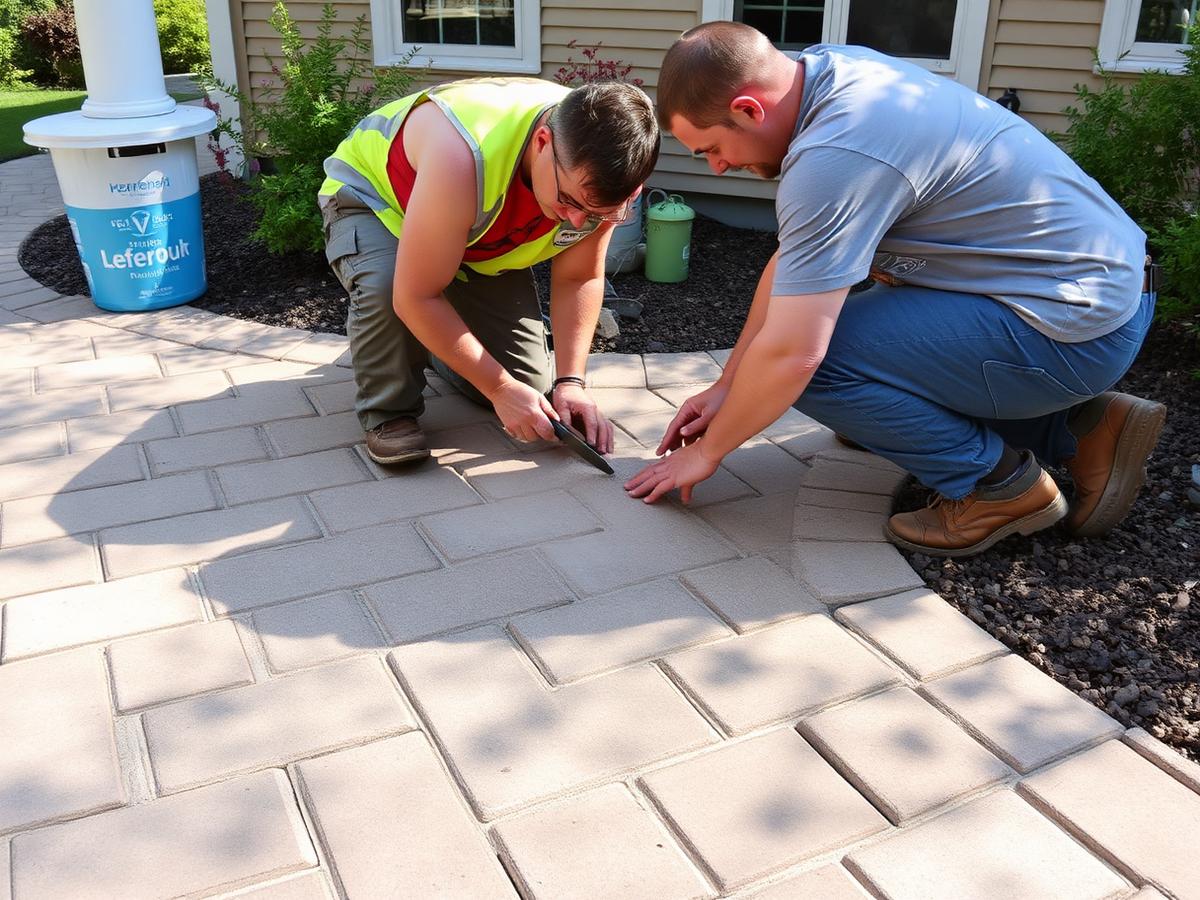
- Day 3: Bedding Sand & Main Paver Field. A uniform 1-inch layer of washed concrete sand is screeded flat. Installers lay the main body of pavers, ensuring tight joints and straight alignment.
- Day 4: Border Cutting, Edge Restraints & Polymeric Sand. Perimeter pavers are measured and wet-cut. Heavy-duty snap-edge restraints are spiked into the base. Polymeric sand is swept into joints and vibrated into place, followed by a misting water activation process.
Key variables that can extend this timeline include limited side-yard access (under 36 inches), which prevents small skid-steers from entering and requires manual wheelbarrow hauling, as well as extensive concrete demolition.
Best surface or material options for this project
The specific surface material you choose directly impacts installation speed and labor intensity:
- Standard Interlocking Concrete Pavers: These are the fastest to install. Manufactured with uniform dimensions and built-in spacer nubs, concrete pavers lock together consistently, allowing an experienced crew to lay up to 400–600 square feet per day once the base is ready.
- Travertine & Natural Stone Pavers: Natural stone requires additional sorting for thickness and tone variations. Installers spend extra time dry-fitting pieces, which adds roughly 1 additional day to the schedule. Natural stone costs approximately 25% to 40% more than standard concrete units.
- Porcelain Outdoor Pavers: Porcelain offers exceptional stain and freeze-thaw resistance, but installation requires specialized diamond blades for precise slow cuts and vacuum suction cups for handling. Installing porcelain pavers takes roughly 30% longer than concrete pavers.
- Complex Patterns & Inlays: Choosing intricate laying patterns (like a double-herringbone with double soldier-course borders) requires significantly more detail cuts around edges and radius curves, adding 1 to 2 extra days of labor.
Base prep, drainage, and North Texas soil details
The single biggest cause of patio failure in Dallas, Fort Worth, Frisco, and surrounding cities is rushing ground preparation. North Texas sits heavily on Blackland Prairie clay—an expansive soil type that expands rapidly when saturated during spring rainstorms and shrinks during blistering summer heat.
To build a paver patio that remains flat and structural over decades, short-cutting excavation to save a day of labor is never an option. Paverston enforces strict base standards across every project:
- Deep Excavation: We excavate 6 to 8 inches for the crushed stone base, plus the thickness of the bedding sand and paver itself.
- Geotextile Fabric: We install commercial woven geotextile fabric between the raw clay subgrade and the crushed stone. This prevents native clay from migrating upward into the aggregate base during wet cycles.
- Compacted FlexBase: We use dense-graded crushed limestone (FlexBase), compacting it in 2-inch to 3-inch lifts to achieve maximum structural density.
- Positive Pitch: The patio surface is engineered with a gentle slope (at least 1/4 inch of fall per linear foot) directing stormwater away from your home's foundation toward lawn discharge points or catch basins.
Cost guidance in Dallas–Fort Worth
Installation timelines and overall costs are directly tied to site preparation complexity, access, and material selection. In the DFW market, professional paver patio installation starts at $20 per square foot installed.
| Project Scope / Type | Sq Footage Range | Estimated On-Site Time | Typical Installed Cost Range |
| :--- | :--- |
|---|---|
| Standard Concrete Paver Patio | 200 – 400 sq ft |
Note: Complex patterns or inlaid borders add 15% to 25% to overall labor costs due to increased precision cutting time.
What to look for in photos or during a site visit
When reviewing past work photos or inspecting an active patio project in your neighborhood, look for these visual markers of quality installation:
- Crisp, Straight Sightlines: Look down joint lines or border courses. Lines should be straight and true without wavering or uneven gaps.
- Smooth Radius Cuts: Curves along garden beds or walkways should feature smooth, custom-cut border units rather than jagged, wide-gapped edges.
- Concealed Edge Restraints: Edge restraints should be installed below final grade, staked firmly into crushed stone base, and concealed by lawn sod or mulch.
- Clean Polymeric Sand Lines: Joints should be consistently filled to within 1/8 inch of the paver chamfer edge, without sand haze smeared across the face of pavers.
- Proper Slope Integration: Look closely at where the patio meets turf or existing structures. The patio should sit flush or slightly above lawn height to ensure proper water runoff without creating trip hazards.
Paverston recommendation
If you are planning an outdoor project for an upcoming event or season, build extra margin into your timeline. While the physical installation on site usually takes 3 to 5 business days, homeowners should allow 2 to 3 weeks prior to construction for HOA approvals, underground utility locates (811 line spots), and custom material deliveries.
Don't let a contractor shortcut base compaction or soil prep to promise a single-day installation—North Texas clay will inevitably shift un-compacted bases within two rainy seasons.
For an accurate, on-site assessment and timeline for your backyard, contact the team at Paverston. Call us today at 214-228-1011 or visit our /contact page to schedule your design estimate.
Related questions
How soon can you walk on or place furniture on a new paver patio?
You can walk on the pavers immediately after unit placement, but heavy outdoor furniture, grills, and dining sets should wait until the polymeric sand joint compound has fully cured. In clear, warm DFW weather, polymeric sand cures within 24 to 48 hours after moisture activation.
How does North Texas weather affect the installation schedule?
Heavy rain halts excavation and base compaction because saturated clay turns into sticky mud that cannot be properly compacted. Cold snaps below freezing or continuous heavy rain will temporarily pause polymeric sand installation, as joints must be completely dry before application.
Do I need a permit or HOA approval to install a paver patio in DFW?
Most DFW municipalities do not require a building permit for ground-level paver patios that do not alter roof structures or major drainage easements. However, nearly all suburban HOAs (such as those in Frisco, Southlake, or McKinney) require architectural review approval, which usually takes 1 to 3 weeks.
Can pavers be installed directly over existing concrete to save time?
In some cases, pavers or thin travertine pavers can be overlayed onto existing concrete slabs if the concrete is structurally sound, level, and crack-free. However, if the existing concrete is severely cracked, settled, or sloping toward the house, full demolition and replacement with a crushed stone base is required.