
Preventing a paver patio from shifting in Fort Worth requires engineered site preparation specifically designed for highly expansive North Texas clay soil. The secret is not the pavers themselves, but what goes underneath them: geotextile stabilization fabric, a deep, heavily compacted crushed limestone base, proper slope management, concrete edge restraints, and polymer-locked joints.
At Paverston, we install every paver system to withstand the dramatic swell-and-shrink cycles common across Tarrant County. By isolating the patio base from moving subgrade clay and directing rainwater away from the foundation, we ensure your outdoor living space stays level, smooth, and structural for decades.
What this means for a DFW homeowner
Fort Worth sits squarely on the Blackland Prairie and Eagle Ford geological formations, notorious for heavy, plastic clay soil. This subgrade soil acts like a sponge—it swells significantly when saturated during heavy spring storms and shrinks dramatically during scorching hot Texas summers.
If a patio is built directly over shallow soil or on an under-engineered gravel base, this soil movement pushes upward and pulls outward. On a rigid, poured-concrete slab, this movement manifests as wide structural cracks. On an improperly installed paver patio, it causes uneven tripping hazards, sunken areas, wide gaps, and spreading edges. Choosing an interlocking paver system is actually superior to poured concrete in North Texas because pavers flex with ground stress without cracking—provided the underlying aggregate base is built correctly.
Best surface or material options for this project
To withstand Fort Worth's harsh climate and shifting earth, select high-density materials installed over a flexible base system:
- Interlocking Concrete Pavers: The top choice for Fort Worth patios. Manufactured under extreme pressure, high-density concrete pavers resist freeze-thaw cracking and absorb minimal moisture. Interlocking joints distribute weight loads across the entire patio surface.
- Natural Travertine or Marble Pavers: Ideal for upscale patio designs or pool decks. Travertine stays cool under foot during 100°F DFW summers. When set over a properly graded aggregate base, travertine provides high durability with a luxurious natural stone finish.
- Porcelain Exterior Pavers: Extremely dense and non-porous. Porcelain resists staining and fading, making it perfect for outdoor kitchens and dining patios. Must be installed with specialized jointing materials over a rock-solid base.
Avoid thin flagstone set in mortar over sand or low-density concrete, as rigid mortar beds easily shear and break when Fort Worth clay soil shifts underneath.
Base prep, drainage, and North Texas soil details
Base prep and drainage dictate whether a Fort Worth paver patio lasts 30 years or fails in 3. Here is the exact installation protocol Paverston uses to defeat expansive clay:
- Deep Excavation: We excavate 8 to 10 inches below final grade for standard patio applications. Removing organic topsoil and exposing subgrade clay is non-negotiable.
- Geotextile Soil Stabilization Fabric: We lay heavy-duty woven geotextile fabric directly over the raw excavated clay foundation. This fabric is critical in Fort Worth: it prevents soft, saturated clay from pumping up into the clean crushed base rock during wet weather, while allowing water to pass through.
- Compacted Crushed Base (Flex Base): We backfill with 6 to 8 inches of crushed limestone (Type 2 road base) mixed with fines. We compact this in maximum 2-inch lifts using a heavy plate compactor, spraying moisture to achieve maximum density (98%+ Standard Proctor density).
- Bedding Sand: A 1-inch uniform layer of washed concrete sand (ASTM C33) is screeded over the compacted base. Pavers are set directly into this bed.
- Concrete Edge Restraints: Without tight perimeter containment, outer pavers spread sideways into flower beds or turf. We install heavy-duty reinforced concrete borders along every exposed edge.
- Polymeric Joint Sand & Drainage: Joint sand is vibrated into place and activated with water, binding the individual units together while remaining slightly flexible. The patio surface is pitched at a minimum 2% slope (1/4 inch per foot) away from home foundations. Catch basins or French drains are integrated whenever natural gravity flow is restricted.
Cost guidance in Dallas–Fort Worth
Paver patio installation in the Dallas–Fort Worth metroplex starts at $20 per square foot installed. Final pricing depends on material selection, structural excavation requirements, accessibility, site slope, and whether existing concrete or pavers must be demolished.
| Project Type / Scope | Average Cost per Sq. Ft. | Notes & Soil Considerations |
| :--- | :--- | :--- |
| Standard Interlocking Paver Patio | $20 – $32 / sq ft | Includes deep excavation, geotextile fabric, 6" flex base, setting sand, and edge restraints |
| Premium Travertine or Porcelain Patio | $25 – $44 / sq ft | Includes premium natural stone or porcelain (+25–40% material cost premium over standard pavers) |
| Complex Patterns & Curves | +15% – 25% Labor | Intricate borders, herringbone or multi-piece random patterns requiring extensive wet-saw cuts |
| Existing Concrete Demolition & Removal | +$6 – $12 / sq ft | Required when tearing out old cracked concrete slabs before rebuilding base layers |
| Existing Paver Demolition & Disposal | +$4 – $8 / sq ft | Removal of old, failed paver systems built without proper soil stabilization |
Note: Paverston maintains a strict minimum baseline of $20/sq ft installed to guarantee correct foundation depth, geotextile membrane placement, and high-density compaction in North Texas soils.
What to look for in photos or during a site visit
When evaluating paver patio installations in Fort Worth portfolio galleries or inspecting a job site, pay attention to structural detail:
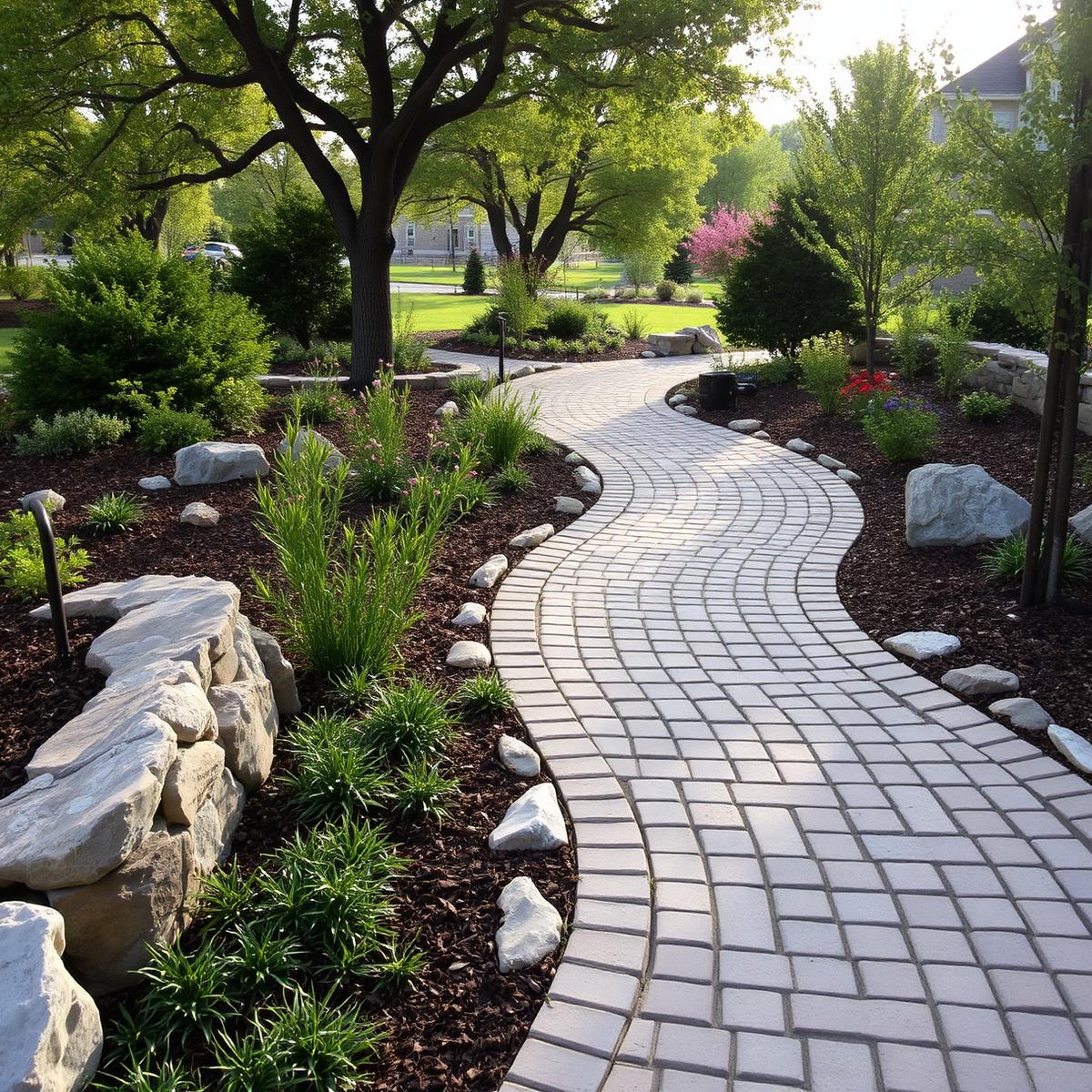
- Border Integrity: Look for straight, uniform soldier or sailor course borders abutting green lawn turf or landscape beds. If pavers meet soil without a defined restraint edge, the system will spread over time.
- Surface Levelness: Inspect photos taken at shallow angles across high-sunlight outdoor living areas. The surface should show flat, continuous planes without dipping or sunken pavers near downspouts.
- Joint Alignment: Look for tight, consistent joint lines throughout complex patterns like 3-piece modular or 45-degree herringbone layouts.
- Drainage Integration: Quality installations show subtle catch basin grates flush with the paver surface near house corners, retainage walls, or outdoor kitchen structures to safely manage roof runoff.
Paverston recommendation
Never shortcut base preparation in Fort Worth. A cheap quote that skips heavy geotextile fabric or provides only 2 to 3 inches of base gravel will inevitably fail after a single DFW weather cycle of heavy spring rain followed by mid-summer drought.
If you are planning a new outdoor space or need to replace a sunken, cracked concrete slab in Fort Worth, trust the engineered approach from Paverston. We build heavy-duty aggregate bases designed specifically to handle local ground movement.
Ready to build a patio that stays level for a lifetime? Contact Paverston today at 214-228-1011 or visit our Contact Page to schedule your on-site consultation and precise project estimate.
Related questions
Why is Fort Worth clay soil so aggressive on hardscape foundations?
Fort Worth clay soils contain high concentrations of montmorillonite and smectite minerals, which expand dramatically in volume when absorbing water and shrink significantly when drying out. This cyclic movement creates vertical pressure (up to several thousand pounds per square foot) that breaks rigid concrete slabs and twists poorly supported paver bases.
Is a flexible paver base better than pouring a concrete slab in DFW?
Yes. Interlocking paver systems on a crushed stone base accommodate subgrade expansion and seasonal soil swelling without cracking. Poured concrete slabs are rigid and brittle; when the underlying clay moves, concrete inevitably cracks along weakness lines, requiring costly full-slab replacements.
Do I need a French drain next to my new paver patio?
If your backyard has poor natural slope or collects water from house downspouts near the patio perimeter, installing a French drain or catch basin system is highly recommended. Excess water standing next to a patio saturates subgrade clay, causing localized swelling and base soft spots.
Can sunken or shifted paver patios in Fort Worth be repaired?
Yes. Unlike concrete, individual pavers can be lifted, cleaned, and reused. Paverston can excavate failed sections, correct subgrade drainage, install proper geotextile fabric, re-compact a deep aggregate base, reset the original pavers, and seal the joints with polymeric sand.