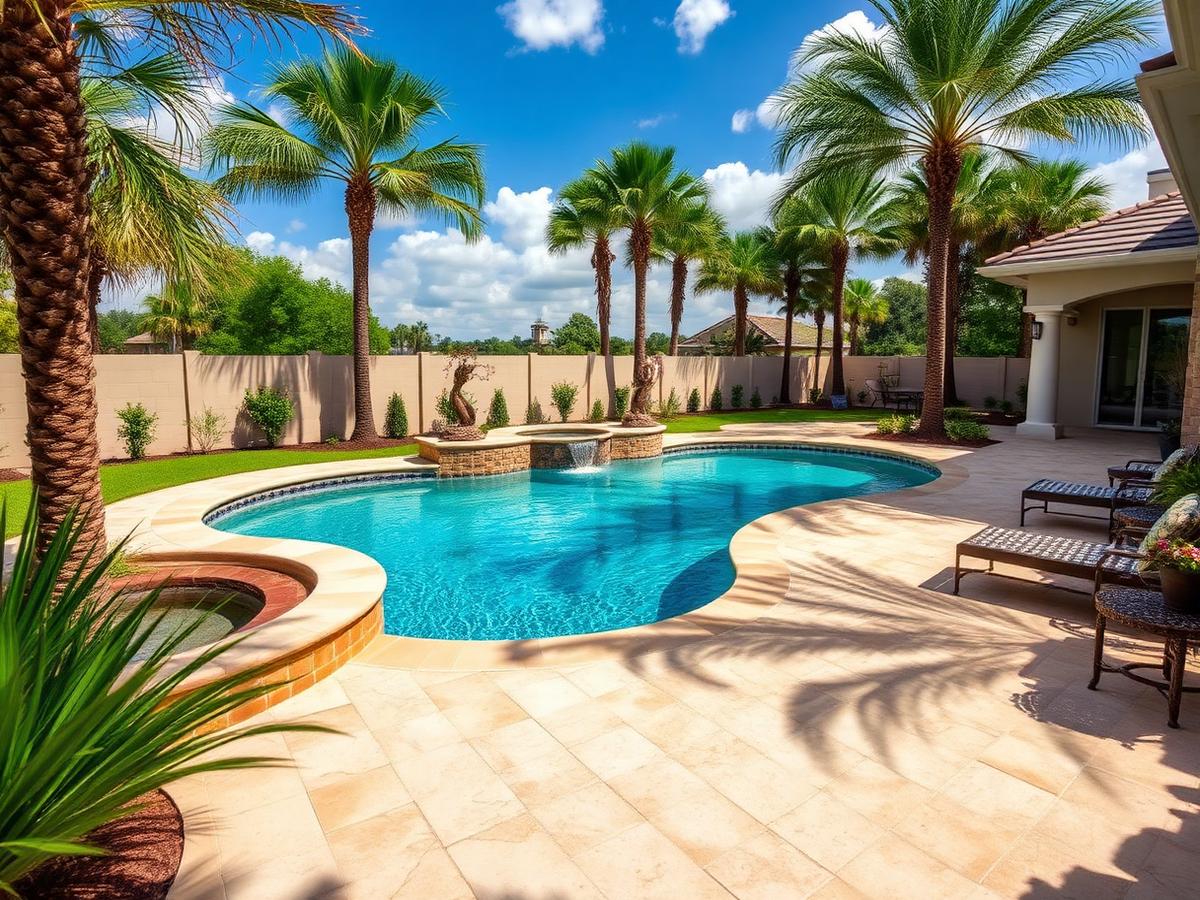
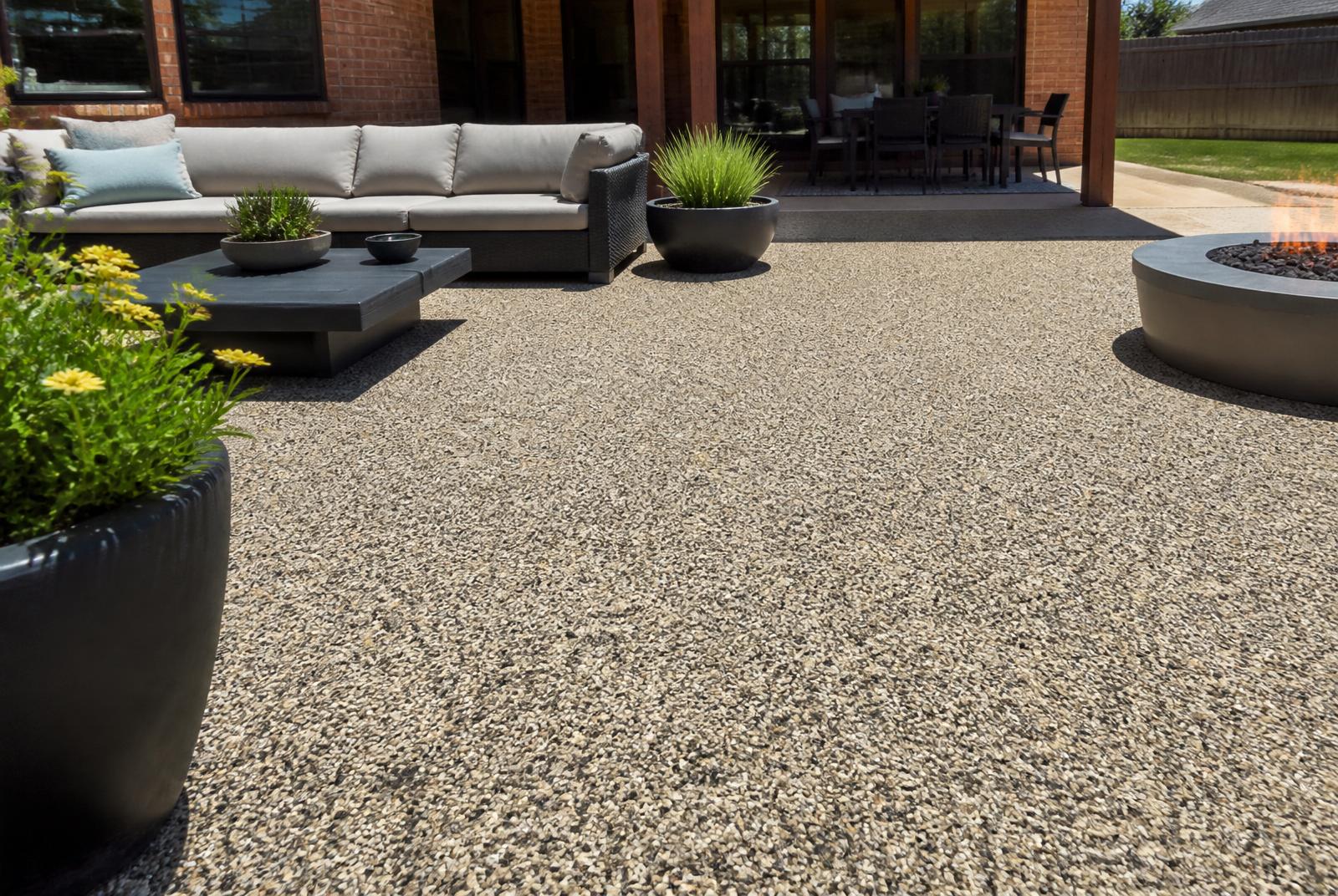
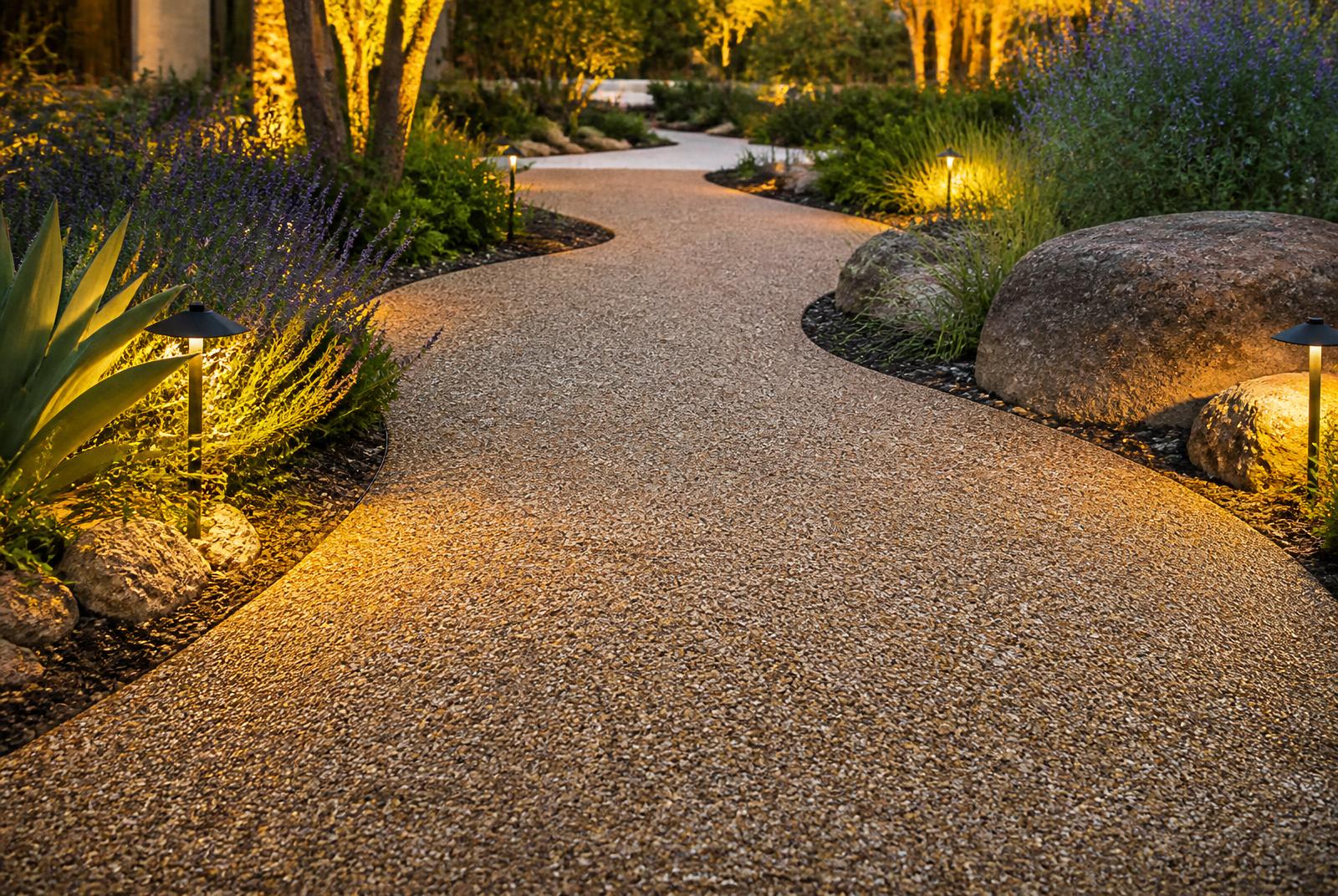
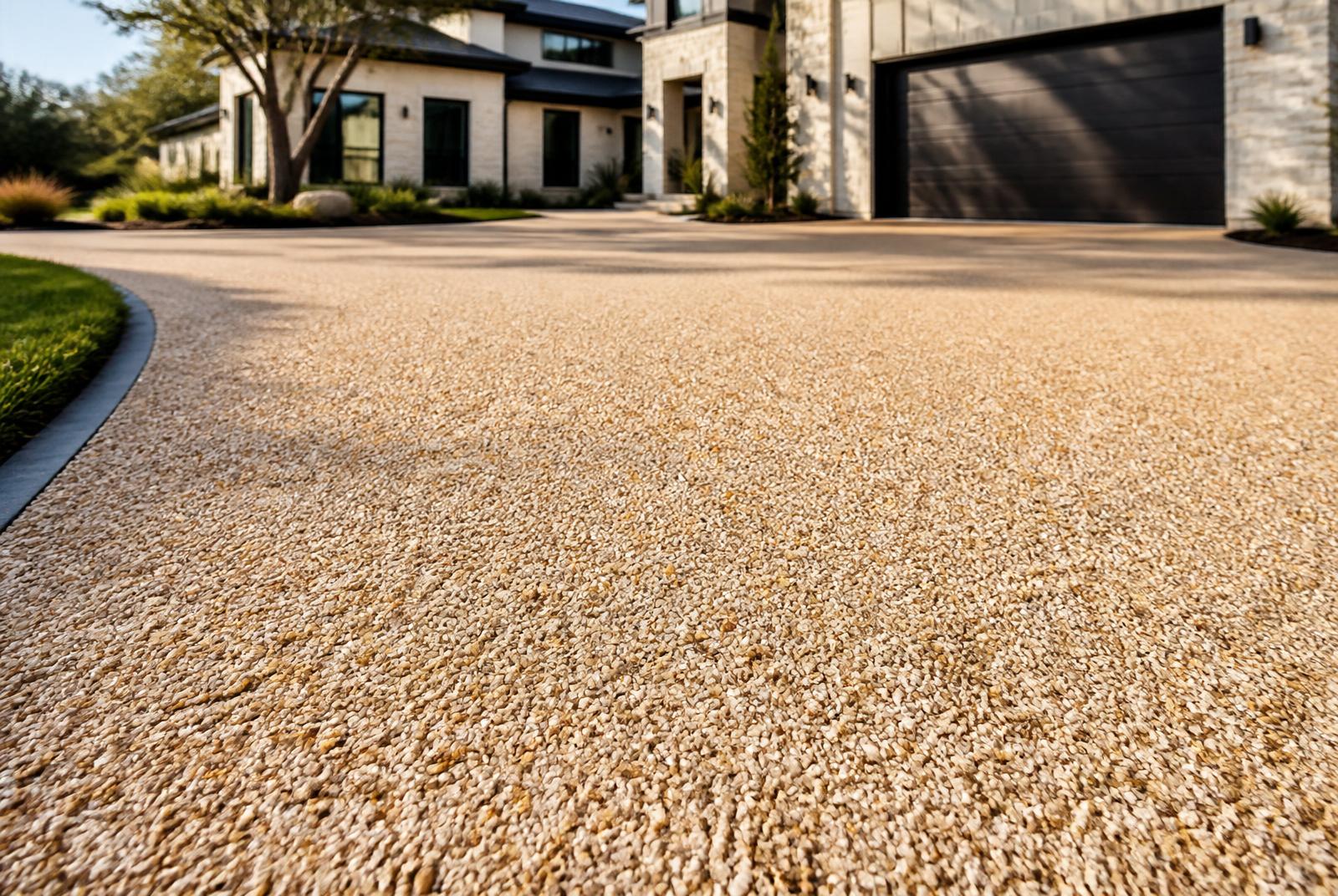
Yes, light-colored travertine pavers are significantly cooler on bare feet than traditional poured concrete, stamped concrete, or dark stone during peak Frisco summers. Because travertine is a natural sedimentary stone filled with microscopic air pockets, it dissipates heat efficiently rather than absorbing and radiating it like dense cement or dark flagstone.
When ambient temperatures in Collin and Denton counties hit 100°F or higher, surfaces like dark pavers or broom-finished concrete can easily reach 135°F to 150°F—hot enough to burn bare skin. Ivory, beige, or light walnut tumbled travertine typically stays between 100°F and 115°F in direct sunlight, keeping poolside walking safe and comfortable for children and pets.
What this means for a DFW homeowner
Living in Frisco means enjoying pool season from late April through October, but July and August bring relentless sun and consecutive days over 100°F. If your pool deck absorbs heat, you end up sprinting from your patio lounge to the pool water, or constantly spraying down the deck with a hose just to cross it.
Beyond heat retention, Frisco sits on notorious Eagle Ford clay soil, which expands dramatically when wet and shrinks when dry. Rigid pool decks, such as stamped or poured concrete, frequently crack within a few seasons due to ground movement and intense UV expansion. Flexible paver systems—especially thick, natural travertine installed over an engineered base—accommodate soil shifts without cracking across the surface.
Best surface or material options for this project
When comparing pool deck materials for a Frisco home, surface temperature, traction, durability, and maintenance all play critical roles. Here is how the most common materials stack up against travertine:
- Light Travertine Pavers (Ivory/Noche/Walnut): Excellent heat reflection, high traction when tumbled, elegant natural aesthetic, and easy to repair individually if soil moves. Requires periodic sealing to protect against pool chemicals.
- Light Concrete Pavers: Highly durable and versatile, but absorb more heat than travertine. Choosing light tan or cream shades helps, but dense concrete naturally holds heat longer after sunset.
- Porcelain Pavers: Ultra-durable, highly slip-resistant, non-porous, and chemical-resistant. Light shade porcelain stays reasonably cool, though density can make it slightly warmer than porous travertine.
- Stamped or Poured Concrete: Lower upfront cost, but notorious for high heat absorption, high slip risk when wet unless heavily textured, and inevitable cracking on Frisco clay soils.
- Oklahoma Flagstone: A local classic, but dark brown or iron-rich flagstone gets scorching hot under Texas sun and can flake or seal poorly around saltwater pools.
Base prep, drainage, and North Texas soil details
Installing travertine on a pool deck in Frisco requires rigorous sub-base engineering. Travertine is a natural stone, and without proper foundation work, soil movement can lead to uneven edges (trip hazards) or standing water near the pool shell.
- Excavation & Geotextile Fabric: We excavate 8 to 10 inches below final grade to remove unstable topsoil. We then lay a heavy-duty geotextile fabric barrier to prevent the underlying Frisco clay from mixing into the clean stone base.
- Crushed Stone Base: A 6-inch compacted layer of crushed stone aggregate (such as flex base or crushed limestone) is compacted in 2-inch lifts to reach 98% compaction. This creates a rigid yet porous foundation that bridges subtle clay movement.
- Bedding Sand & Drainage Slope: A 1-inch layer of washed concrete sand levels the travertine pavers. The deck must be pitched at least 1/8 inch per foot away from the pool edge to route splash-out water into deck drains or lawn areas.
- Edge Restraints & Polymeric Sand: Concrete bond beams or heavy-duty edge restraints lock the perimeter pavers. High-performance polymeric sand locks the joints to block weeds and insect intrusion while allowing minor ground flex.
Cost guidance in Dallas–Fort Worth
In the DFW metroplex, professional pool deck installations start at $26 per square foot for standard concrete pavers and scale upward for premium natural stone or porcelain. Below is a realistic breakdown of pool deck material costs installed in Frisco, including site prep and base installation.
| Surface Material | Average Installed Cost per Sq. Ft. | Heat Resistance (Barefoot Friendly) | Longevity & Soil Flex | Maintenance Level |
| :--- | :--- |
|---|---|
| :--- |
| Light Travertine Pavers | $32 – $44 | Exceptional (Stays cool) | High (Flexible joint system) | Low (Seal every 2-3 yrs) |
| Concrete Pavers | $26 – $38 | Moderate (Light colors best) | Very High (Durable) | Low (Occasional wash) |
| Porcelain Pavers | $35 – $48 | Good to Very Good | Exceptional (Stain/scratch proof) | Very Low (No sealing needed) |
| Stamped Concrete | $18 – $28 | Poor to Moderate | Low (Prone to cracking) | Moderate (Reseal every 2 yrs) |
| Flagstone (Mortared) | $30 – $42 | Poor (Darker stone gets hot) | Moderate (Grout lines fail) | High (Flaking/grout repairs) |
Note: Existing concrete deck demolition adds $6 to $12 per square foot depending on thickness and steel reinforcement. Complex pool copings, tight access, or intricate French pattern layouts add 15% to 25% to labor costs.
What to look for in photos or during a site visit
When reviewing pool deck project photos or inspecting completed jobs in neighborhoods like Newman Village, Phillips Creek Ranch, or Starwood, watch for these critical quality markers:
- Edge Finishing: Quality travertine pool decks feature bullnose or chiseled edge copings around the water's edge. Look closely at joint tight gaps along the pool beam.
- Color Uniformity & Blend: Premium travertine installers pull tiles from multiple crates simultaneously to ensure natural color variations blend smoothly across the deck rather than looking patchy.
- Flush Deck Drains: Slot drains or decorative channel drains should integrate flush with the travertine surface without awkward cuts or high lips.
- Finish Texture: Ensure photos show tumbled or honed travertine around pools. Polished travertine is smooth and becomes slippery when wet, whereas tumbled travertine provides natural slip-resistant cavities.
Paverston recommendation
For Frisco homeowners seeking the ultimate balance of heat comfort, luxury aesthetic, and structural longevity, Paverston recommends 3cm Tumbled Ivory or Select Light Walnut Travertine in a French Pattern.
Tumbled travertine provides excellent slip resistance for wet children's feet while remaining remarkably comfortable during 100°F Frisco afternoons. Paired with a 6-inch compacted crushed stone base, geotextile sub-layer, and high-performance polymeric sand, a travertine deck from Paverston will handle North Texas soil shifting beautifully without the cracking associated with poured concrete.
Ready to elevate your poolside experience with a cooler surface? Contact the local specialists at Paverston today.
- Phone: 214-228-1011
- Online: Request an Estimate
Related questions
Does tumbled travertine get slippery around a pool when wet?
No. Tumbled travertine features small natural surface pits and a slightly chalky, textured finish that provides superior foot traction even when wet with pool water. Polished travertine can be slippery, which is why Paverston exclusively uses tumbled or unfilled/honed finishes for pool deck applications.
Do travertine pavers need to be sealed in Frisco, TX?
Yes, we recommend applying a breathable, penetrating natural-look sealer every 2 to 3 years. This protects the porous stone from pool chlorine, salt water, food spills, and UV exposure without trapping heat or creating a glossy, slippery surface film.
Can travertine pavers be installed directly over an existing concrete pool deck?
Yes, if the underlying concrete is structurally sound and free of massive settling. We can overlay 1.25-inch (3cm) travertine pavers over existing concrete using thinset mortar or sand setting beds with perimeter border locking, saving you concrete demolition costs.
How does travertine compare to porcelain pavers for heat resistance?
Light travertine remains slightly cooler than porcelain under direct afternoon sun because travertine is porous and dissipates heat through air pockets. However, light-colored porcelain pavers run a close second and offer higher stain resistance with zero sealing requirements.