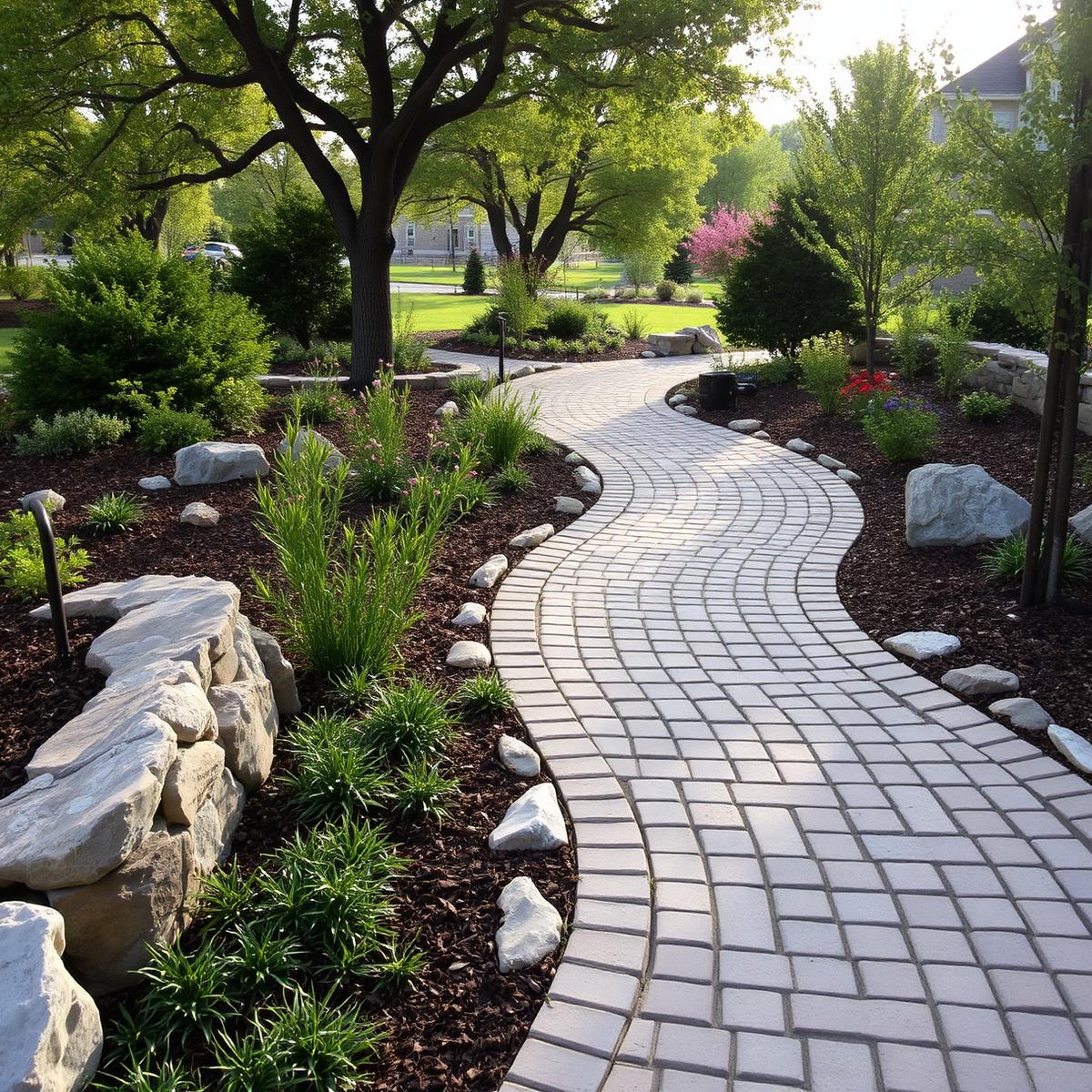
To prevent paver patios from sinking, shifting, or rutting on Prosper's expansive clay soil, professional contractors must replace unstable native subgrade with a deep, multi-layer engineered base and isolate it using heavy-duty woven geotextile fabric. In Prosper and surrounding North Texas communities, native dirt expands dramatically when wet and shrinks when dry, making standard shallow prep guaranteed to fail within a few seasons.
By excavating 8 to 12 inches into native soil, installing geotextile fabric as a soil stabilization layer, backfilling with crushed angular limestone compacted in thin lifts, and installing reinforced edge restraints, Paverston creates a flexible, floating structural system. This ensures your patio moves uniformly during seasonal moisture shifts without cracking, dipping, or separating.
What this means for a DFW homeowner
Prosper sits squarely on the Blackland Prairie formation, famous across North Texas for high-index expansive clay soil. This clay acts like a sponge. During wet DFW spring storms, the soil expands up to 10 to 15 percent by volume. During scorching summer droughts, it loses moisture, shrinks, and forms deep soil fissures.
If a paver patio is installed directly over topsoil or thin dirt, or if a contractor skips proper sub-base preparation, that constant cycle of swelling and shrinking unevenly lifts and drops individual pavers. You end up with low spots that puddle water, tripped edges along walking paths, and spreading borders that push out into the surrounding lawn. Unlike monolithic concrete slabs—which crack under tension when soil swells beneath them—an interlocking paver system is designed to flex. However, that flexibility requires a rigid, well-drained stone base to keep the surface flat.
Best surface or material options for this project
When building a patio on active clay soil in Prosper, material selection directly affects long-term stability and maintenance. Interlocking concrete pavers, natural travertine, and outdoor porcelain slabs perform exceptionally well when paired with the right base profile:
- Interlocking Concrete Pavers (60mm / 2.38-inch thickness): High-density concrete pavers offer superior structural integrity. Their small format distributes surface loads effectively across the base, absorbing subgrade movement without cracking.
- Natural Travertine Pavers (30mm thickness): A popular choice around Prosper pool decks and covered patios due to its cool surface temperature under summer heat. Travertine requires an ultra-level crushed stone bed to prevent corner chipping.
- Architectural Porcelain Pavers (20mm thickness): Extremely low absorption rate (under 0.05%), making porcelain highly resistant to staining and freeze-thaw cycles. Porcelain requires specialized dry-set or wet-set installation techniques on aggregate bases.
Base prep, drainage, and North Texas soil details
Preventing ground movement from ruining a paver patio comes down to mechanical soil engineering. At Paverston, our installation standard for Prosper homes follows strict multi-step guidelines tailored to local conditions:
- Deep Base Excavation: We excavate 8 to 12 inches below final finished grade, removing topsoil, organic matter, and loose clay. In low-lying Prosper lots with high moisture retention, deeper excavation is required to reach stable subgrade soil.
- Geotextile Fabric Separation: We line the entire excavated trench with a heavy-duty woven geotextile stabilization fabric (minimum 200 lb tensile strength). This critical barrier prevents soft clay from pumping up into the stone base while allowing subsurface water to drain through.
- Crushed Aggregate Base (Flexbase): We install 6 to 8 inches of angular crushed limestone (such as TxDOT Grade 4 crushed base). Angular stones interlock under compaction, unlike smooth round river rock. We compact the stone in 2- to 3-inch lifts using a heavy vibratory plate compactor to achieve at least 98% Standard Proctor density.
- Uniform Bedding Layer: Over the compacted aggregate, we lay a 1-inch uniform layer of washed concrete sand or ASTM No. 8 crushed aggregate. This layer acts as the leveling screed for the pavers.
- Edge Restraints and Anchoring: Pavers must be held tight horizontally to keep joints locked. We install heavy-duty PVC or metal edge restraints spiked into the aggregate base with 10-inch steel spikes every 12 inches, or pour a reinforced concrete bond beam along perimeter borders.
- Positive Pitch and Drainage: We set the finished surface at a minimum 1% to 2% slope (1/8 inch to 1/4 inch of drop per linear foot) sloping away from the home's foundation. Where yard elevation prevents natural sheet flow, we integrate catch basins, channel drains, or buried PVC pipe systems.
Cost guidance in Dallas–Fort Worth
In the DFW metroplex, professional paver patio installation starts at $20 per square foot installed. Pricing varies depending on total square footage, selected materials, excavation depth, slope correction, and site accessibility.
| Project Component | Estimated Cost Range (DFW Market) |
|---|---|
| Standard Concrete Paver Patio (Includes standard base prep) | $20 – $32 per sq ft |
| Travertine or Porcelain Paver Patio (Material upgrade +25-40%) | $26 – $44 per sq ft |
| Complex Patterns / Inlays / Border Ribbons | +15% to +25% total labor |
| Existing Concrete Demolition & Removal | +$6 – $12 per sq ft |
| Existing Paver Removal & Haul-off | +$4 – $8 per sq ft |
| Subsurface Drainage Integration (Catch basins, French drains) | $800 – $2,500 linear/flat rate |
Note: All Paverston projects start at $20/sq ft installed. Severe clay excavation, heavy slope correction, or tight access equipment charges may adjust initial estimates.
What to look for in photos or during a site visit
When evaluating a contractor's previous patio installations in Prosper, inspect project photos carefully for these signs of quality execution:
- Visible Base Depth in Progress Photos: Look for job-site photos showing deep excavation boxes lined with dark fabric and substantial light-gray aggregate layers before pavers are laid.
- Straight Joint Lines and Edge Consistency: Zoom in on pattern soldier courses (borders). Lines should be razor-straight without wide or uneven joint gaps.
- Flush Perimeter Edges: The soil, sod, or mulch along patio edges should sit flush with or slightly below the top of the pavers to allow surface water to flow off cleanly without backing up.
- Seamless Grading near Structures: Pay attention to how the paver patio meets weep holes, brick ledging, or back door thresholds. There should always be an adequate safety gap below wood siding or brick line, maintaining positive slope away from walls.
Paverston recommendation
If you live in Prosper—whether in Windsong Ranch, Whitley Place, or Lakes of La Cima—never allow a contractor to cut costs on sub-base depth or skip geotextile fabric. Saving a few hundred dollars on excavation or crushed stone will result in thousands of dollars in repairs when North Texas clay expands next spring.
Demand a minimum 6-inch compacted stone base on geotextile fabric for standard patios, and insist on hard-piped drainage solutions if your yard holds standing water. Contact Paverston today at 214-228-1011 or visit our contact page to schedule a complimentary site evaluation with an experienced North Texas hardscape specialist.
Related questions
How deep should the aggregate base be under a paver patio in Prosper?
For residential patios built on Prosper's clay soil, the aggregate base should be a minimum of 6 inches of compacted crushed limestone over geotextile fabric. For heavy loads or poor subgrade moisture conditions, an 8- to 10-inch base is recommended.
Should I use concrete sand or play sand under my patio pavers?
Always use washed concrete sand (ASTM C33) or coarse aggregate (ASTM No. 8) for the bedding layer. Never use play sand, mason sand, or stone dust. Fine sands wash out easily, lock in moisture against clay, and cause uneven sinking over time.
Can I install pavers over my existing cracked concrete patio in Prosper?
Yes, overlaying pavers over an existing concrete patio is possible if the concrete slab is structurally sound and settled. However, if the underlying concrete is actively tilting, shifting, or heaving due to clay soil beneath it, demolishing the slab ($6–$12/sq ft) and installing a flexible aggregate base system is the safest long-term solution.
How do edge restraints prevent paver patios from spreading?
Rigid edge restraints locked down with 10-inch steel spikes secure the perimeter pavers in place. This prevents horizontal displacement (paver spreading) caused by foot traffic, wet sand friction loss, and edge expansion in dynamic soil conditions.