

In Prosper, Texas, the best backyard drainage layout for a paver patio combines a pitch slope of at least 1/4 inch per foot away from the house, integrated channel drains along key edges, and deep catch basins connected to a subterranean PVC discharge line. Because North Texas experiences intense torrential downpours, a surface-only slope is rarely enough to protect adjacent landscaping or prevent standing water near the foundation.
A complete hardscape drainage system captures roof runoff, surface sheet flow, and subsurface water before it can saturate the base materials. By routing rainwater through smooth-bore PVC pipes toward the curb, a pop-up emitter in the lawn, or a designated swale, your paver installation remains structurally sound and dry even during peak Dallas–Fort Worth seasonal storms.
What this means for a DFW homeowner
Prosper sits on heavy, expansive Blackland prairie clay soil. This high-plasticity clay expands dramatically when wet and contracts when dry. If rainwater collects along the edge of your paver patio or pools beneath the base, the soil underneath will heave and shift, leading to uneven pavers, low spots, and failing retaining walls.
Furthermore, many newer homes in Prosper feature tight lot lines and low-sloped backyards that naturally hold water against patio margins. Leaving drainage as an afterthought usually results in roof downspouts dumping hundreds of gallons of water directly onto or beside your patio edge during a single severe weather event. Designing an integrated drainage layout before laying a single block is the single most critical step in preserving both your outdoor living space and your home's foundation.
Best surface or material options for this project
Selecting the right surface material and joint finish plays a major role in how water moves across your backyard patio layout:
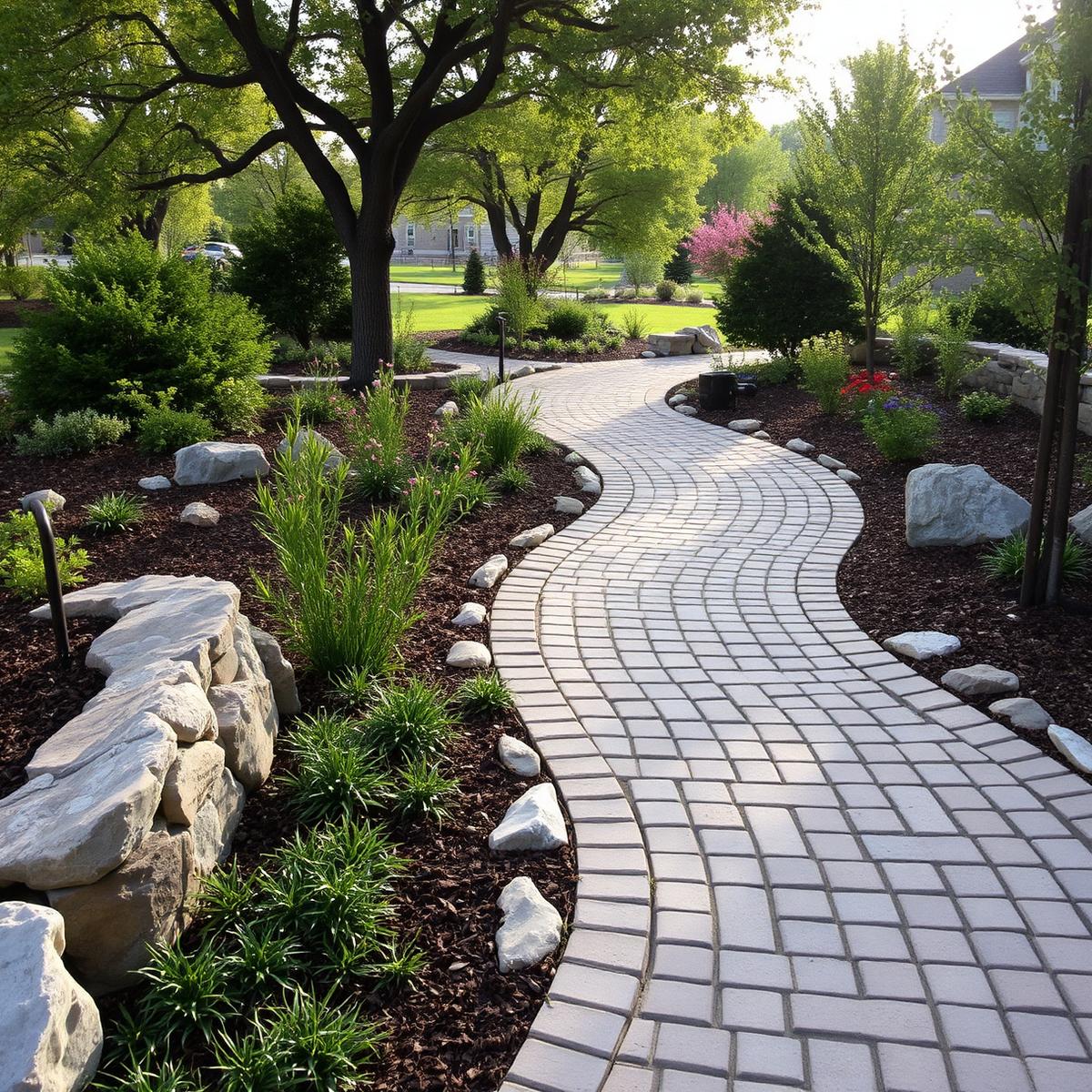
- Interlocking Concrete Pavers: Standard concrete pavers are non-porous and shed water rapidly. When laid with a consistent 2% slope (1/4 inch fall per foot), surface water flows smoothly toward perimeter channel drains or catch basins.
- Permeable Pavers: Designed with wider, aggregate-filled joint gaps, permeable pavers allow high-volume rainwater to sink directly through the surface into an underground stone storage reservoir, bypassing surface runoff entirely.
- Natural Travertine and Porcelain Pavers: Excellent choices for upscale Prosper outdoor living spaces. Because travertine and porcelain absorb virtually no water, they require precise slope calibration paired with low-profile slot drains or deck drains along transition edges.
- Polymeric Joint Sand: For conventional paver patios, polymer-modified sand seals joint gaps, preventing heavy rain from washing away the bedding sand layer while directing surface flow toward collection points.
Base prep, drainage, and North Texas soil details
Proper drainage starts well below the pavers. At Paverston, our foundation prep for Prosper clay soils is engineered specifically to prevent subterranean water entrapment:
- Deep Excavation: We excavate native clay soil 8 to 12 inches below finish grade to allow room for a robust, water-impermeable base assembly.
- Geotextile Separation Fabric: A heavy-duty woven geotextile fabric is laid over the native clay bottom. This prevents soft, saturated clay from pumping upward into the aggregate base over time.
- Compacted Aggregate Base: We install 6 to 8 inches of TxDOT Flex Base (crushed limestone aggregate), compacted in 2-inch lifts to 98% density. This creates a rock-solid, non-shifting foundation.
- Bedding Layer: A uniform 1-inch layer of sharp, angular sand or coarse #8 crushed stone provides a smooth bedding surface for the pavers.
- Subsurface Piping Network: All roof downspouts near the patio are intercepted and converted into 4-inch rigid smooth-bore SDR-35 or Schedule 40 PVC pipes buried beneath or alongside the aggregate base. Corrugated flex pipe should never be used, as clay movement and root intrusion easily crush or clog it.
- Channel and Catch Basin Integration: Low-profile trench drains are cast into the patio border, while catch basins are set at low corners to capture surface sheet flow before it reaches turf areas.
Cost guidance in Dallas–Fort Worth
Every paver project by Paverston starts at a baseline of $20 per square foot installed. Pricing varies based on material choices, pattern complexity, existing site conditions, and necessary drainage upgrades.
| Project & Drainage Component | Average DFW Cost Range | Primary Function / Notes |
| :--- | :--- | :--- |
| Standard Concrete Paver Patio | $20 – $32 per sq ft | Standard slope design, base prep, high-grade concrete pavers |
| Travertine or Porcelain Patio | $26 – $44 per sq ft | Requires precise pitching and specialized slot/deck drains |
| Integrated Deck / Channel Drains | $18 – $35 per linear ft | Installed flush with pavers to capture surface sheet runoff |
| Subsurface Rigid PVC Drainage System | $1,200 – $3,500 total | Intercepts downspouts and basins; routes water to curb or lawn |
| Existing Concrete Demolition & Removal | $6 – $12 per sq ft | Necessary when removing old poured concrete slabs prior to paver installation |
| Existing Paver Demolition & Prep | $4 – $8 per sq ft | Removal and haul-off of failing hardscape materials |
Note: Complex patterns or tight access in suburban Prosper lots may add a 15% to 25% premium to labor costs.
What to look for in photos or during a site visit
When reviewing a contractor's past project photos or inspecting a completed patio project in North Texas, pay attention to these technical visual indicators:
- Drainage Grate Integration: Grates for catch basins and channel drains should sit perfectly flush with the paver surface, aligned seamlessly with paver joint lines.
- Pillar and Wall Clearance: Retaining wall bases or outdoor kitchen bases should have clear relief drainage outlets so water doesn't pool behind stone structures.
- Clean Pitch and Line: Look along the house siding line. The paver surface should pitch visibly and evenly away from the weep holes of the brick or stone veneer.
- Solid Edge Restraints: Clean concrete borders or heavy-duty spiked edge restraints prevent perimeter pavers from sliding outward when saturated soil swells.
- Discharge Emitters: Underground drain lines should terminate in clean pop-up discharge valves installed in lawn areas or direct connections to curb cuts.
Paverston recommendation
For homeowners in Prosper, Paverston recommends never relying on lawn absorption or basic surface pitch alone. Combine a 2% paver surface slope with a closed subterranean PVC drainage circuit. Tie all adjacent gutters directly into rigid underground pipes, and place a channel drain anywhere pavers meet an elevated lawn or landscape bed. This dual-layer approach safeguards your investment against high-volume spring downpours and long-term clay soil movement.
Ready to engineer a beautiful, storm-ready paver patio for your Prosper home? Contact the experts at Paverston today at 214-228-1011 or visit our contact page at /contact to schedule your on-site consultation.
Related questions
Can roof downspouts be routed underneath a new paver patio?
Yes. In fact, routing downspouts under the patio through rigid 4-inch PVC pipe is standard practice for Paverston. It prevents concentrated water streams from washing across your paver surface, keeping the patio clean and avoiding erosion at the hardscape edges.
How much slope is required for proper paver patio drainage?
A paver patio should feature a minimum pitch of 1/4 inch drop per linear foot of runoff (approximately a 2% slope). This ensures rainwater flows off the surface quickly without creating visible dips or steep inclines that affect furniture stability.
Are permeable pavers better than standard pavers for handling rain in Prosper?
Permeable pavers are highly effective for properties with severe drainage constraints or standing water issues. However, because Prosper has thick clay soil, permeable systems require a deeper open-graded aggregate base layer to store runoff until the subgrade can absorb it.
Why shouldn't flexible corrugated pipe be used for patio drainage?
Flexible corrugated drain pipe breaks down easily under soil movement, is prone to crushing under heavy wheel or foot loads, and traps sediment inside its ridges. Rigid Schedule 40 or SDR-35 PVC pipe features a smooth interior that resists clogging and withstands heavy ground pressure.