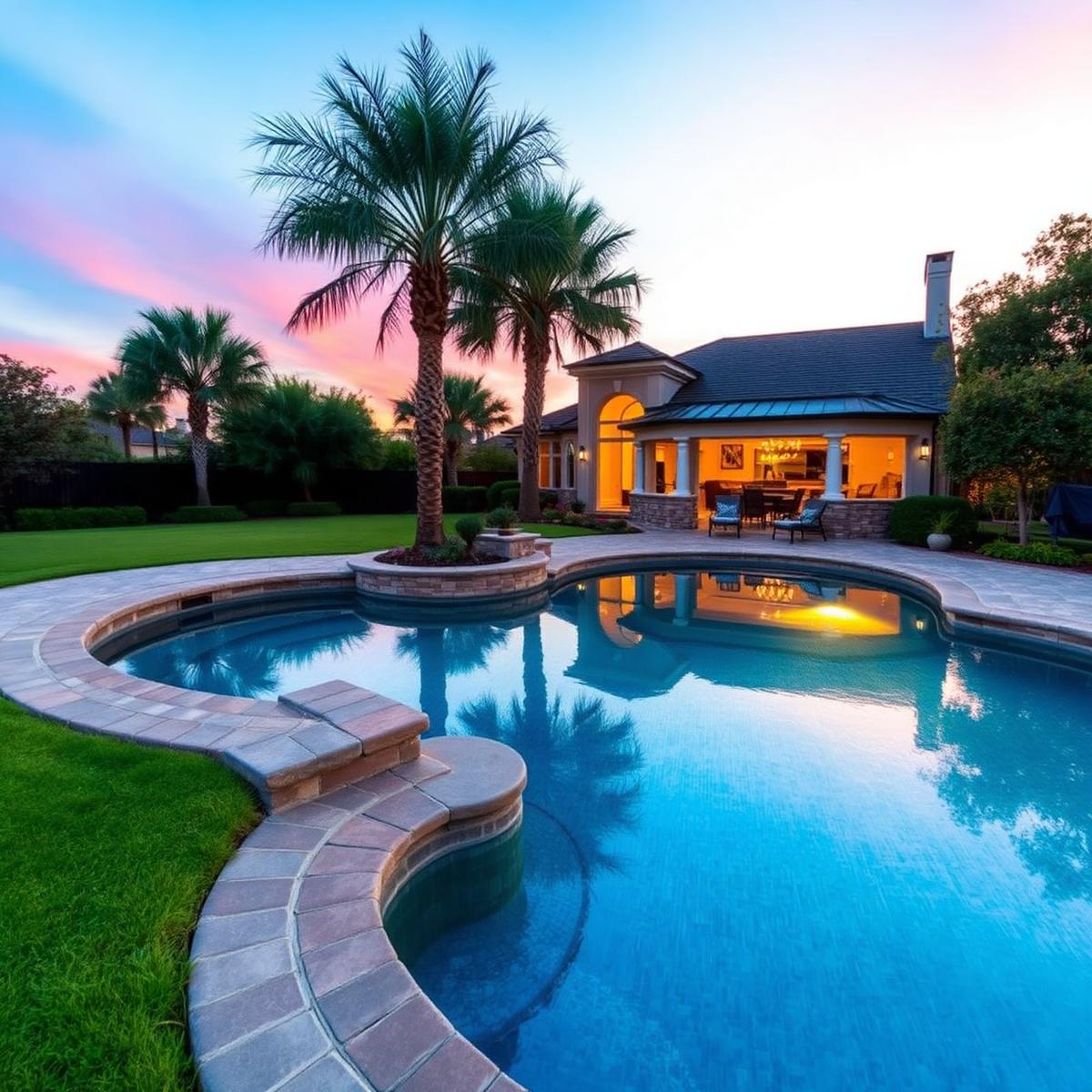
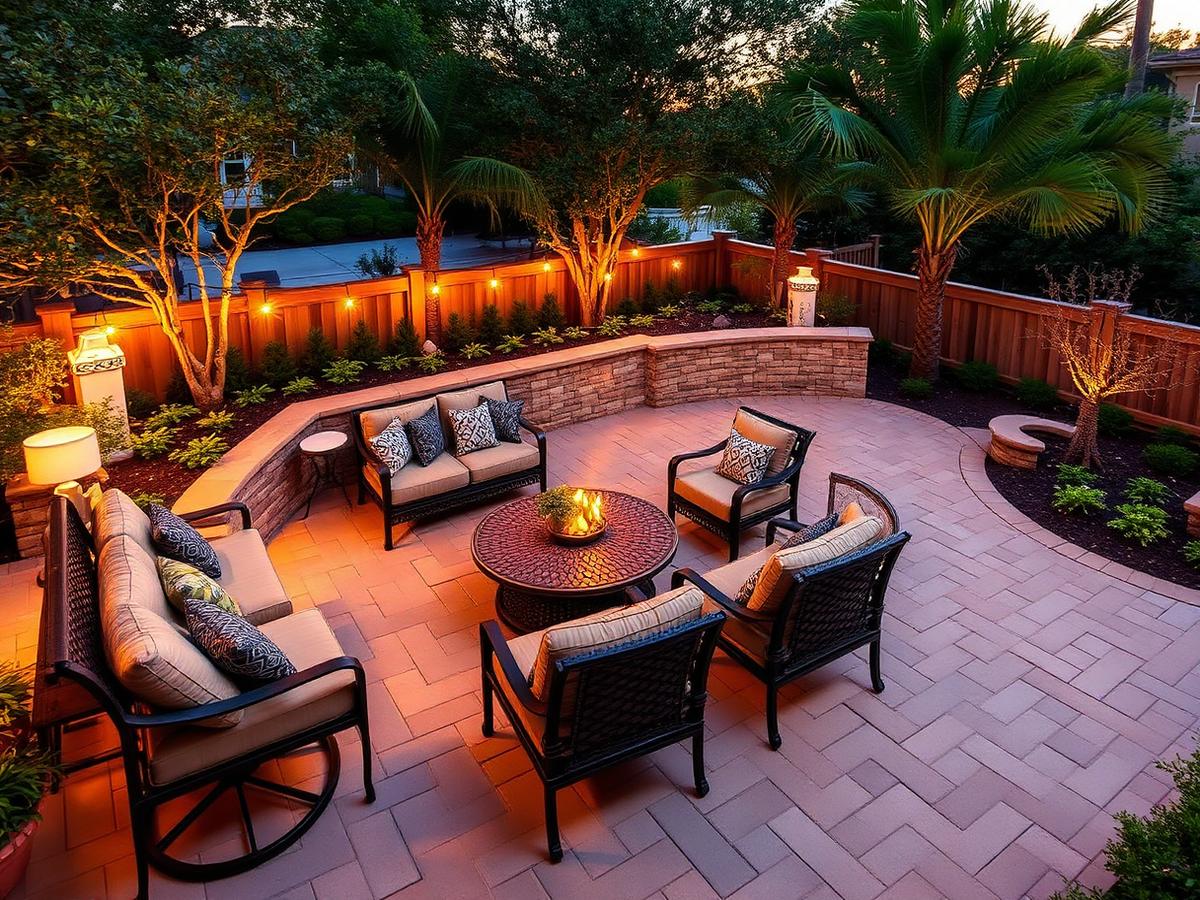
When designing an outdoor patio or pool deck in Frisco, heat resistance is often the single most important factor for North Texas homeowners. During DFW summers, outdoor surfaces exposed to direct sunlight frequently reach temperatures exceeding 130°F, making bare feet, pets, and outdoor entertainment uncomfortable. Choosing between light-colored outdoor porcelain pavers and stamped concrete comes down to surface thermal reflectivity, long-term durability, and how each material responds to extreme thermal cycles.
At Paverston, we install custom hardscapes built specifically for the local climate. Outdoor porcelain pavers reflect solar radiation far more effectively than sealed stamped concrete, remaining noticeably cooler underfoot. Furthermore, porcelain pavers are installed over an engineered base system that accommodates North Texas clay soil movement, whereas continuous stamped concrete slabs trap heat energy and inevitably crack when the ground shifts beneath them.
What this means for a DFW homeowner
Frisco backyards experience intense direct sun for nearly five months of the year, alongside severe moisture fluctuations in the underlying soil. Stamped concrete relies on continuous poured slabs coated with acrylic sealers. These dark pigments and high-gloss acrylic sealers absorb heat, acting as a thermal mass that radiates warmth long after the sun goes down. In direct 100°F weather, stamped concrete can easily surpass 140°F, rendering pool decks and patio spaces unusable without footwear.
Porcelain pavers engineered for outdoor use (2cm thick) feature dense mineral compositions and low thermal mass. When selected in lighter shades such as cream, beige, or soft limestone gray, porcelain reflects UV light rather than absorbing it. This physical property allows porcelain patio surfaces to remain up to 20°F to 30°F cooler than dark stamped concrete under identical sun exposure.
Beyond surface heat, thermal expansion plays a major role in hardscape longevity. As North Texas summer heat bakes the ground, Blackland Prairie clay soil dries out and contracts. Stamped concrete slabs expand under heat while the soil shrinks beneath them, causing internal stress that results in surface cracks across the stamped pattern. Porcelain pavers use flexible sand or aggregate joints, allowing individual units to expand and contract without structural damage.
Best surface or material options for this project
For homeowners seeking high heat resistance alongside architectural aesthetics, material selection dictates overall outdoor comfort. Here is how the top options perform in high-heat Frisco outdoor living spaces:
- Light-Toned Outdoor Porcelain Pavers (2cm): Outdoor-rated porcelain is non-porous (water absorption rate below 0.5%), impervious to thermal shock, and highly UV-reflective. Light-colored porcelain stays cool, resists fading, and requires zero topical acrylic sealers. It provides an elegant, modern look for pool decks and patios.
- Travertine Pavers: A classic natural stone option that stays exceptionally cool due to natural porosity and light color profiles. Travertine offers excellent thermal performance, though porcelain provides superior stain resistance against DFW red mud, patio spills, and grill grease.
- Stamped Concrete: A poured concrete slab textured and colored to mimic stone or brick. While initial installation cost can be lower than premium stone, stamped concrete absorbs heavy thermal energy. The required acrylic sealer traps heat, creates a slick surface when wet around pool decks, and re-radiates heat late into the evening.
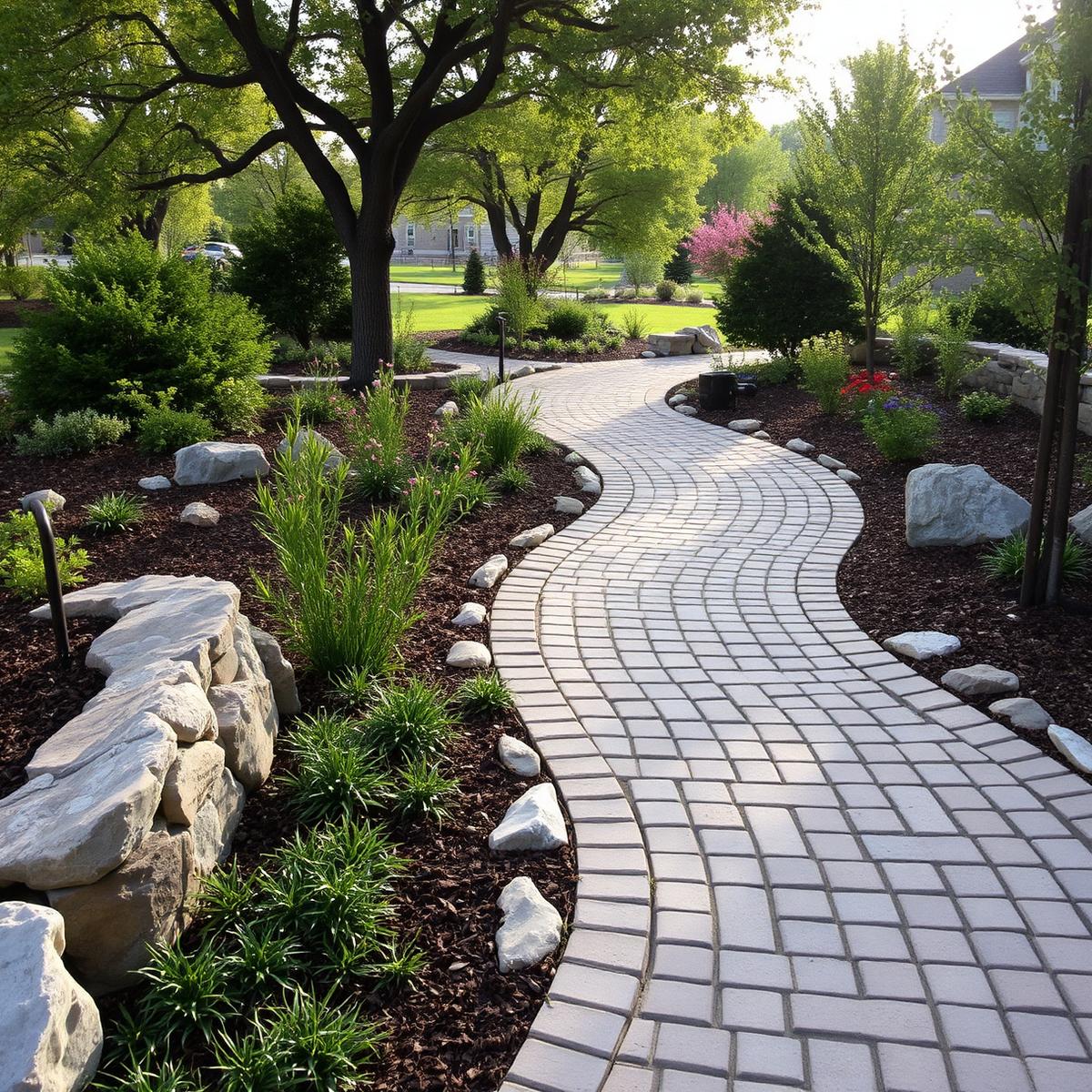
- Standard Interlocking Concrete Pavers: A reliable middle ground. Concrete pavers absorb slightly more heat than porcelain but far less than dark stamped concrete. They offer flexible joint systems that prevent soil-shift cracking.
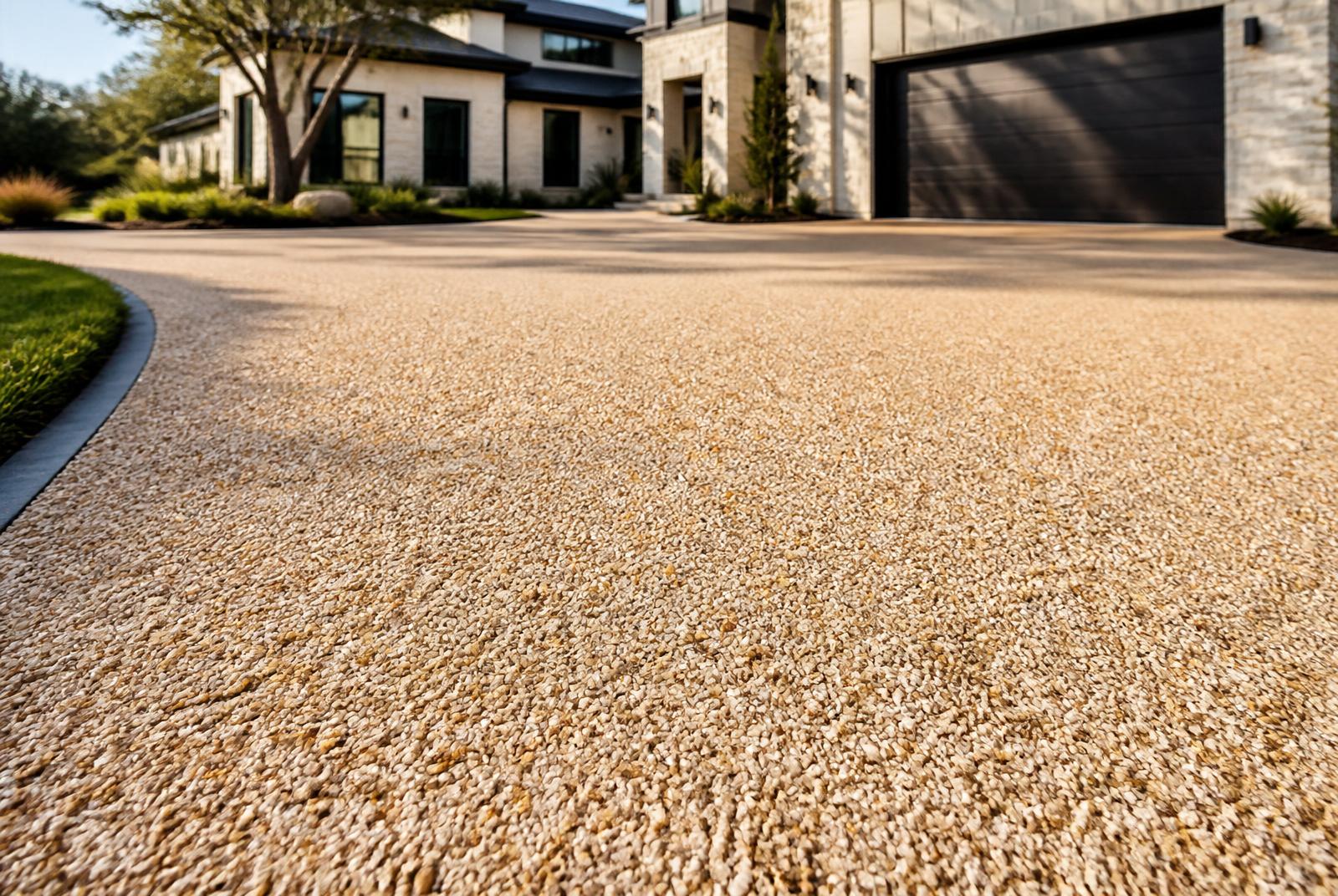
- Resin Bound Stone & Rubber Surfacing: Specialty overlay systems often used around pool surrounds for high barefoot comfort, though they serve different aesthetic goals than structural hardscape pavers.
Base prep, drainage, and North Texas soil details
Heat resistance is only half the battle in Frisco; foundation stability is the other. Frisco sits on highly expansive clay soil that expands when saturated and contracts severely during hot, dry summer months. Installing any patio or pool deck without addressing base prep and drainage leads to premature structural failure.
For porcelain paver installations, Paverston executes a rigorous site preparation process:
- Excavation & Subgrade Prep: We excavate 6 to 8 inches of organic soil, reaching stable sub-grade clay, and slope the subgrade at a minimum 1/4 inch per foot away from the home’s foundation.
- Geotextile Layer: A heavy-duty woven geotextile fabric is installed across the clay subgrade to prevent migration between the expansive clay base and the aggregate foundation.
- Compacted Aggregate Base: We place 4 to 6 inches of crushed stone base material (typically flex-base or crushed limestone), compacted in 2-inch lifts to achieving maximum density. This open crushed stone base acts as a thermal break and allows expansive soil movement without lifting individual pavers.
- Bedding Layer & Grouting: Porcelain pavers are set on a smooth bedding layer, with joints filled using high-performance polymeric sand or specialized porcelain jointing compounds that retain flexibility.
In contrast, stamped concrete requires a single poured slab over gravel. When Frisco heat dries the clay underneath, the slab loses uniform support. Lacking flexible joints, the monolithic concrete cracks across the stamped relief lines, requiring costly repairs or full removal.
Cost guidance in Dallas–Fort Worth
All professional paver hardscape projects installed by Paverston in the DFW metroplex start at $20 per square foot. Porcelain pavers represent a luxury, long-lasting surface material that carries a material premium of 25% to 40% over standard concrete pavers. If an existing cracked concrete patio must be removed, demolition adds $6 to $12 per square foot for concrete removal (or $4 to $8 per square foot for existing paver removal).
The table below outlines typical investment levels and performance metrics for a 500 sq. ft. patio or pool deck project in Frisco:
| Surface Material | Barefoot Heat Level (100°F Day) | Average Lifespan | Soil Movement Resistance | Installed Cost Range (per sq. ft.) | Maintenance Requirement |
| :--- | :--- |
|---|---|
| :--- | :--- |
| Porcelain Pavers (2cm) | Cool to Warm (Very Comfortable) | 50+ Years | Exceptional (Flexible Base) | $26 – $44 | Low (Occasional wash, no sealer) |
| Travertine Pavers | Very Cool | 30+ Years | Exceptional (Flexible Base) | $26 – $40 | Moderate (Periodic sealing optional) |
| Concrete Pavers | Warm | 30–40 Years | Excellent (Flexible Base) | $20 – $32 | Low-Moderate (Polymeric sand top-up) |
| Stamped Concrete | Hot to Very Hot (Requires Shoes) | 10–15 Years | Poor (Prone to cracking) | $18 – $28 | High (Re-seal every 2–3 years) |
Note: Final pricing depends on site access, drainage requirements, edge restraint profiles, and pattern complexity (complex patterns add 15–25% in labor).
What to look for in photos or during a site visit
When evaluating hardscape portfolios or inspecting a completed site, pay close attention to visual markers that reveal material performance and quality craftsmanship:
- Surface Glare & Texture: Examine project photos taken in direct midday sunlight. Stamped concrete often shows a shiny acrylic glare that indicates heavy heat absorption and slickness. Porcelain pavers display a soft, matte, textured finish (R11 slip-resistance rating) that absorbs minimal glare.
- Joint Consistency: Inspect patio design photos for uniform 3/16-inch joint lines across large spans. Uniform joints demonstrate precision base compaction that won't shift during summer soil drying.
- Edge Restraints & Coping: Look closely at pool deck perimeter transitions. Quality porcelain installs feature rounded coping edges around pool borders and clean border courses that frame outdoor kitchens or fire features seamlessly.
- Site Evaluation Details: During a Paverston site visit, our estimator checks your backyard's sun orientation (south- and west-facing yards receive the highest thermal load), soil moisture levels, grade pitch, and foundation proximity before recommending material light reflectivity ratings.
Paverston recommendation
For Frisco homeowners who want an outdoor space usable in the peak of DFW summer heat, Paverston strongly recommends light-colored 2cm porcelain pavers over flexible aggregate base systems. Porcelain eliminates the surface heat issues, slickness, and cracking inherent to sealed stamped concrete, giving you a luxurious, maintenance-free patio or pool deck built to handle North Texas soil and sun.
Ready to elevate your Frisco backyard with heat-resistant porcelain pavers? Contact the local specialists at Paverston today. Call us at 214-228-1011 or visit our /contact page to schedule your on-site consultation and design estimate.
Related questions
Do light-colored porcelain pavers really stay cooler than stamped concrete?
Yes. Light-colored 2cm porcelain pavers reflect solar radiation and have low thermal density, staying 20°F to 30°F cooler under direct DFW sun than dark or acrylic-sealed stamped concrete.
Will porcelain pavers crack when Frisco clay soil shifts in the summer?
No. Porcelain pavers are installed over a compacted aggregate base with flexible sand joints. Unlike rigid stamped concrete slabs, the system flexes independently with soil movement without cracking.
Is porcelain paver surface slippery when wet around a pool?
No. Outdoor-rated porcelain pavers feature an engineered R11 anti-slip surface texture specifically designed for pool decks, providing superior traction compared to sealed stamped concrete.
How often do porcelain pavers require sealing compared to stamped concrete?
Porcelain pavers never require sealing because their non-porous structure resists stains and fading naturally. Stamped concrete requires expensive acrylic re-sealing every 2 to 3 years to maintain color and protection.