When building a backyard patio in Frisco, Texas, choosing between interlocking concrete pavers and stamped concrete comes down to one overwhelming factor: North Texas clay soil. While stamped concrete offers a seamless initial look, interlocking concrete pavers consistently outperform monolithic poured slabs in resisting cracks caused by ground movement.
At Paverston, we install custom hardscapes across Collin County, and we regularly replace failed, cracked stamped concrete slabs with flexible paver systems. Concrete pavers handle soil expansion and contraction seamlessly because the joints between the units absorb ground movement, whereas stamped concrete inevitably develops visible surface or structural cracks.
What this means for a DFW homeowner
Frisco sits on highly expansive Eagle Ford and Blackland Prairie clay soils. This soil acts like a sponge—expanding significantly during heavy spring downpours and shrinking rapidly under intense 100-degree summer heat. This moisture cycle creates continuous upward and lateral pressure against any rigid hardscape structure.
A stamped concrete patio is a single, rigid slab of poured concrete with decorative patterns stamped into the surface before curing. As the underlying soil heaves and shifts, stress builds within the slab. Control joints are cut to direct cracking, but soil movement rarely follows neat lines. When stamped concrete cracks, the crack travels across the decorative pattern, ruining the continuous design. Repairing stamped concrete requires patching or re-skinning, which leaves obvious color mismatches.
Interlocking concrete pavers, by contrast, form a flexible pavement system. Hundreds of individual units sit on a engineered aggregate base and are locked together with joint sand. When the clay soil expands or contracts beneath the patio, each paver micro-adjusts independently. The system flexes without breaking, keeping your patio surface intact and structurally sound over decades of North Texas weather cycles.
Best surface or material options for this project
For Frisco homeowners planning a new outdoor patio, assessing surface options requires balancing appearance, durability, and long-term maintenance:
- Interlocking Concrete Pavers: Available in modern large-format slabs, classic cobble, or elegant slate textures. Concrete pavers from quality manufacturers (like Belgard or Pavestone) are manufactured under strict factory conditions, achieving compressive strengths of 8,000+ PSI (compared to 3,000–4,000 PSI for poured concrete). They resist freeze-thaw cycles, hold color exceptionally well, and allow individual paver replacement if stained or damaged.
- Travertine or Porcelain Pavers: Ideal for high-end patio environments or pool decks. Travertine stays cool under foot during DFW summers, while outdoor porcelain provides a sleek, stain-resistant modern finish. Both are installed over the same flexible aggregate system as concrete pavers, protecting against clay movement.
- Stamped Concrete: Poured on-site and color-tinted with stamped patterns mimicking slate, brick, or stone. Stamped concrete offers lower up-front installation labor, but its rigid nature makes it vulnerable to cracking, and its sealed surface can become slippery when wet unless anti-slip additives are applied.
Base prep, drainage, and North Texas soil details
No patio material can overcome poor subgrade prep in Collin County. The performance of your patio depends 80% on what lies beneath the surface. Paverston follows strict installation engineering tailored to North Texas soil dynamics:
- Deep Excavation: We excavate 7 to 9 inches below finished grade to remove weak topsoil and reach stable subgrade.
- Geotextile Fabric Barrier: We lay heavy-duty woven geotextile fabric between the raw clay soil and aggregate base. This prevents the expansive clay from migrating upward into the base rock during wet seasons.
- Compacted Aggregate Base: We install 4 to 6 inches of crushed limestone (Flex Base), compacted in 2-inch lifts to 98% Proctor density. This forms a rock-solid, permeable foundation that distributes loads evenly.
- Bedding Sand & Polymeric Sand: A crisp 1-inch bedding layer of coarse concrete sand allows precise paver levelling. Once pavers are set and edge restraints are anchored, polymeric sand is swept into joints and activated, creating a weather-resistant seal that prevents weed growth and insect intrusion while retaining system flexibility.
- Slope and Drainage: Patios must pitch at least 1/8 inch to 1/4 inch per linear foot away from your home's foundation to prevent water pooling on clay near the slab.
Cost guidance in Dallas–Fort Worth
While stamped concrete sometimes presents a lower initial quote, concrete pavers offer far superior long-term value because they eliminate costly slab replacement down the road. All professional paver installations in the DFW metro area start at $20 per square foot.
| Patio Option / Service | Average Installed Cost (Per Sq. Ft.) | Longevity & Repairability | Clay Soil Resistance |
| :--- | :--- |
|---|
| Interlocking Concrete Pavers | $20 – $32 / sq ft | 30+ years; individual pavers easily replaced | Excellent (flexible joint system absorbs heave) |
| Travertine or Porcelain Pavers | $26 – $44 / sq ft | 40+ years; luxury appeal, low maintenance | Excellent (installed on flexible aggregate base) |
| Stamped Concrete (New Slab) | $18 – $28 / sq ft | 10–15 years; repairs leave visible patches | Poor to Moderate (inevitable cracking from clay shifting) |
| Existing Concrete Demolition | +$6 – $12 / sq ft | Complete removal of old cracked slabs | N/A |
| Complex Layouts / Custom Borders | +15% – 25% | Enhances curb appeal and boundary definition | N/A |
Note: Total project investment depends on site access, drainage requirements, edge borders, and material selection.
What to look for in photos or during a site visit
When evaluating previous patio project photos or examining completed hardscapes in your Frisco neighborhood, pay attention to key execution details:
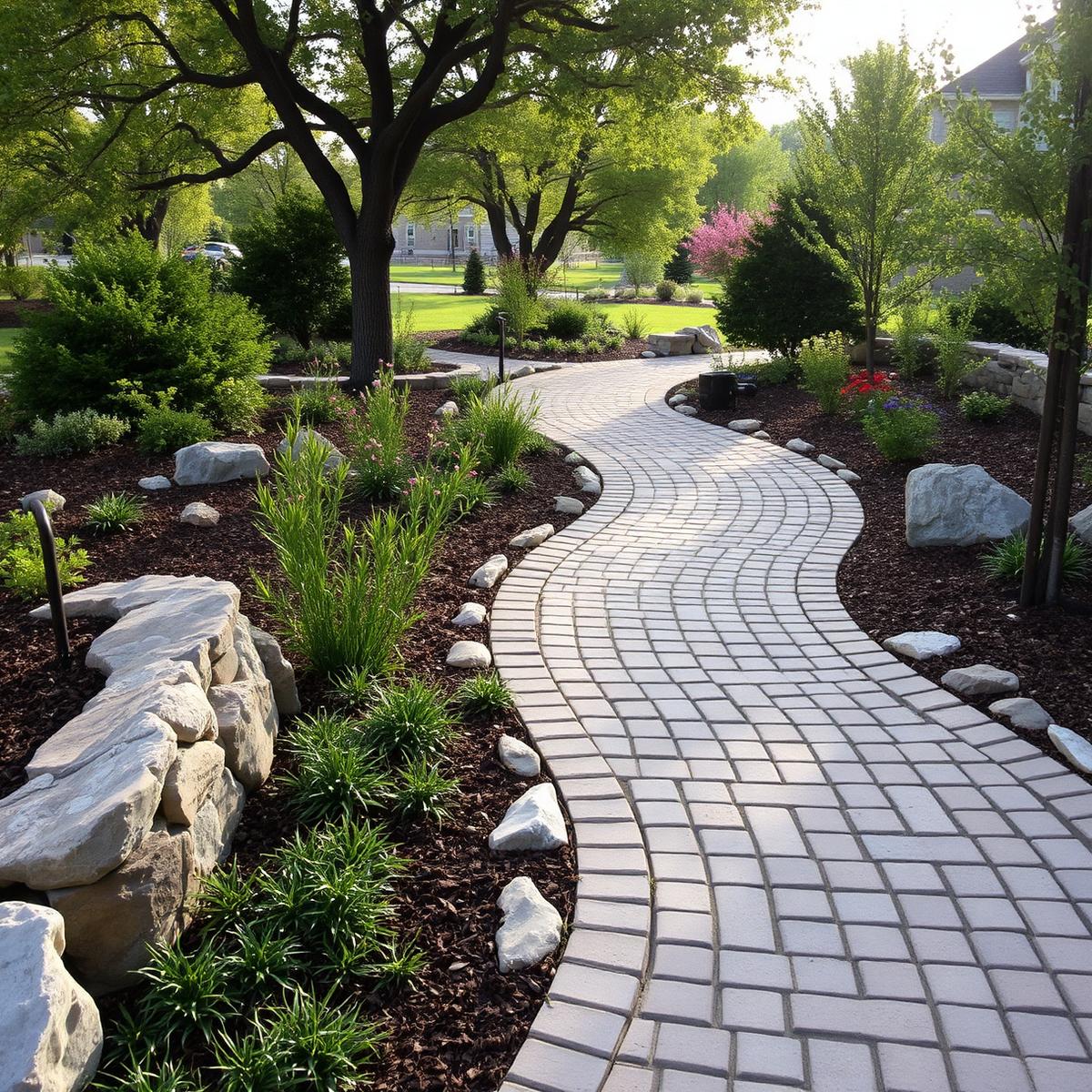
- Border Cuts and Edging: Look at the patio perimeter photos. Professional paver installations feature clean, precise saw-cuts along curved borders and solid concrete sand-set edge restraints rather than exposed dirt edges.
- Joint Uniformity: Check that joint lines are straight and consistent across large patio expanses, showing consistent craftsmanship.
- Drainage Integration: Inspect where rainwater goes. Quality projects integrate subtle surface sloping, channel drains, or catch basins that channel runoff safely away from house foundations and pool decks.
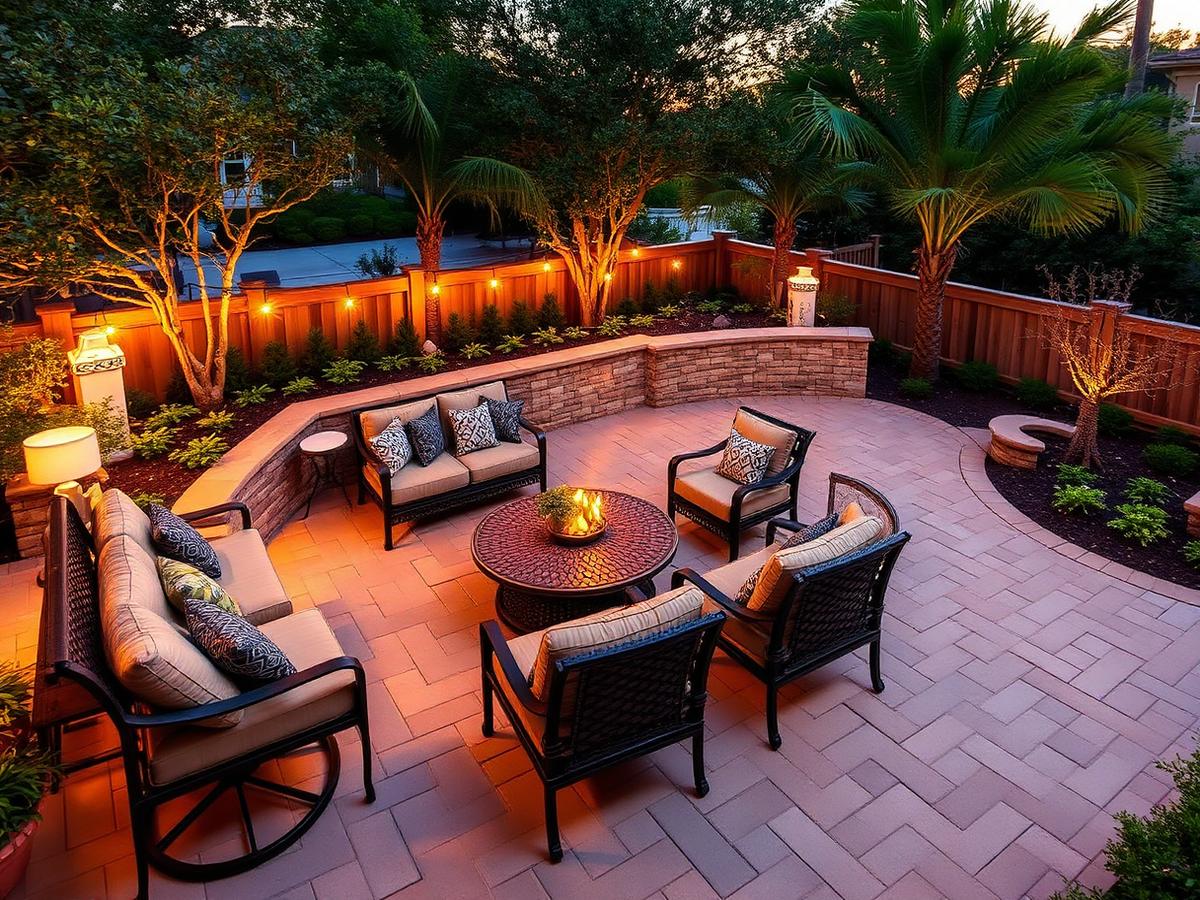
- Surface Consistency: In stamped concrete photos, look for hairline cracks radiating from pattern corners—a sign of stress points. In paver photos, check for smooth transitions across steps and fire pit areas.
Paverston recommendation
For long-term reliability in Frisco's clay soil environment, Paverston strongly recommends interlocking concrete pavers over stamped concrete. The initial investment in a flexible paver system pays for itself by preventing the structural cracking, unsightly patches, and complete surface failures common to poured concrete slabs in North Texas.
Whether you are designing a new outdoor entertaining space, adding a fire pit feature, or replacing an old cracked concrete slab, proper base preparation and premium paver selection ensure your patio stays beautiful for decades.
Ready to upgrade your Frisco backyard with a crack-resistant paver patio? Contact the experts at Paverston today at 214-228-1011 or visit our /contact page to schedule your on-site consultation and detailed project estimate.
Related questions
Does stamped concrete always crack in Frisco?
Yes, almost all poured concrete slabs in Collin County will develop cracks over time due to the deep expansive clay base. Control joints help direct where the concrete cracks, but soil heave frequently causes unexpected surface and structural cracking across stamped patterns.
Can you install pavers over an existing cracked concrete patio?
Overlaying pavers directly over a severely cracked or shifting concrete slab is generally not recommended. If the underlying concrete moves, those movement lines will transfer through to the pavers above. We typically recommend demolishing the old slab ($6–$12/sq ft) and installing a properly engineered aggregate base.
How long do concrete pavers last compared to stamped concrete?
Interlocking concrete pavers typically last 30 to 50 years with minimal maintenance. Stamped concrete slabs often show noticeable wear, surface scaling, or major cracks within 5 to 10 years under North Texas climate extremes.
Do concrete pavers require sealing in North Texas?
Sealing concrete pavers is optional but recommended every 3 to 5 years. A quality penetrating sealer protects against oil stains, enhances color retention, and helps lock joint sand in place during heavy rainstorms.