
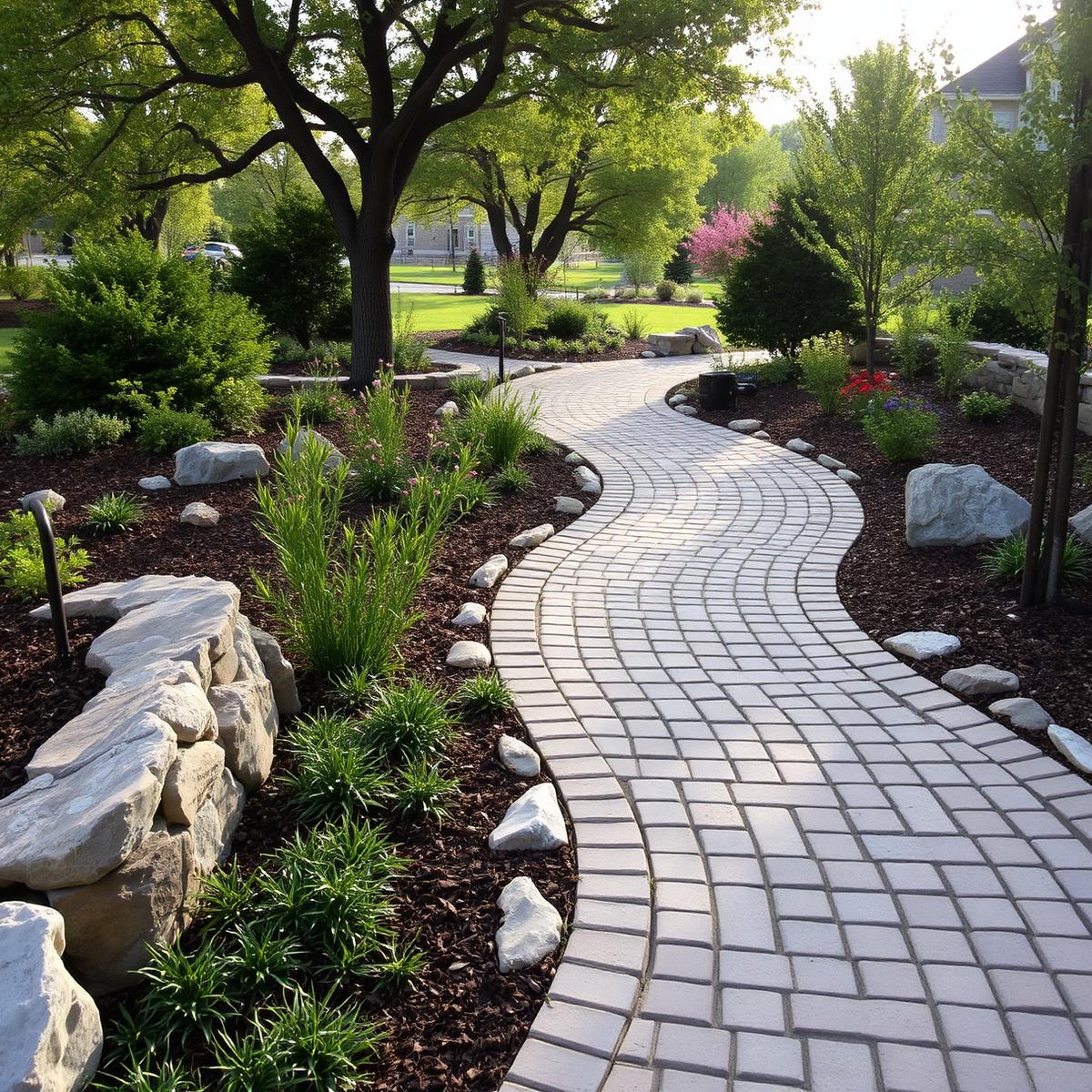
In Frisco, Texas, where heavy Blackland Prairie and Eagle Ford Shale clay dominate the soil profile, a standard residential paver patio base requires a total excavation depth of 8 to 10 inches. This depth accommodates a minimum 6-inch compacted crushed stone sub-base (TxDOT Flex Base or recycled crushed concrete), a 1-inch bedding layer of sharp, coarse concrete sand, and a standard 2.375-inch (60mm) concrete paver.
Skipping deep excavation in Frisco clay is the primary cause of premature patio failure across Collin and Denton counties. Because expansive native clay swells significantly when saturated during sudden North Texas thunderstorms and shrinks tightly during scorching 100°F summer droughts, a shallow 3-to-4-inch base quickly leads to sunken pavers, open joints, tripping hazards, and standing water within just two to three seasons.
What this means for a DFW homeowner
Frisco soil is notorious among hardscape contractors for its high Plasticity Index (PI). When native clay absorbs moisture, it exerts massive upward and lateral pressure against hard surfaces. When it dries out, it recedes, leaving air pockets and uncontained voids.
For a Frisco homeowner, a properly engineered base acts as a flexible structural bridge between this reactive ground and your finished outdoor living space. Instead of allowing ground movement to translate directly into the pavers, a 6-inch compacted stone sub-base absorbs subgrade shifts while distributing surface weight evenly.
Furthermore, deep excavation requires a non-negotiable secondary component: heavy-duty non-woven or woven geotextile filter fabric installed directly on top of the excavated clay prior to laying down the stone base. Without geotextile fabric, the heavy native clay will swallow crushed aggregate over time during wet freeze-thaw cycles, effectively destroying your sub-base thickness from the bottom up.
Best surface or material options for this project
When planning a patio over expansive clay in Frisco, choosing the right combination of pavers and base materials is critical to long-term performance:
- Interlocking Concrete Pavers (60mm / 2.375"): The gold standard for DFW patios. Their manufactured strength and interlocking friction joints allow the patio to move microscopic amounts during severe ground shifts without cracking or breaking loose.
- Natural Travertine Pavers (30mm or 2"): Extremely popular in Frisco backyards for their cool-touch surface during hot summers. Travertine requires an ultra-stable base—often requiring 6 to 8 inches of aggregate sub-base plus a modified crushed stone or open-graded bedding layer to prevent natural stone cracking (+25% to +40% material cost premium over standard concrete pavers).
- Porcelain Pavers (20mm): Sleek, non-porous, and stain-resistant, but require rigid or semi-rigid setting beds over deep, highly compacted aggregate bases to guarantee zero surface deflection.
- Flex Base Material: TxDOT Grade 2 crushed stone or crushed concrete containing a balanced mix of 3/4-inch rock down to fine stone dust. When moisture-conditioned and compacted, it locks together into a dense, solid mat.
Base prep, drainage, and North Texas soil details
A long-lasting paver patio in Frisco relies entirely on disciplined site preparation and proactive water management. At Paverston, our base preparation process follows strict hardscape engineering guidelines:
- Marking and Utility Checks: Before digging, Texas 811 is called to locate underground electrical, gas, and fiber optic lines. Irrigation lines are identified and temporarily capped or rerouted.
- Excavation to Native Subgrade: We excavate 8 to 10 inches below the intended final paver height. Roots, topsoil, and organic debris are removed down to clean, dense native clay.
- Subgrade Compaction & Geotextile Fabric: The exposed raw clay is compacted with a mechanical vibratory plate compactor. We then line the entire trench with commercial-grade geotextile soil stabilization fabric, overlapping seams by at least 12 inches and extending fabric up the side walls of the excavation.
- Flex Base Lifts & Moisture Control: We install the crushed aggregate base in two distinct 3-inch lifts. Each lift is lightly sprayed with water to achieve optimum moisture content and compacted to 98% Standard Proctor density using a heavy-duty 5,000+ lb force plate compactor.
- Coarse Sand Bedding Layer: Exactly 1 inch of uncompacted, coarse concrete sand (ASTM C33) is screeded flat using 1-inch pipe guides. Fine masonry sand or stone dust is never used for this setting bed because it traps water and washes out.
- Positive Drainage Pitch: The entire base is laser-leveled to ensure a minimum slope of 1/4 inch per linear foot (a 2% pitch) away from the home’s foundation. If the backyard has a high water table or flat grading, integrated channel drains, catch basins, or underground PVC piping are tied into the base system.
Cost guidance in Dallas–Fort Worth
All professionally installed paver projects in the DFW metroplex start at $20 per square foot. Total project costs depend on excavation complexity, old surface demolition, total base thickness, and material selection.
| Patio Project Type | Avg. Excavation Depth | Base Thickness | Installed Cost Range (per sq ft) |
| :--- | :--- |
|---|
| Standard Paver Patio | 8 – 10 inches | 6" Flex Base + 1" Sand Bedding | $20 – $32 |
| Travertine / Porcelain Patio | 9 – 11 inches | 6–8" Flex Base + Bedding Layer | $25 – $45 |
| Heavy-Duty Vehicle Driveway | 12 – 14 inches | 8–10" Flex Base + 1" Sand | $22 – $38 |
| Pool Deck Paver Installation | 8 – 10 inches | 6" Flex Base + 1" Sand Bedding | $26 – $44 |
| Concrete Demo Add-On | N/A (Existing Slab) | Removal of existing 4" slab | +$6 – $12 |
| Existing Paver Demo Add-On | N/A (Old Pavers) | Removal and haul-off | +$4 – $8 |
Note: Complex patterns, soldier course borders, retaining walls, steps, or multi-level steps add roughly 15% to 25% to overall labor costs.
What to look for in photos or during a site visit
When evaluating a hardscape contractor's active job site or reviewing past project portfolios, look for these indicators of correct base execution:
- Visible Fabric Barriers: You should see black geotextile fabric extending under the stone base and pinned along the edges of the excavated patio perimeter.
- Commercial Compaction Equipment: Workers should be operating heavy gas-powered vibratory plate compactors or rammers. Hand tampers are completely inadequate for Frisco clay.
- Laser Level Setup: A rotary laser level mounted on a tripod should be active on site to verify proper pitch away from the residence.
- Spiked Edge Restraints: Solid plastic or aluminum edge restraints secured into the compacted base with 10-inch steel spikes spaced every 12 inches. Without edge restraints, side pavers will spread outward over time.
- Clean Sand Bedding: Screeded sand should be uniform, dry-to-damp coarse concrete sand without standing footprints before pavers are laid.
Paverston recommendation
Building a beautiful, enduring paver patio in Frisco requires respecting the power of North Texas clay soil. Skimping on 2 or 3 inches of base depth might save a few hundred dollars on excavation today, but it virtually guarantees thousands of dollars in restoration costs tomorrow.
At Paverston, every patio we construct in Frisco, Plano, Prosper, and McKinney includes full 8-to-10-inch deep site preparation, heavy geotextile soil stabilization, engineered aggregate compaction, and laser-guided drainage. Whether you are envisioning a custom backyard patio, a sprawling pool deck, or a grand front entry walkway, our team delivers craftsmanship built to withstand DFW soil movement.
Ready to transform your backyard? Contact Paverston today at 214-228-1011 or visit /contact to schedule your on-site consultation and receive an accurate, written estimate starting at $20/sq ft.
Related questions
Can I build a paver patio directly on top of Frisco dirt without a base?
No. Laying pavers directly on raw Frisco clay will result in complete failure within months. Rain causes native clay to soften into mud, causing pavers to sink unevenly under foot traffic, while summer drying creates deep soil fissures that tilt pavers off level.
Why is geotextile fabric so critical under a paver base in North Texas?
Geotextile fabric acts as a permanent barrier between the soft subgrade clay and the hard aggregate sub-base. In high-plasticity DFW soils, heavy rain causes wet clay to pump upward into crushed stone, swallowing the base material and leading to surface rutting. Fabric prevents this cross-contamination permanently.
How far past the paver edge should the aggregate base extend?
The aggregate sub-base should extend outward at least 6 inches past the final perimeter edge of the pavers. This extra width creates a stable anchor shoulder for driving 10-inch edge restraint spikes and prevents edge pavers from sloughing off into surrounding lawn turf.
What happens if my yard has poor drainage near the house?
If your Frisco yard lacks adequate slope or holds standing water, Paverston integrates subsurface drainage solutions during base excavation. This includes installing French drains, catch basins, or solid PVC pipe lines beneath or alongside the aggregate base to collect stormwater and discharge it safely away from your home's foundation.