
To keep a paver patio from sinking in Fort Worth’s notoriously expansive clay soil, you cannot rely on standard shallow excavation or simple sand beds. The secret lies in creating a rigid, free-draining structural foundation that completely isolates the pavers from the movement of the subterranean native clay. At Paverston, our base prep protocol for North Texas requires excavating 8 to 10 inches into the subgrade, laying down heavy-duty non-woven geotextile fabric, and building a dense, mechanically compacted aggregate sub-base.
Without this engineered base layer, the moisture cycles in Tarrant County—where heavy spring rains swell the clay and hot summer droughts shrink it—will rapidly undermine your patio. Proper site excavation, soil separation, crushed limestone compaction in thin lifts, and intentional slope drainage ensure your paver patio stays level, smooth, and structurally stable for decades.
What this means for a DFW homeowner
Fort Worth sits on thick layers of Blackland Prairie and Eagle Ford clay soils. These soil types possess a high plastic index, meaning they expand significantly when absorbing moisture and contract sharply during extended dry spells. If pavers are installed directly on top of clay or over a thin 3-inch gravel base, the underlying ground acts like an unstable accordion.
During a rainy North Texas spring, saturated clay softens and yields under foot traffic or heavy patio furniture, causing individual pavers to sink and dip. In August, as the soil dries out and cracks, whole sections of the patio can settle unevenly, creating hazardous trip edges and low spots where future rainwater will pool. For a DFW homeowner, proper base preparation is not an optional upgrade; it is the single most important factor determining whether your patio lasts 30 years or fails in 2.
Best surface or material options for this project
When building an outdoor patio over expansive clay, pairing the right paver material with a solid base design is critical. Interlocking concrete pavers and natural stone each react slightly differently to subtle ground stresses:
- Interlocking Concrete Pavers: The industry standard for Fort Worth backyards. Because individual concrete pavers feature chamfered edges and flexible sand joints, they absorb micro-movements without cracking like poured concrete slabs. Look for 60mm (2.36-inch) thick pavers for standard residential patio use.
- Travertine Pavers: Excellent for high-heat exposure and barefoot patio comfort. Travertine handles North Texas summers exceptionally well, but requires a flawless 6-inch compacted aggregate base and high-performance polymeric joint sand to remain locked in place.
- Porcelain Pavers: Extremely durable, stain-resistant, and non-porous. Porcelain requires precise surface leveling and specialized base bedding (or open-graded aggregate systems) to handle shifting underlying subgrades without cracking.
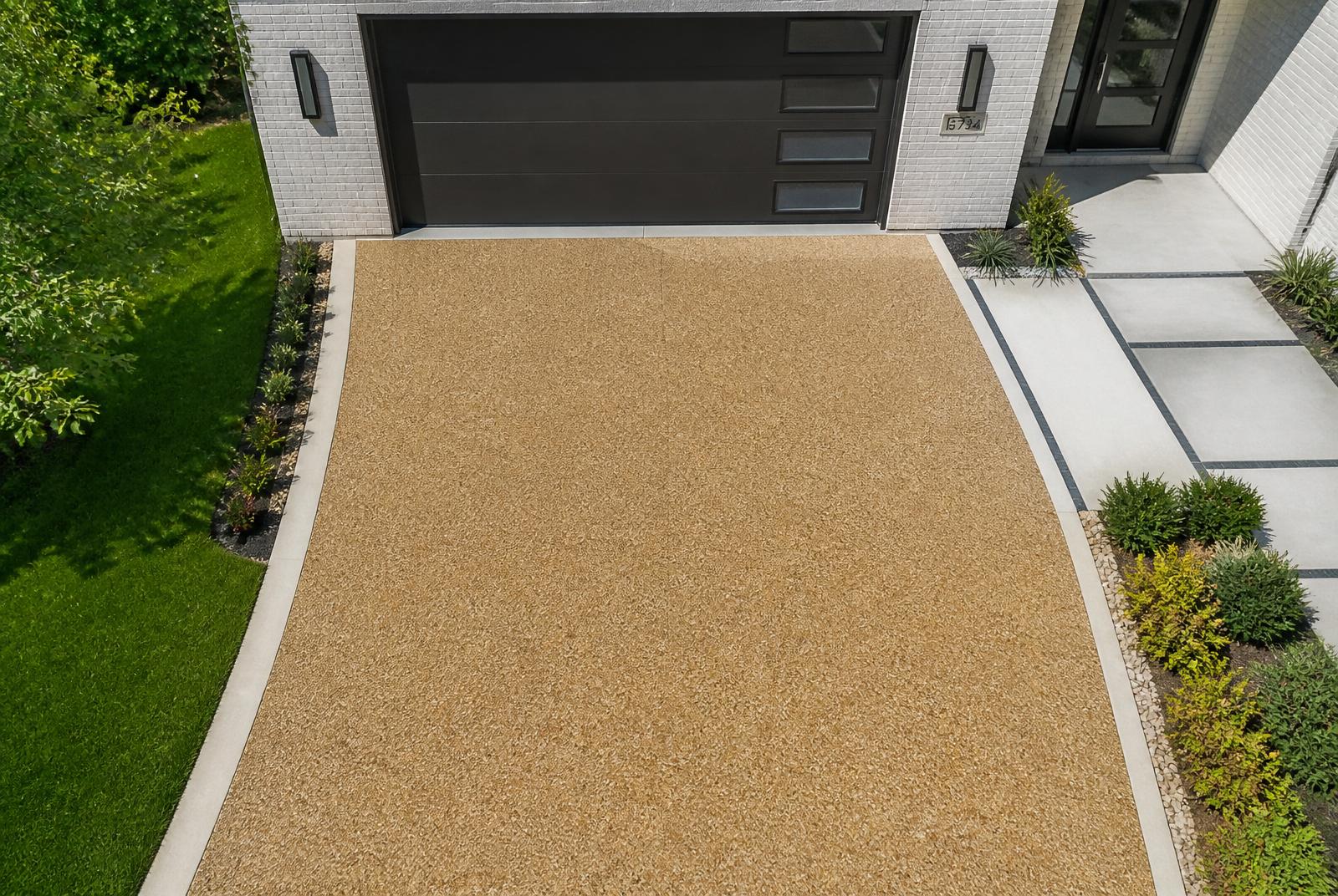
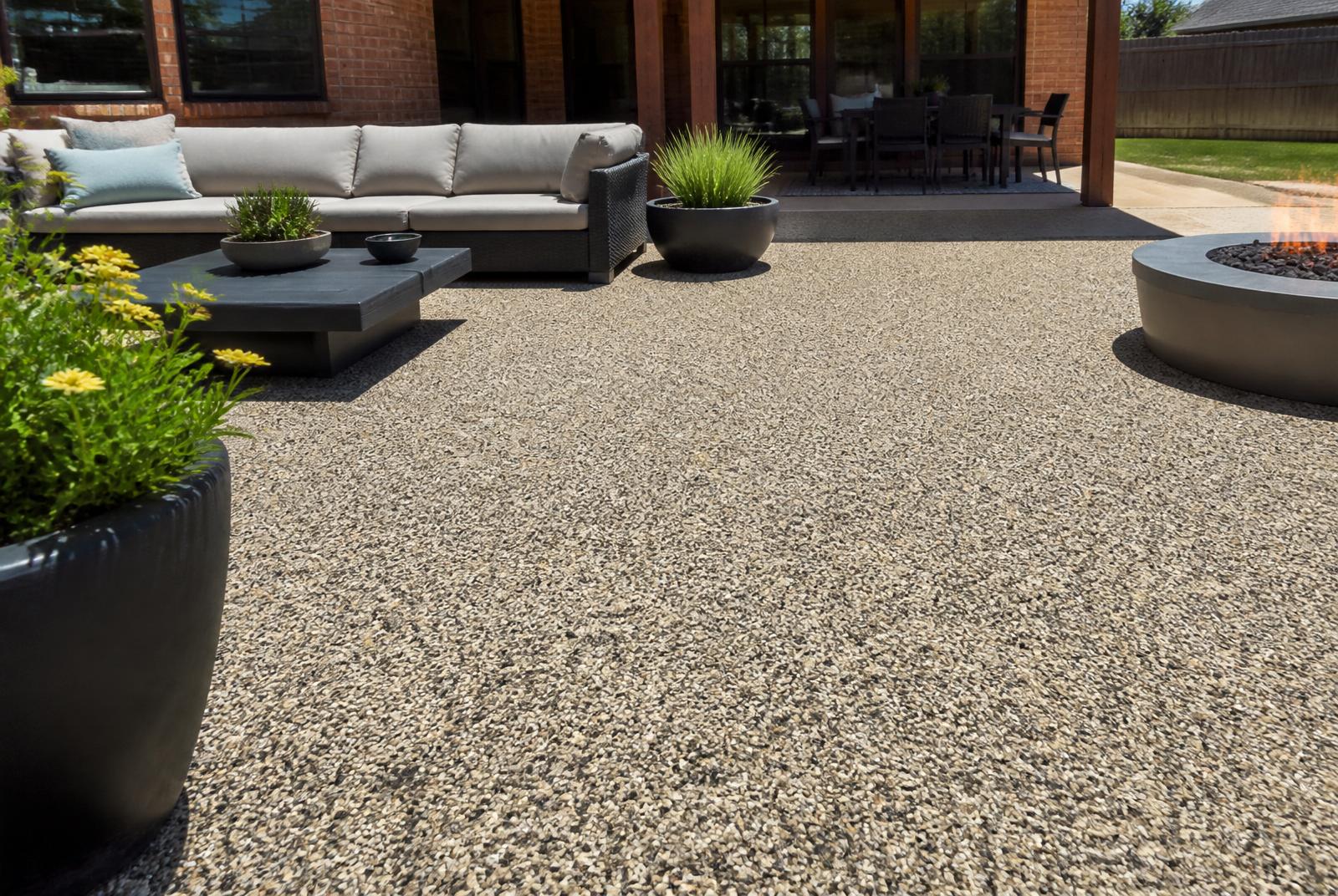
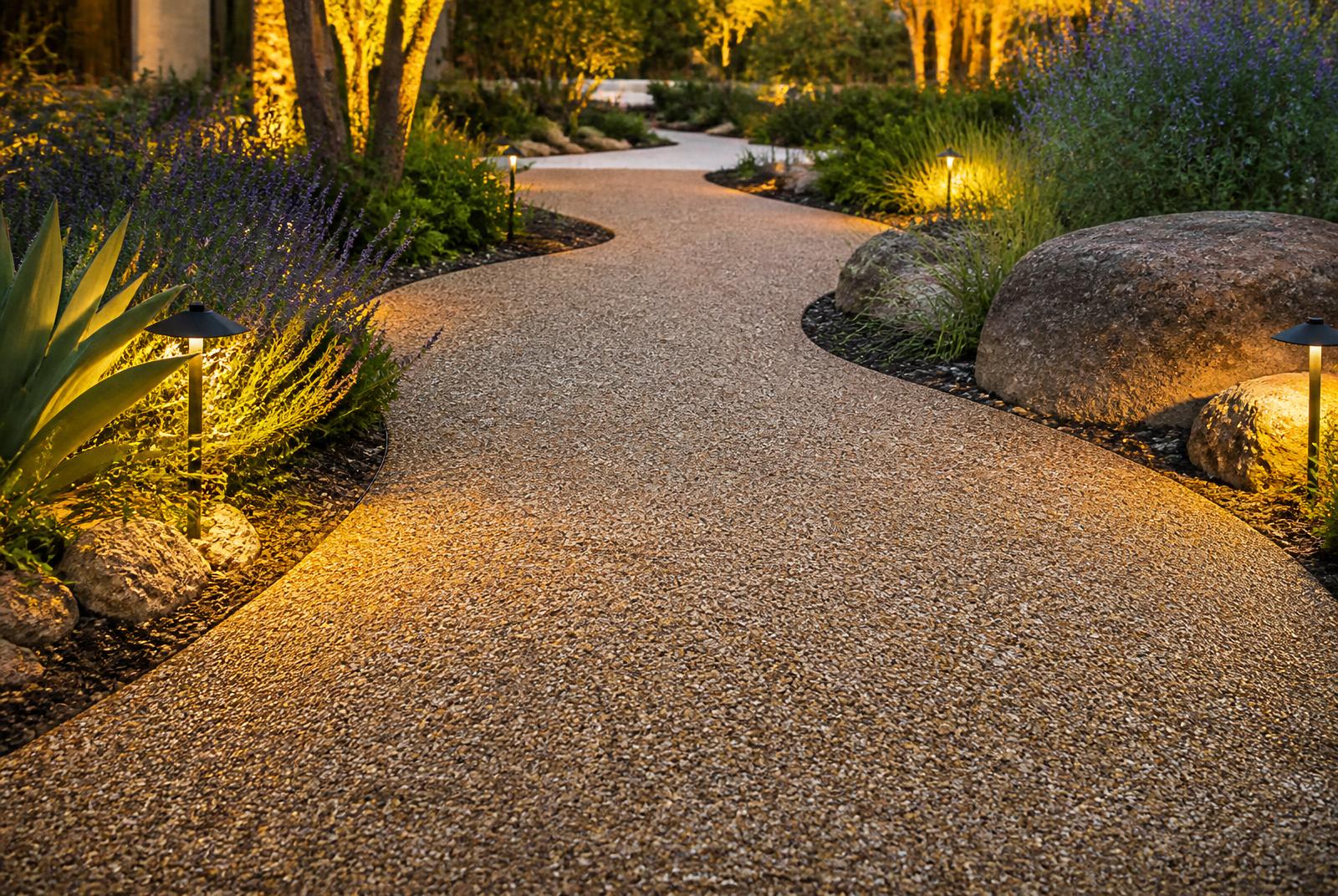
In our patio project photos across Fort Worth, you can see how thick, high-density pavers combined with tight jointing systems maintain clean sightlines even along expansive perimeter edges.
Base prep, drainage, and North Texas soil details
To build a paver patio base that withstands Fort Worth soil movement, Paverston follows a strict four-step geotechnical installation sequence:
- Deep Excavation: We excavate 8 to 10 inches below final finished grade, removing topsoil, organic debris, and loose clay. We establish a clean, uniform native subgrade sloped slightly away from home foundations.
- Geotextile Soil Separation: We lay heavy-duty, non-woven geotextile fabric across the entire bottom and sides of the excavated trench. This fabric acts as a permanent barrier, stopping crushed stone from sinking into soft wet clay while allowing subterranean water to drain through freely.
- Compacted Aggregate Base (Flex Base): We backfill with 6 inches of crushed Texas DOT Grade 1 limestone aggregate (flex base or crushed rock with fines). We apply this aggregate in 2-to-3-inch layers (lifts), running a heavy mechanical plate compactor over every lift to achieve 98% Standard Proctor Density.
- Bedding Sand & Sloping: We screed a crisp 1-inch uniform layer of coarse, washed concrete sand directly over the compacted base. The base layer is set at a continuous slope of 1/4 inch per linear foot away from all structures, directing surface runoff straight toward yard drainage points or French drains.
Cost guidance in Dallas–Fort Worth
Base preparation in heavy clay soil requires specialized excavation machinery, soil disposal, material trucking, and rigorous mechanical compaction. All paver patio installations by Paverston in DFW start at $20 per square foot, with total costs depending on material selection, site access, and existing site demolition.
| Project Type / Scope | Average Range (Installed) | Key Base Prep Considerations |
| :--- | :--- | :--- |
| Standard Concrete Paver Patio | $20 – $32 / sq ft | Includes 8-10" dig, geotextile fabric, 6" flex base, 1" sand bed, pavers, & joint sand. |
| Travertine or Porcelain Patio | $26 – $44 / sq ft | Includes deeper base compaction, premium stone pavers, special bedding sand, & polymeric jointing. |
| Concrete Removal (Demolition) | +$6 – $12 / sq ft | Demolishing and hauling away existing cracked concrete slabs prior to excavation. |
| Existing Paver Demo / Reset | +$4 – $8 / sq ft | Removing failing DIY or improperly installed paver systems to rebuild the sub-base. |
| Complex Patterns or Tight Access | +15% – 25% | Manual wheelbarrow haul-off and intricate border hand-cutting around patio features. |
What to look for in photos or during a site visit
When evaluating paver contractors or examining in-progress jobsite photos, look for these key indicators of proper base preparation in clay soil:
- Fabric visible before gravel: You should clearly see black or grey geotextile fabric lining the bare dirt trench before any crushed stone is dumped.
- Laser levels on site: Professional crews use transit laser levels throughout excavation to ensure precise slope away from the house foundation.
- Mechanical plate compactors: Compactors should be active on every 2-3 inch lift of base stone, not just used once at the very end.
- Thick aggregate depths: Look at the trench edge next to lawn turf—there should be a visible cut showing 6 inches of gray stone base under the sand and pavers.
Paverston recommendation
Never allow a contractor to cut costs by eliminating soil separation fabric or digging only 3 or 4 inches into Fort Worth clay. Cutting corners on base depth leads directly to sunken pavers, uneven steps, and standing water. Paverston builds every patio foundation to engineered commercial standards so your living space handles Texas heat waves and torrential spring storms with zero settling.
Ready to build a permanent, stable paver patio in Fort Worth? Contact Paverston today at 214-228-1011 or visit our Contact Page to schedule a free on-site soil evaluation and detailed project estimate.
Related questions
How deep should you dig for a paver patio in Fort Worth?
For residential patios in Fort Worth clay soil, excavate 8 to 10 inches deep. This allows for 6 inches of compacted crushed limestone aggregate base, 1 inch of coarse bedding sand, and a standard 2.36-inch (60mm) paver, keeping the finished surface flush with surrounding turf or framing.
Is geotextile fabric really necessary under paver aggregate?
Yes. In expansive clay soils like Fort Worth's, geotextile separation fabric is mandatory. Without fabric, wet clay works its way upward into the gravel base under foot pressure, while the crushed aggregate sinks into the mud, causing the patio surface to dip and sink.
How do you handle drainage under a Fort Worth paver patio?
Proper drainage requires sloping the compacted base 1/4 inch per foot away from all buildings. In tight backyards with high clay content, Paverston integrates subsurface catch basins, French drains, or edge channel drains to route water cleanly away from the patio perimeter.
Can you lay pavers directly over Fort Worth clay soil?
No, laying pavers directly over Fort Worth clay soil will guarantee project failure. Rainwater will turn the raw clay beneath the pavers into mud, causing individual stones to sink, tilt, separate, and create severe tripping hazards within a single season.