
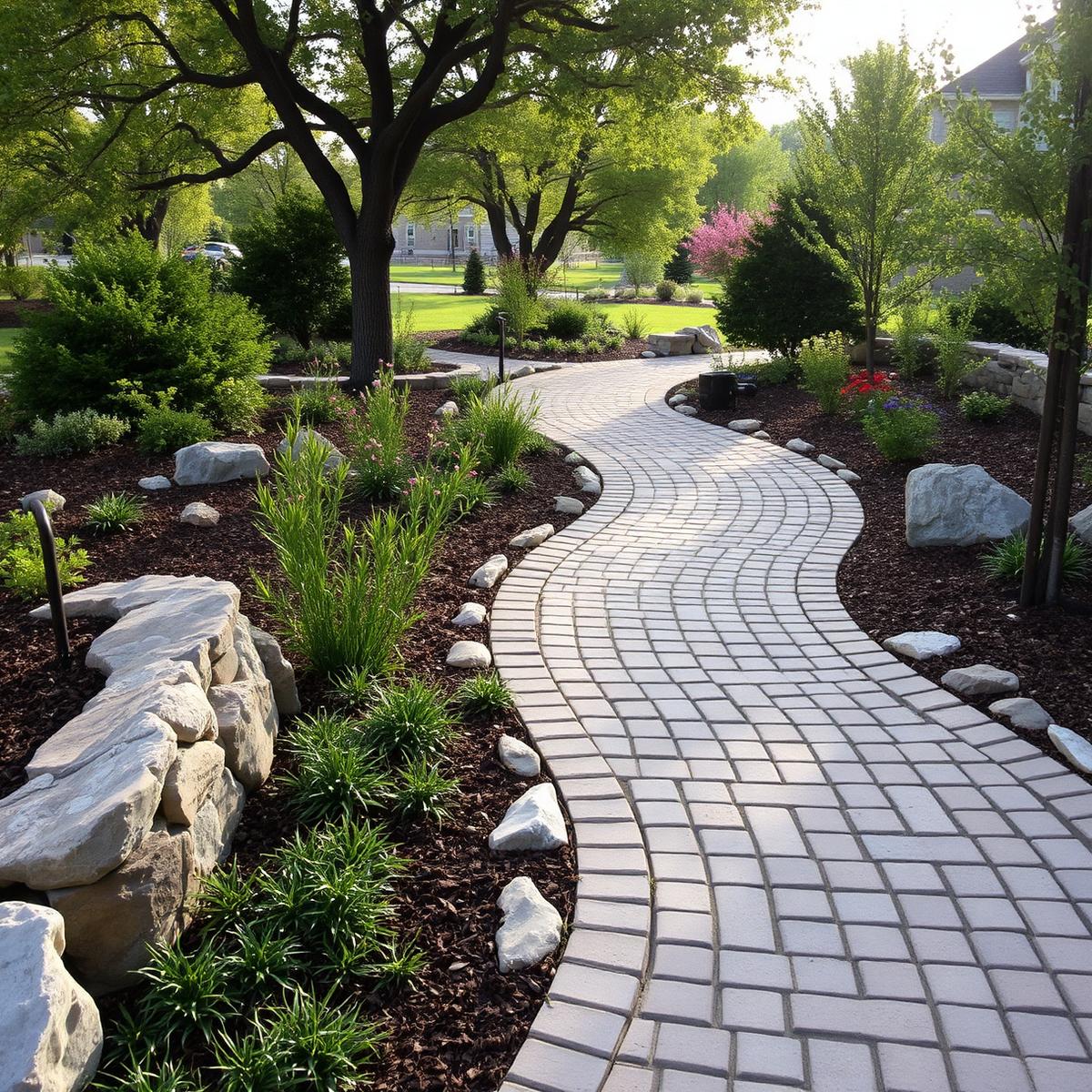
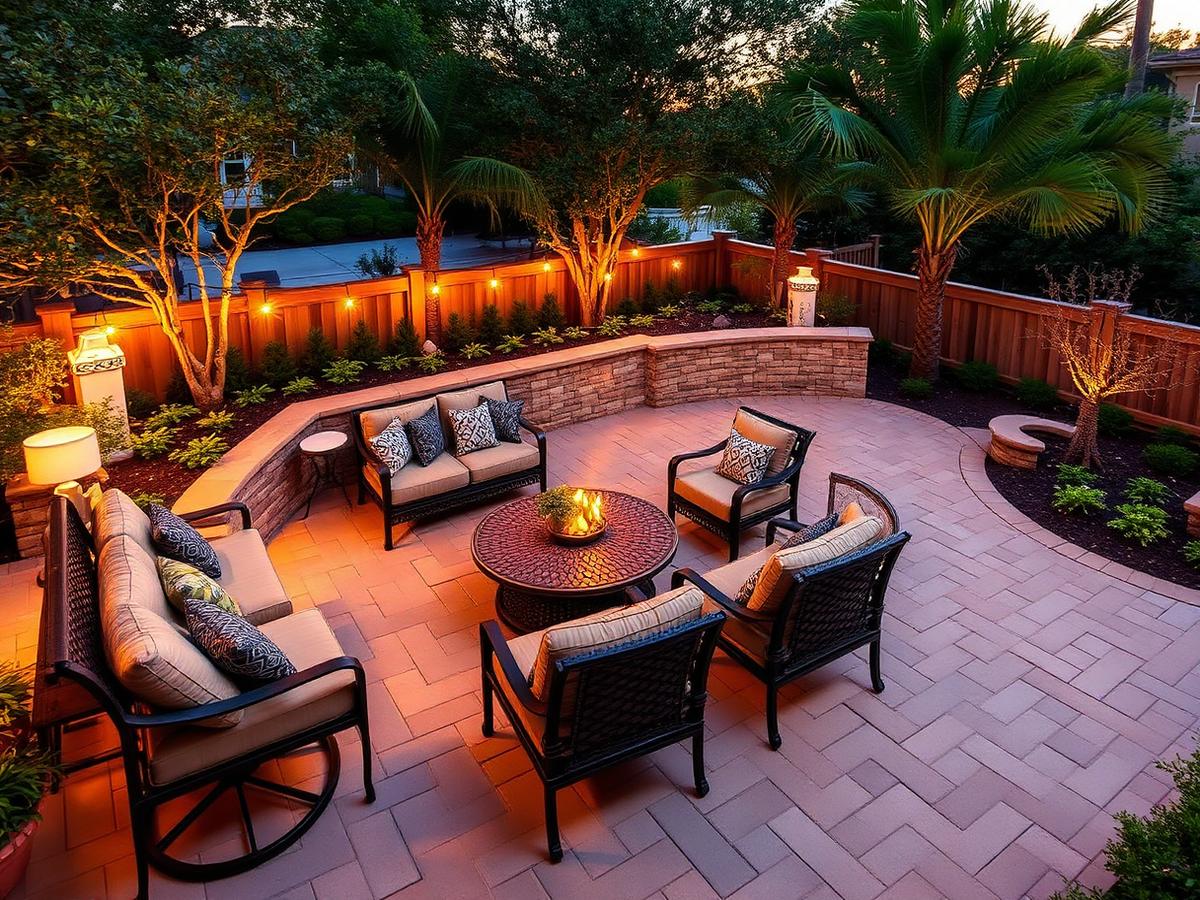
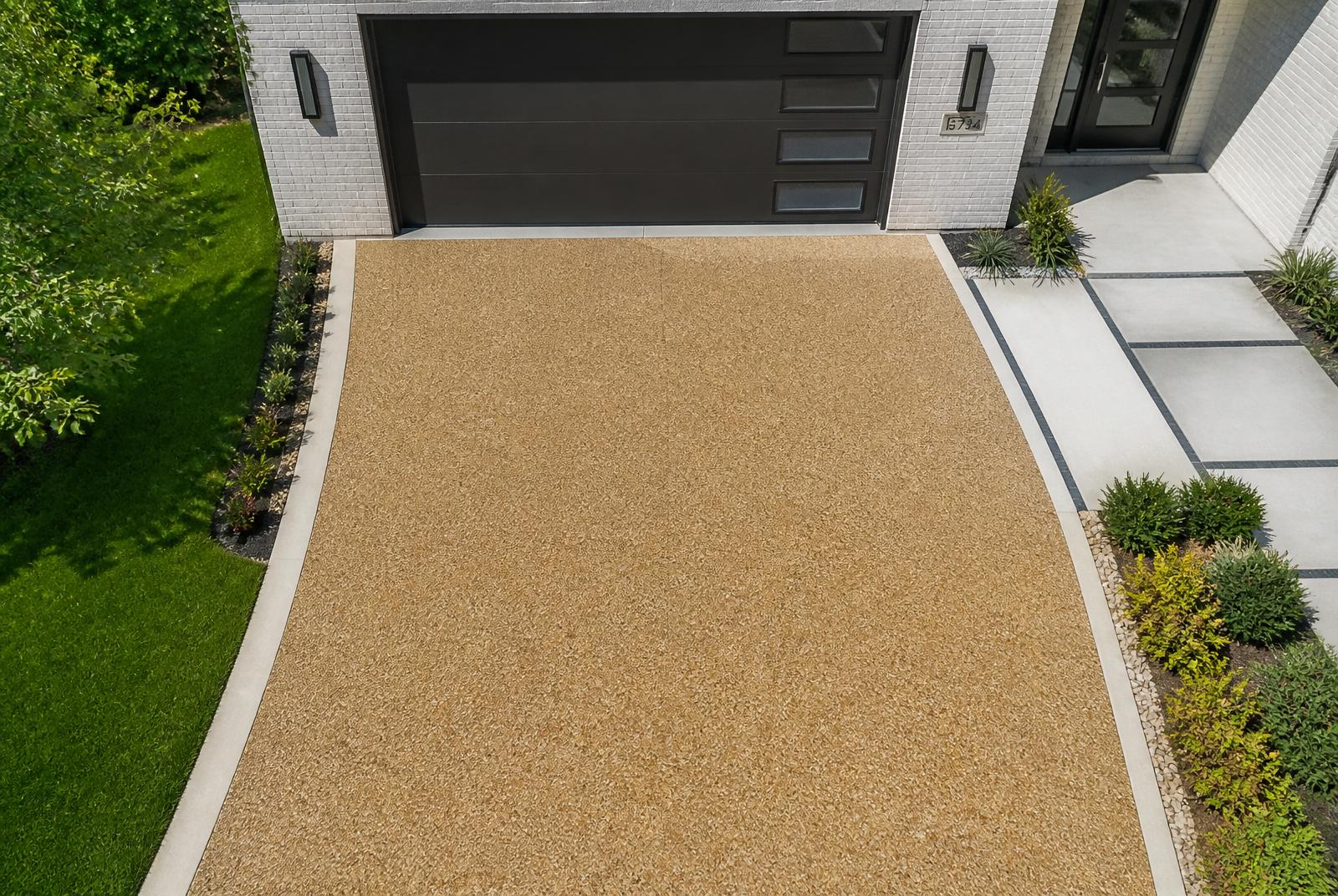
When installing a new driveway in Fort Worth, concrete pavers handle the region's aggressive Blackland Prairie clay significantly better than stamped concrete. Blackland soil swells dramatically when saturated with rain and shrinks severely during dry Texas summers, creating thousands of pounds of hydraulic pressure under your driveway. Stamped concrete forms a continuous, rigid slab that inevitably cracks under this constant movement, breaking the stamped decorative pattern and creating eyesores that are nearly impossible to patch invisibly.
Interlocking concrete pavers, by contrast, form a flexible pavement system composed of individual high-density units linked by engineered joint sand. As the subgrade soil expands and contracts, the paver system articulates micro-adjustments without cracking or losing structural load capacity. At Paverston, we install paver driveways across Tarrant County specifically engineered to absorb North Texas ground movement while maintaining structural integrity under heavy vehicle traffic.
What this means for a DFW homeowner
Fort Worth sits squarely atop expansive clay formations that expand by up to 10% or more when wet. For a homeowner considering a driveway replacement, this soil movement directly determines how your investment will age over five, ten, or twenty years.
A stamped concrete driveway relies on control joints cut into the slab to encourage cracking along straight lines. However, clay soil expansion rarely follows straight lines. Differential soil movement across a 50-foot driveway will cause uncontrolled diagonal cracking directly across your stamped patterns. Once control joints or decorative textures crack, water penetrates beneath the slab, accelerating clay expansion and creating soft spots under the driveway.
Interlocking pavers eliminate monolithic tensile stress. Because hundreds of individual joints absorb ground movement, the surface remains uniform. If subgrade failure ever occurs due to extreme soil movement or a water line leak beneath the driveway, individual pavers can be lifted, the base re-compacted, and the original pavers reinstalled without leaving a visible patch or mismatched dye job.
Best surface or material options for this project
Driveways require materials rated for dynamic vehicle loads and rotational tire stress. Here is how the surface options evaluate for Fort Worth homes:
- 80mm Heavy-Duty Concrete Pavers: The gold standard for residential driveways. Thick 80mm (3.15-inch) concrete pavers provide deep interlocking strength capable of supporting heavy pickup trucks and SUVs. Available in smooth contemporary finishes or textured tumbled styles.
- Permeable Concrete Pavers: Designed with wider joint openings filled with crushed aggregate. Permeable pavers allow heavy rainfall to drain directly through the surface into the subbase, reducing runoff while keeping the underlying soil moisture levels more consistent.
- Stamped Concrete: A poured concrete slab stamped with texturing mats and stained. While initially attractive, it forms a brittle 4-inch shell that is vulnerable to soil heave and surface spalling from thermal expansion.
- Travertine or Porcelain Pavers: Excellent for patios and pool decks, but standard 20mm porcelain or 1.25-inch travertine is generally unsuitable for vehicular driveway loads unless set over a specialized reinforced concrete bed.
Base prep, drainage, and North Texas soil details
In Fort Worth, a driveway surface is only as stable as the subbase beneath it. Skipping proper base depth in Blackland Prairie soil guarantees driveway failure regardless of the material used.
- Deep Subgrade Excavation: We excavate 10 to 14 inches below final grade to remove organic topsoil and expose the dense subgrade clay.
- Geotextile Fabric Separation: A heavy-duty woven geotextile fabric is laid over the clay subgrade. This critical barrier prevents the expansive clay from migrating upward into your clean base gravel during wet cycles.
- Compacted Crushed Stone Base: We install 8 to 12 inches of crushed aggregate stone (Flexbase/TxDOT Grade 4), compacted in 2-inch lifts to 98% Standard Proctor Density. This rigid gravel matrix acts as a bridge over shifting clay.
- Bedding Layer & Edge Restraints: A precise 1-inch layer of coarse concrete sand levels the pavers, framed by heavy-duty concrete edge restraints anchored into the aggregate base to prevent outward lateral spreading.
- Polymeric Joint Sand: Sand treated with binding polymers fills the paver joints, locking the units together while keeping surface water from saturating the base aggregate.
Cost guidance in Dallas–Fort Worth
While stamped concrete carries a lower initial installation cost, concrete pavers provide lower total cost of ownership in DFW due to zero slab-replacement costs and simple spot repairs. Paverston driveway installations start at $20/sq ft, with typical driveway projects running between $22 and $38 per square foot depending on site access, base requirements, and paver style.
| Driveway Feature / Metric | Interlocking Concrete Pavers | Stamped Concrete Slab |
| :--- | :--- | :--- |
| Installed Cost Range (DFW) | $22 – $38 per sq ft | $16 – $26 per sq ft |
| Existing Slab Demolition | $6 – $12 per sq ft | $6 – $12 per sq ft |
| Resistance to Clay Soil Heave | Exceptional (Flexes without cracking) | Poor (Prone to cracking under heave) |
| Repairability | Seamless (Lift & replace individual units) | Poor (Patches are highly visible) |
| Lifespan in North Texas | 30–50+ Years | 10–15 Years (before major cracking) |
| Surface Maintenance | Polymeric sand top-up every 5 years | Resealing required every 2–3 years |
Note: Demolition of an existing concrete driveway adds $6–$12/sq ft. Complex laying patterns or multi-color borders add 15–25% to paver labor costs.
What to look for in photos or during a site visit
When reviewing driveway contractor portfolios or inspecting past work in Fort Worth, look closely at these structural details:
- Edge Restraint Seams: Check the outer edges where the driveway meets lawn or flowerbeds. High-quality paver work displays straight, fully supported edge lines without sunken peripheral pavers.
- Joint Alignment: Look down long pattern lines. A skilled crew keeps joint lines razor-straight across a 40-foot span without weaving.
- Drainage Channels: Inspect where water travels during heavy rain. You should see subtle surface sloping (1/4 inch per foot minimum) directing water toward street gutters or integrated channel drains.
- Crack Patterns on Older Concrete: On stamped concrete sites older than 3 years, check whether cracks run directly across the stamped tile or wood-grain pattern, cutting through the design aesthetic.
Paverston recommendation
For Fort Worth homeowners tackling Blackland Prairie clay, concrete pavers are the superior long-term investment for driveway replacement. While stamped concrete costs slightly less on day one, its inability to flex under North Texas soil expansion leads to unrepairable cracking and premature replacement.
Paverston installs driveway paver systems engineered specifically for DFW soil dynamics, backed by robust base preparation and deep aggregate compaction. Contact Paverston today at 214-228-1011 or visit our /contact page to schedule an on-site driveway evaluation and receive a detailed, accurate quote for your home.
Related questions
Why does stamped concrete crack so quickly in Fort Worth?
Fort Worth sits on expansive clay soil that expands when wet and shrinks when dry. Stamped concrete forms a rigid, solid slab that cannot bend under this soil movement. Tensile stress builds up until the slab cracks across the stamped pattern.
How thick should driveway pavers be for truck traffic?
Driveway pavers should be at least 80mm (3.15 inches) thick. Thinner 60mm pavers designed for patio use can shift or crack under heavy vehicular loads like full-size pickup trucks and delivery vans.
Can you fix settled pavers after a water line leak?
Yes. Unlike stamped concrete which requires smashing and re-pouring the entire slab, pavers can be removed individually over the repair zone. After fixing the pipe and re-compacting the soil base, the original pavers are reinstalled seamlessly.
Does a paver driveway require sealing in Texas?
Sealing is optional but recommended. A quality breathable sealer protects the paver colors from intense Texas UV rays, resists oil drops from vehicles, and helps lock the joint sand in place against high-pressure rainfall.