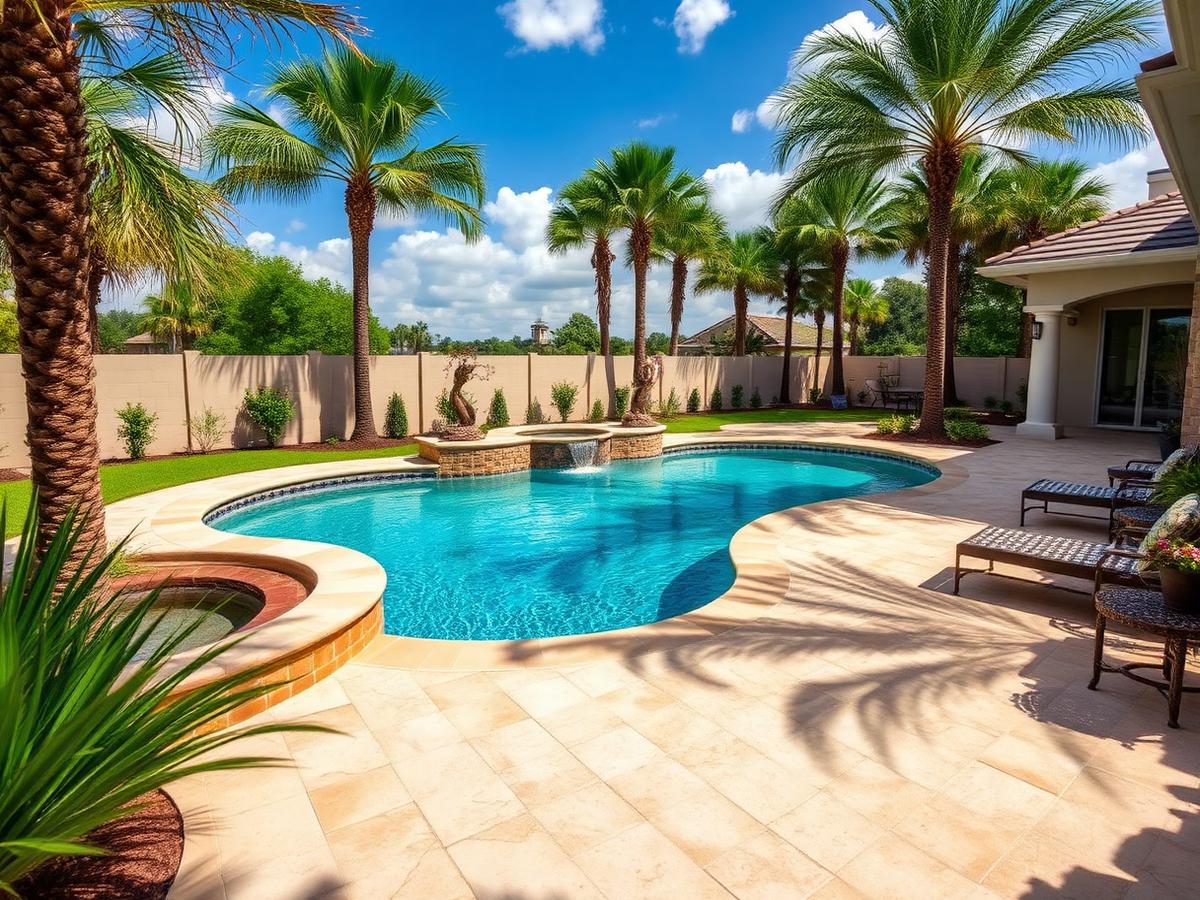
Travertine pavers stay significantly cooler than stamped concrete under the blazing Southlake summer sun. Because natural travertine is a porous, light-reflecting natural stone, it reflects solar radiation and allows sub-surface moisture to evaporate through its pore structure. This natural thermodynamic process keeps light-colored travertine pool decks comfortable for bare feet even when DFW temperatures cross 100°F.
In contrast, stamped concrete acts as a solid thermal mass that absorbs and retains heat throughout the day. Stamped concrete decks—especially those sealed with high-gloss acrylic sealers or finished in medium to dark color tones—can reach scorching surface temperatures above 135°F in peak July and August heat. Beyond thermal comfort, Southlake's expansive clay soils make rigid stamped concrete highly prone to cracking over time, whereas an interconnected travertine paver system flexes naturally with soil movement.
What this means for a DFW homeowner
For homeowners in Southlake and the surrounding Tarrant County area, choosing a pool deck surface comes down to three everyday factors: bare-foot thermal comfort, long-term structural resilience, and ongoing maintenance.
During a typical North Texas summer, outdoor temperatures routinely remain in the upper 90s and 100s for weeks. On a 102°F afternoon in Southlake, surface temperature measurements highlight stark differences:
- Ivory or Light Travertine Pavers: Typically surface-measure between 104°F and 112°F, remaining walkable without footwear.
- Unsealed Standard Concrete: Measures between 120°F and 125°F.
- Stamped Concrete (with color & sealer): Frequently measures between 130°F and 145°F, making bare-foot travel from the water to a lounger uncomfortable or hazardous for children and pets.
Furthermore, Southlake sits atop active Blackland and Eagle Ford clay formations. These expansive soils swell significantly when wet during spring thunderstorms and shrink drastically during hot, dry summer droughts. A rigid monolithic slab like stamped concrete cannot withstand this continuous ground movement without eventually developing visible stress cracks. A travertine paver system is flexible; each stone sits on an engineered gravel base, accommodating soil expansion and contraction without cracking the surface.
Best surface or material options for this project
When planning a custom pool deck project in Southlake, evaluate these top material choices:
1. Light-Tone Travertine Pavers (Ivory, Light, or Walnut)
Natural travertine imported from quarry regions offers unmatched thermal efficiency. For pool decks, an Ivory or French Pattern Light travertine in a tumbled finish is the premier option. Tumbled travertine features micro-textures and open pores that maximize traction when wet while dissipating heat efficiently. Bullnose travertine coping pieces provide smooth, elegant edges along the pool perimeter.
2. Exterior Porcelain Pavers
Thick (2cm) outdoor porcelain pavers engineered with high solar reflectance values (SRI) offer another heat-conscious alternative. While non-porous, light-colored textured porcelain does not absorb heat the way concrete does, though it lacks the natural earthen variation of real quarry travertine.
3. Stamped & Colored Concrete
Stamped concrete utilizes a poured concrete slab textured with rubber stamps to mimic stone, slate, or brick. While initial installation costs are lower than natural stone, stamped concrete requires topcoat acrylic sealers to protect color pigments. These non-porous sealers trap solar heat, turn slick when wet, and require re-application every 2 to 3 years to prevent clouding and UV fading.
Base prep, drainage, and North Texas soil details
A pool deck in Southlake is only as stable as the sub-grade foundation beneath it. Travertine pavers installed incorrectly over raw clay soil will shift unevenly over time. At Paverston, our installation methodology is built specifically for North Texas soil dynamics:
- Excavation & Soil Stabilization: We excavate the perimeter pool subgrade 8 to 10 inches deep to remove unstable topsoil and reach firm clay sub-base.
- Geotextile Barrier: A heavy-duty woven geotextile fabric is laid down to separate the native clay from crushed stone, preventing soil contamination and sub-base sinking during rain events.
- Flex Base Aggregate Base: We install a 6-inch base of crushed limestone flex-base, compacted in 2-inch lifts to 98% Standard Proctor density. This creates a structural foundation that drains water while bridging ground movement.
- Bedding Layer & Drainage Slope: A 1-inch uniform layer of washed concrete sand or coarse aggregate provides setting precision. The entire surface is pitched at a minimum slope of 1/4 inch per foot away from the pool edge and home foundation toward integrated strip drains or area drains.
- Edge Restraints: Perimeter pavers are locked into place using reinforced concrete bond beams or engineered edge restraints to prevent lateral spreading.
Cost guidance in Dallas–Fort Worth
Pool deck installations in Southlake reflect local material availability, labor standards, and site preparation requirements. All Paverston paver projects start at a baseline of $20 per square foot installed, with premium natural stone materials scaling based on detail.
| Surface Option | Average Installed Cost (sq ft) | Surface Temp in 100°F Heat | Resistance to Soil Cracking | 10-Year Maintenance Needs |
| :--- | :--- |
|---|---|
| :--- |
| Travertine Pavers | $26 – $44 / sq ft | Cool (104°F – 112°F) | Excellent (Flexible system) | Low (Occasional re-sanding) |
| Porcelain Pavers | $28 – $42 / sq ft | Moderate to Cool | Excellent (Flexible system) | Very Low (Non-porous) |
| Stamped Concrete | $18 – $28 / sq ft | Hot to Scorching (130°F+) | Poor (Rigid slab cracks) | High (Re-seal every 2-3 yrs) |
| Concrete Removal (Demo) | +$6 – $12 / sq ft | N/A | N/A | N/A |
Note: Complex pattern layouts (such as French Pattern) or tight access around existing pool plumbing add approximately 15% to 25% in labor detail.
What to look for in photos or during a site visit
When reviewing pool deck project photos or evaluating completed installations in North Texas, pay attention to these subtle craftsmanship markers:
- Coping Integration: Look at the edge where the deck meets the pool tile. High-end travertine pool decks feature thick, smooth bullnose travertine coping with uniform grout or sealant joints.
- Surface Texture & Sheen: Inspect photos for artificial shine. A glossy coating indicates acrylic sealer on stamped concrete, which signals high heat retention and slip hazards. Genuine tumbled travertine photos will show a matte, natural stone texture.
- Drainage Detail: Quality builders integrate low-profile slot drains or decorative channel drains seamlessly along travertine paver lines rather than leaving standing water points near outdoor kitchens or back patios.
- Pattern Alignment: Verify that French pattern modular tiles maintain consistent 1/16 to 1/8 inch joint widths across wide expanses without drifting.
Paverston recommendation
If thermal comfort underfoot and long-term durability in Southlake clay soil are your primary goals, travertine pavers are the clear winner over stamped concrete. While stamped concrete may offer a slightly lower upfront cost, its tendency to trap intense summer heat, become slick, and crack under DFW soil shifts makes it a higher-maintenance choice over time.
Paverston specializes in designing and building custom travertine pool decks, outdoor living spaces, and stone patios tailored to North Texas conditions. Contact Paverston today at 214-228-1011 or visit /contact to schedule an on-site consultation and design estimate for your Southlake home.
Related questions
Is travertine paver surface slippery when wet around a pool?
Tumbled travertine pavers are exceptionally slip-resistant around pools. The natural tumbling process opens tiny surface pores and creates an organic texture that offers excellent footwear and barefoot traction, even when wet. Avoid polished or honed-unfilled interior travertine for outdoor pool deck applications.
Can you install travertine pavers directly over an existing concrete pool deck?
Yes, if the existing concrete deck is structurally sound, uncracked, and properly sloped, thin travertine overlay pavers (typically 1.25 inches thick) can be mud-set or thin-set over concrete. However, if the underlying concrete has major cracks from soil movement, those cracks will reflect through the travertine, making complete demolition and a flexible base installation the safer long-term choice.
How do you repair cracked stamped concrete versus damaged travertine pavers?
Repairing cracked stamped concrete is difficult and rarely invisible; patch materials seldom match the original color stain or pattern. Travertine pavers, by contrast, are individual units. If a paver ever stains or chips, it can be lifted out and replaced in minutes without disturbing the rest of the pool deck.
Does travertine require regular sealing in Southlake?
While travertine does not require sealing to maintain its structural integrity, applying a breathable, penetrating (impregnating) sealer every 3 to 5 years helps resist organic stains from leaf drops or outdoor dining while preserving the natural stone color without adding surface heat or gloss.