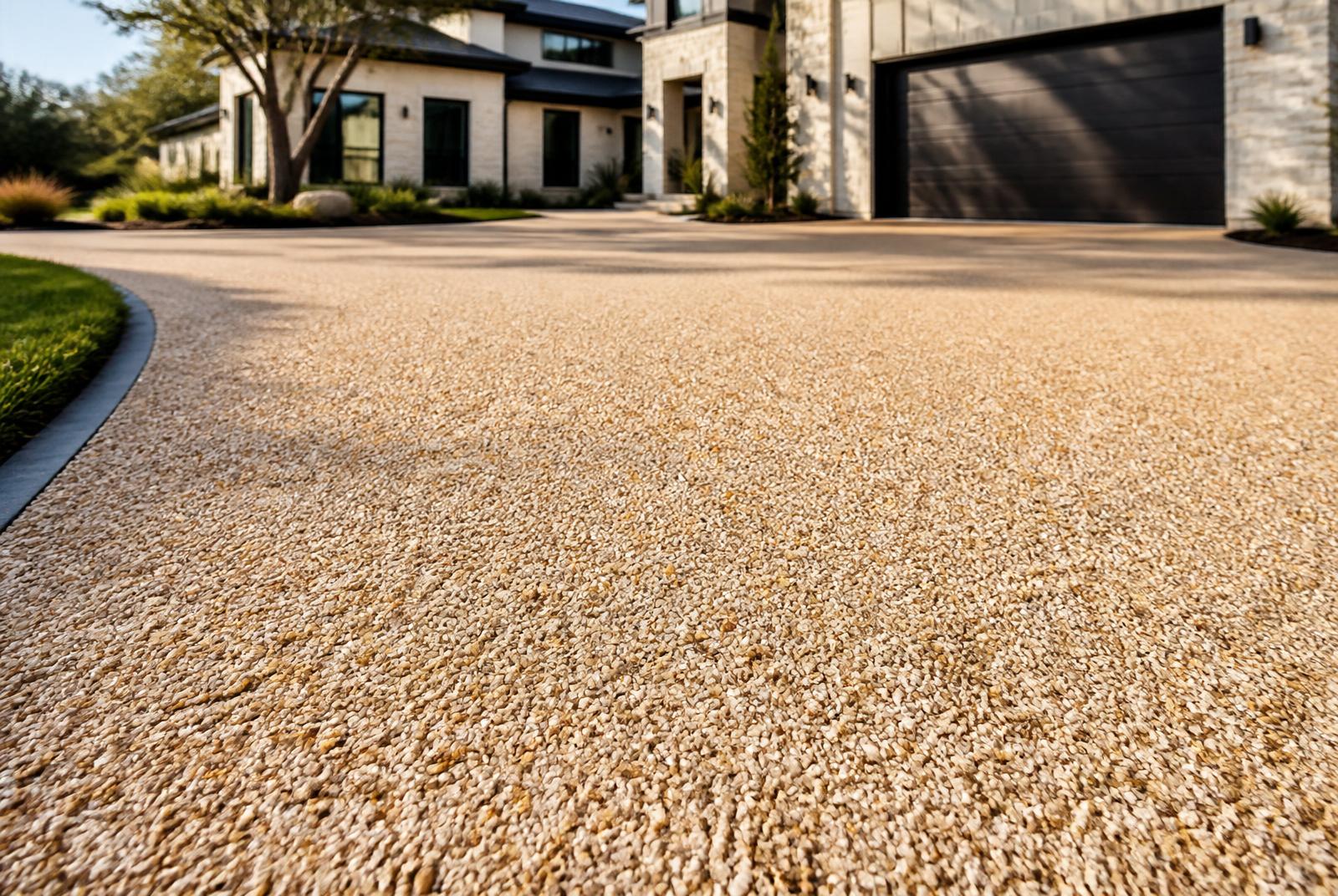
Resin Bound Stone vs Pavers
Two premium surfaces, two very different install philosophies.
Written and reviewed by Mark — owner and lead estimator at Paverston, 30+ years installing pavers across Dallas–Fort Worth.
Both resin bound stone and pavers are premium hardscape surfaces. Which one belongs on your DFW project depends on how you weight upfront cost, heat, joints, drainage, and repairability.
Every metric that matters in DFW.
| Factor | Resin Bound Stone | Pavers | Winner |
|---|---|---|---|
| Upfront cost ($/sq ft installed) | $22–$40 | $16–$30 | B |
| Lifespan | 20–25 years | 30+ years | B |
| Barefoot heat (100°F sun) | Cool — 20–40°F below concrete | Varies by material (travertine cool, concrete hot) | A |
| Joints & weeds | None — seamless pour | Polymeric sand joints, weeds possible | A |
| Permeability / drainage | Fully permeable | Permeable only with special pavers | A |
| Slip resistance wet | SRV 65+ wet | Depends on texture | A |
| Individual replaceability | Spot-repair only | Pull and replace one paver | B |
| Maintenance | Rinse, occasional pressure wash | Re-sand, re-seal every 3–5 years | A |
| HOA / impervious cover | Passes as permeable | Counts as impervious | A |
| ADA compliance | Native — smooth, level, joint-free | Requires flush joints | A |
Which to choose.
Resin wins on seamlessness, heat, permeability, and low maintenance. Pavers win on cost and replaceability. Choose resin for a joint-free architectural finish on driveways, patios, or pool decks. Choose pavers when budget matters or you need the modular repair story for a heavy-vehicle driveway.
Resin Bound Stone — best for:
- →Modern architectural driveways
- →Pool decks with barefoot use
- →HOA-restricted permeable driveways
- →Courtyards and motor courts
Pavers — best for:
- →Budget-conscious patios and driveways
- →Traditional aesthetic
- →Heavy vehicle / RV pads
- →Projects where individual paver replacement is a priority
Not sure which is right for your project?
Book a free on-site consult. We bring physical samples of both and quote each side by side.
People also ask.
Is resin bound really cooler than paver pool decks?+
Yes vs concrete pavers; roughly comparable to light travertine. Both beat dark concrete pavers or wet-set concrete by 20–40°F.
Which one lasts longer in Texas clay?+
Pavers slightly edge out on raw lifespan (30+ vs 20–25 years) but resin doesn't accumulate the joint failures and re-sanding cycles that pavers do.
Which is better for HOAs?+
Resin often passes impervious-cover restrictions because it's classified permeable; pavers typically count as impervious unless they're permeable pavers specifically.